The 7 Chakras and Their Crystals
A stone for every centre — from the grounded root to the luminous crown.
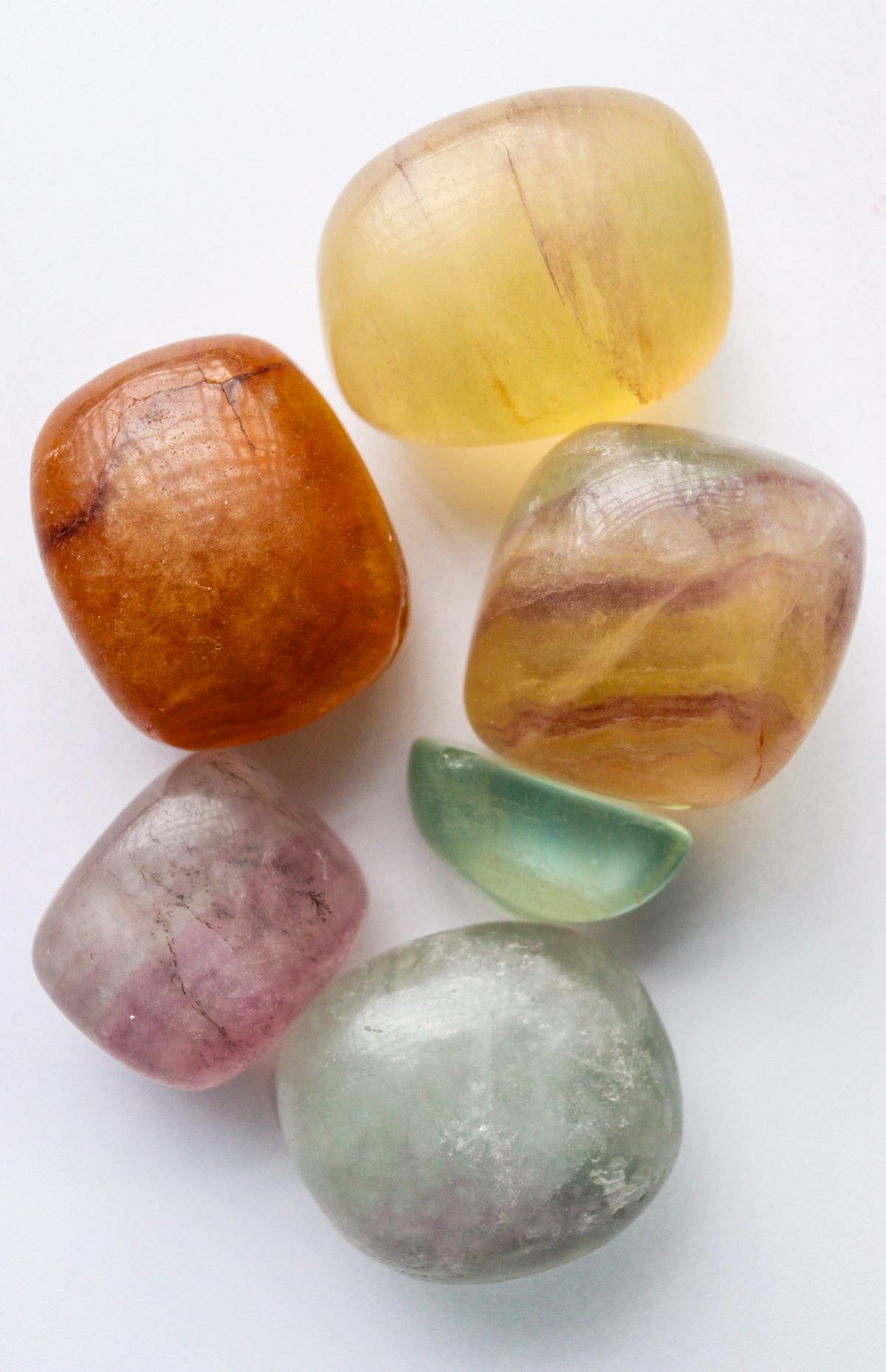
Seven centres · seven colours
The chakras are seven energy centres running from the base of the spine to the top of the head, each with its own colour, theme and matching crystals. The classic pairings are red jasper (root), carnelian (sacral), citrine (solar plexus), rose quartz / green aventurine (heart), blue lace agate / lapis (throat), amethyst (third eye) and clear quartz / selenite (crown). Below: what each centre governs, the stones that suit it, and how to use them.
If you’ve spent any time around crystals, you’ve met the chakras — the seven energy centres that crystal healing borrows from the yogic tradition. Pairing a stone with a chakra is one of the oldest and most intuitive ways to choose a crystal: you match the colour and the theme of a centre to a stone, and let it become a focus for the quality you’d like to nurture. This guide walks through all seven, from root to crown, with the crystals most often used for each.
A gentle word before we begin. The chakra system is a symbolic map, not a medical one — a beautiful, centuries-old way of thinking about where we hold tension and where we’d like to feel more open. We’ll treat it in that spirit: as tradition and metaphor, clearly labelled, never as a treatment.
What are the chakras?
The word chakra comes from Sanskrit and means “wheel” or “disc.” In tantric and yogic philosophy, the chakras are spinning centres of energy arranged along the spine, each governing a cluster of physical, emotional and spiritual themes. There are many systems, but the one almost everyone uses today describes seven main chakras, each with a colour drawn from the rainbow — red at the base, rising through orange, yellow, green and blue to indigo and violet at the crown.
Crystal healing maps onto this system naturally, because crystals come in exactly those colours. The simplest approach is colour-matching: a red stone for the red root chakra, a green stone for the green heart chakra, and so on. Beyond colour, each stone also carries a traditional theme — grounding, confidence, love, expression — that lines up with the centre it’s paired to. Let’s take them one at a time.
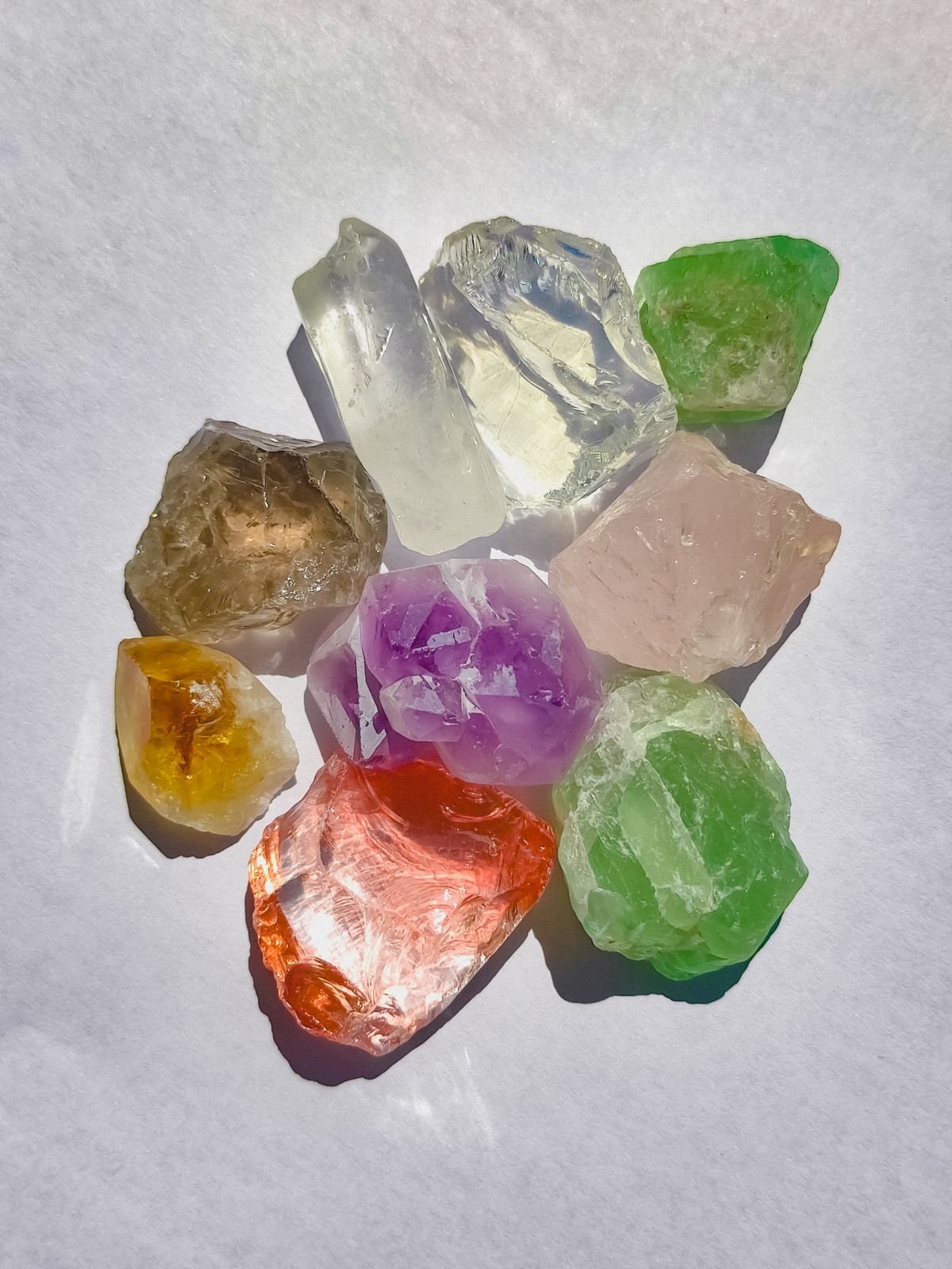
Root chakra — Muladhara (red)
The root chakra sits at the base of the spine and governs our sense of safety, stability and belonging. When it feels balanced, we feel grounded and secure; when it’s shaky, we feel anxious or unmoored. Its colour is red, and its stones are the dark, dense, earthy ones.
Classic root crystals are red jasper, black tourmaline, hematite and black obsidian — stones long associated with grounding and protection. Keep one in a pocket or hold it underfoot during meditation to encourage that “feet on the earth” feeling.
Sacral chakra — Svadhisthana (orange)
Just below the navel, the sacral chakra is the centre of creativity, pleasure and emotion. It’s associated with flow — of feelings, of ideas, of warmth toward others. Its colour is orange, and its signature stone is carnelian, the glowing orange chalcedony of vitality and courage.
Other sacral stones include orange calcite and sunstone. People reach for them when they feel creatively blocked or emotionally flat, as a warm, encouraging focus for getting things moving again.
Solar plexus chakra — Manipura (yellow)
Above the navel sits the solar plexus, the centre of confidence, willpower and personal power. A balanced solar plexus feels like quiet self-assurance; a depleted one feels like self-doubt. Its colour is sunny yellow, and its stone, fittingly, is citrine — the golden quartz of optimism and drive.
Tiger’s eye is the other great solar plexus stone, prized for courage and clear decisions. Carry either when you need to step forward, speak up, or back yourself.
Heart chakra — Anahata (green / pink)
At the centre of the chest, the heart chakra governs love, compassion and connection — both for others and for ourselves. It’s the bridge between the lower, earthly centres and the upper, spiritual ones. Its colours are green and pink, and its best-loved stone is rose quartz, the gentle pink crystal of tenderness and self-care.
Green aventurine, jade and rose quartz together make a soothing heart set. People use them when they want to soften toward themselves, heal after a loss, or open up to others again.
Throat chakra — Vishuddha (blue)
At the throat sits the centre of communication, truth and self-expression. When it’s open, we speak honestly and listen well; when it’s blocked, we swallow our words. Its colour is light blue, and its stones are the calm blues: blue lace agate, aquamarine and lapis lazuli, the deep-blue stone of truth.
Worn as a pendant near the throat, these stones are a traditional support for anyone who wants to express themselves more clearly — before a difficult conversation, a presentation, or simply speaking their mind.
Third eye chakra — Ajna (indigo)
Between the brows lies the third eye, the centre of intuition, insight and imagination. It’s where we “see” beyond the obvious. Its colour is indigo, and its great stone is amethyst, the violet quartz of clarity and inner stillness — the same calm presence that makes it such a popular bedside stone.
Labradorite and moonstone are also linked to the third eye, both prized for intuition and that sense of quiet inner knowing. Rest one on the brow during meditation, or keep it where you reflect.
Crown chakra — Sahasrara (violet / white)
At the very top of the head, the crown chakra is the centre of awareness, spirituality and connection to something larger. Its colours are violet and pure white, and its stones are the clearest and most luminous: clear quartz, selenite and, once again, amethyst, whose reach extends from the third eye to the crown.
Clear quartz is often called the “master healer” and is said to amplify intention; selenite is valued for its bright, cleansing quality. Both make a serene focus for meditation and are popular on altars and in quiet corners.
The chakra system is a symbolic and spiritual framework, not a medical one. Crystals can be a lovely focus for reflection and relaxation, but they are not a treatment and nothing here is intended to diagnose or cure any condition. If you’re struggling physically or emotionally, please also speak with a qualified professional.
How to use chakra crystals
There’s no single “correct” method — the point is to make the stone a focus for the quality you’d like to nurture. The most common approaches:
- A chakra layout. Lie down and place each stone on its centre, in colour order, for a few quiet minutes. The classic full-body reset.
- One centre at a time. Working on confidence? Carry citrine. Want to speak up? Wear a blue stone at the throat. Focus on the centre that needs attention.
- Meditation. Hold the stone for the chakra you’re exploring, and breathe with its colour and theme in mind.
- Wear it. A pendant naturally sits near the heart or throat; a ring keeps a solar-plexus stone close to your hands and your will.
- Build a set. A seven-stone chakra set is an easy, affordable way to start — one stone for each centre, kept together.
How to cleanse & charge chakra stones
Like any crystals you use often, chakra stones benefit from an occasional reset. The gentlest, all-purpose methods suit a mixed set best, because some stones are delicate: moonlight overnight, incense or sage smoke, a selenite plate, or sound from a singing bowl. Avoid water for soft or porous stones such as selenite and lapis lazuli, and keep amethyst, citrine and rose quartz out of long, strong sunlight, which can fade their colour. Many people simply cleanse their set once a month.
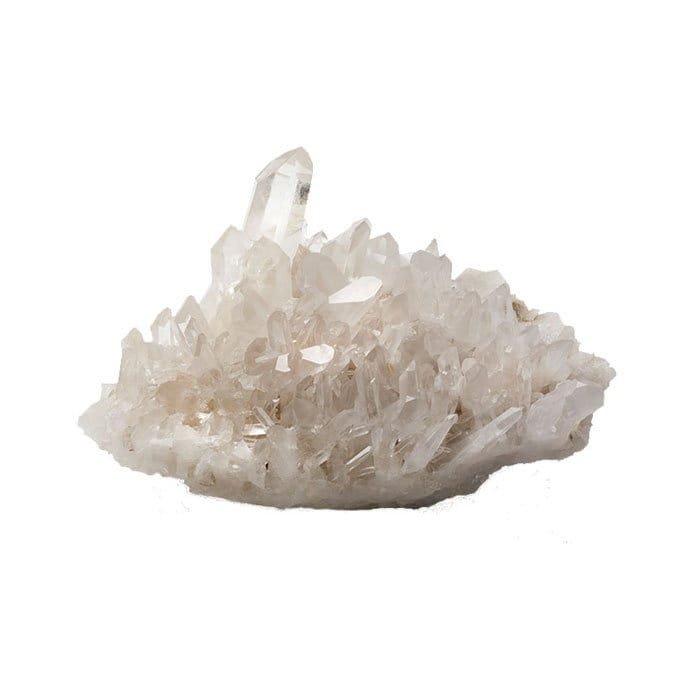
Genuine, ethically sourced stones
If you’d like to build your own set, Minerals Kingdom offers authenticated natural crystals — tumbled stones, points and chakra sets for every centre.