
Tiger’s Eye
The golden stone of nerve — for the days you need a little courage.
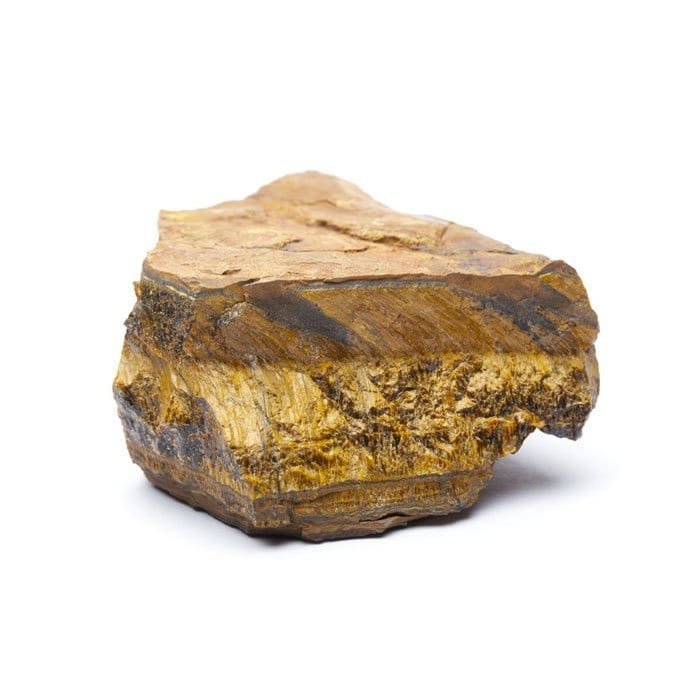
Chatoyant quartz · Solar plexus
Tiger’s eye is a golden-brown variety of quartz famous for its chatoyancy — the silky band of light that slides across the stone like a cat’s eye. In the crystal tradition it’s the stone of confidence, courage and willpower, tied to the solar plexus chakra. It’s durable, affordable and one of the easiest stones to wear every day. Below: what it is, where its meaning comes from, how to use and clean it, the colours you’ll meet, and how to tell a real stone from fiber-optic glass.
Tiger’s eye is the stone people pick up when they want to feel a little braver. Hold a polished piece to the light and you’ll see why it has fascinated people for so long: a band of gold seems to float just beneath the surface and glides as you turn it, exactly like the slit pupil of a cat — or a tiger. That living gleam, paired with a warm honey-brown colour, has made it one of the most recognisable and best-loved stones in the world.
This guide covers everything worth knowing: what tiger’s eye actually is, the strange and rather wonderful way it forms, where its reputation for courage comes from, how people use and wear it, how to keep it looking its best, the colours and cousins you’ll meet, and how to tell a genuine stone from the fiber-optic glass that often stands in for it. As always, we’ll keep the lore and the facts clearly labelled.
What is tiger’s eye?
Tiger’s eye is a chatoyant variety of quartz — silicon dioxide (SiO₂), the same basic mineral as amethyst, citrine and clear rock crystal. What makes it special is not its chemistry but its structure: it’s made of fine parallel fibres, and when light strikes them it reflects back as a single bright band that shifts as the stone moves. Gemmologists call this effect chatoyancy, from the French chat (cat) and œil (eye) — literally “cat’s eye.” The same trick of the light gives us cat’s-eye chrysoberyl and the silky sheen of satin spar selenite.
How those fibres got there is one of the better stories in mineralogy. For more than a century the stone was explained as a pseudomorph: a fibrous blue mineral called crocidolite (a form of asbestos) slowly dissolved and was replaced, fibre by fibre, by quartz, while iron staining turned the whole thing golden. The fibres’ ghostly alignment was preserved in the new quartz, and that’s what catches the light. More recent research has proposed a subtler “crack-seal” process, in which the quartz and the fibres grow together as a fracture repeatedly opens and heals. Either way, the result is the same: a hard quartz stone that has somehow trapped a beam of light inside it.
And yes — because that origin story involves asbestos, people often ask whether tiger’s eye is dangerous. It isn’t. In the finished stone the fibres have been replaced or sealed by silica, so polished and tumbled tiger’s eye is simply quartz: solid, stable and safe to handle and wear. On the Mohs scale it rates a sturdy 7, the same as amethyst, which is why it stands up so well to everyday jewellery.
Tiger’s eye meaning & history
The name says most of it. To early observers the stone’s restless gleam looked like a watchful, all-seeing eye, and that single image has shaped its meaning for thousands of years. In Ancient Egypt the golden, radiant stone was associated with the eyes of the gods and with divine protection and insight. Roman soldiers are said to have carried tiger’s eye into battle — engraved as an amulet — to keep them brave and to deflect harm, trusting that an “eye” stone could see danger coming.
From those roots, tiger’s eye settled into the role it still holds today: a stone of courage, confidence and clear-headed willpower. It’s the talisman people reach for when they have to act despite their nerves — a difficult conversation, a first day, a decision they’ve been putting off. Where amethyst is the stone of slowing down, tiger’s eye is the stone of stepping up.
It carries a useful double meaning, too. The tiger is bold and decisive, but it is also patient and watchful — it doesn’t pounce blindly. That balance of warmth and grounding is exactly how the stone is read in the crystal tradition: not reckless courage, but the steady kind that lets you see a situation clearly and then act.
Tiger’s eye healing properties
In the crystal tradition, tiger’s eye is above all a stone of personal power. It’s the one most often suggested for building confidence, finding motivation, and steadying yourself before something daunting. Because it’s considered both grounding and energising, people also turn to it to cut through self-doubt and indecision — to help them stop circling a problem and finally move.
People typically reach for tiger’s eye for:
- Confidence & courage. A classic talisman for nerve before a challenge.
- Willpower & motivation. Associated with discipline and seeing things through.
- Focus & decisions. Said to clear mental fog and steady scattered thinking.
- Grounding & protection. A warm, earthy stone long linked to feeling safe and centred.
These are traditional and symbolic uses, not medical claims. Tiger’s eye is a lovely focus for building confidence and a steadier mindset — it is not a treatment, and nothing here is intended to diagnose or cure any condition. If you’re struggling with anxiety, low confidence or low mood, please also speak with a qualified healthcare professional.
Tiger’s eye, the chakras & zodiac
In chakra work, tiger’s eye is most strongly linked to the solar plexus chakra (Manipura), the energy centre just above the navel that’s associated with confidence, willpower and a sense of personal power. Its warm golden colour is a natural match. It’s often tied to the sacral chakra as well, the centre of drive and creativity, and its grounding quality connects it to the root chakra — which is part of why it’s described as a stone that helps you feel both fired-up and steady at the same time.
Tiger’s eye isn’t an official birthstone, but in astrology it’s most often associated with the bold, sun-ruled sign Leo and the disciplined Capricorn — a fitting pair for a stone about courage and follow-through. Some traditions also link it to Gemini. As a warm, solar stone it’s connected to the element of Fire, with an earthy, grounding undertone.
How to use tiger’s eye
You don’t need a ritual to enjoy a stone you simply like having around — but if you’d like to be more intentional, here are the most common ways people work with tiger’s eye. Because it’s a “doing” stone, most uses are about keeping it close while you act.
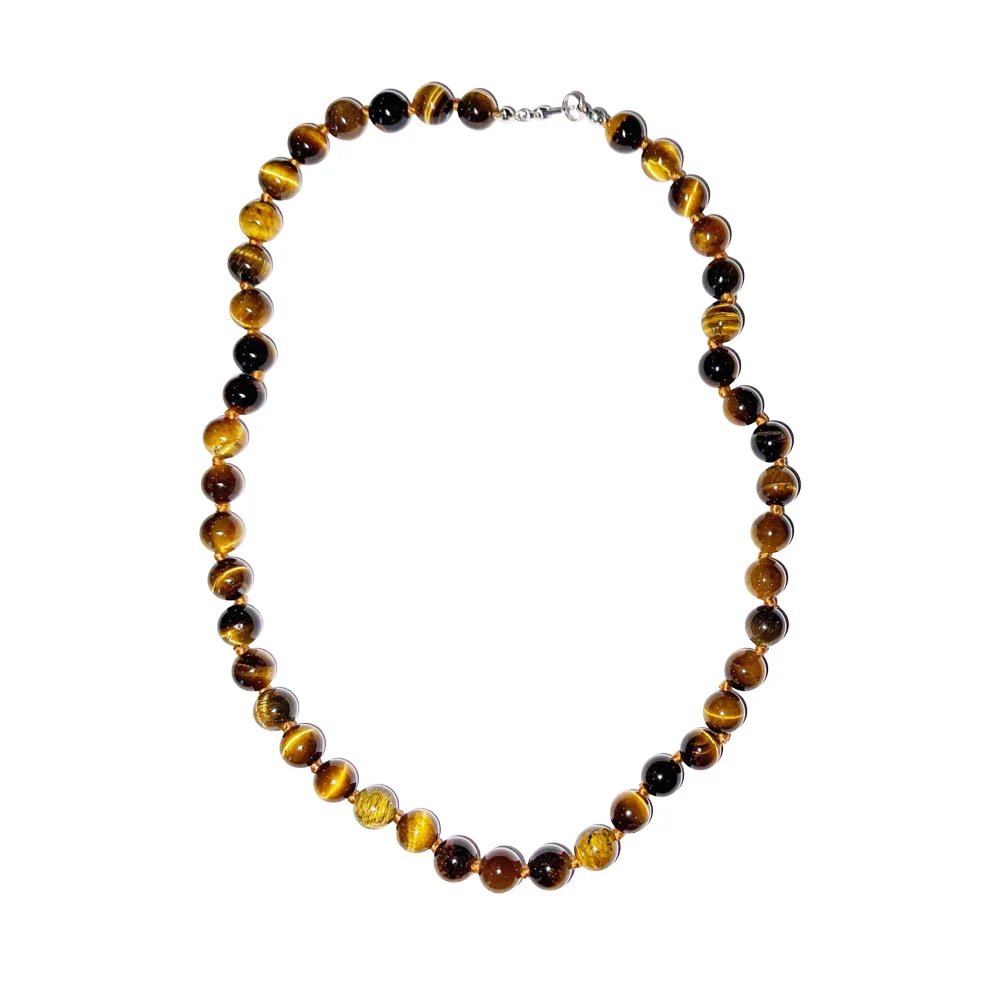
- Wear it as a bracelet. By far the most popular way — a beaded tiger’s eye bracelet keeps the stone on your pulse through a demanding day.
- Carry a pocket stone. A smooth tumbled piece is a tactile reminder to stand your ground before a meeting or interview.
- Keep one on your desk. A point or palm stone where you work, as a focus for motivation and follow-through.
- Hold it while you decide. Many people use a tumbled stone as something to hold during a few slow breaths before a tough choice.
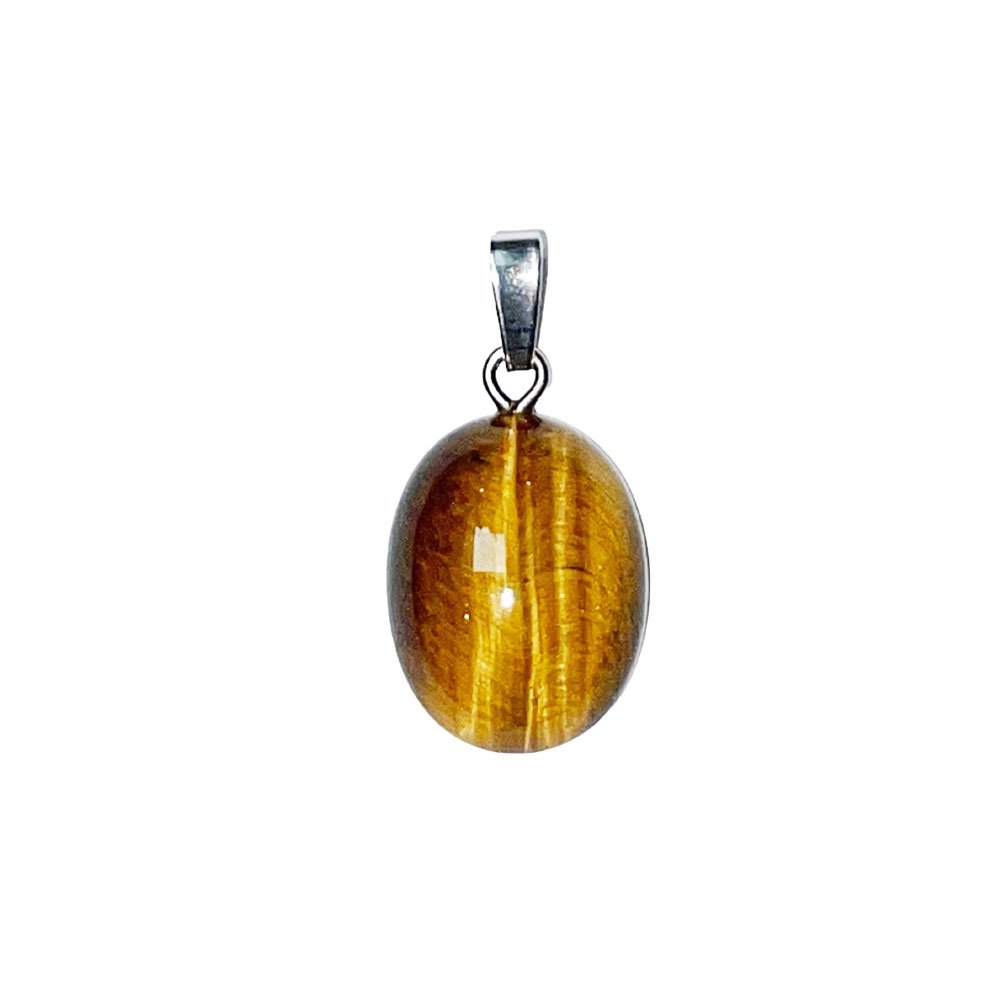
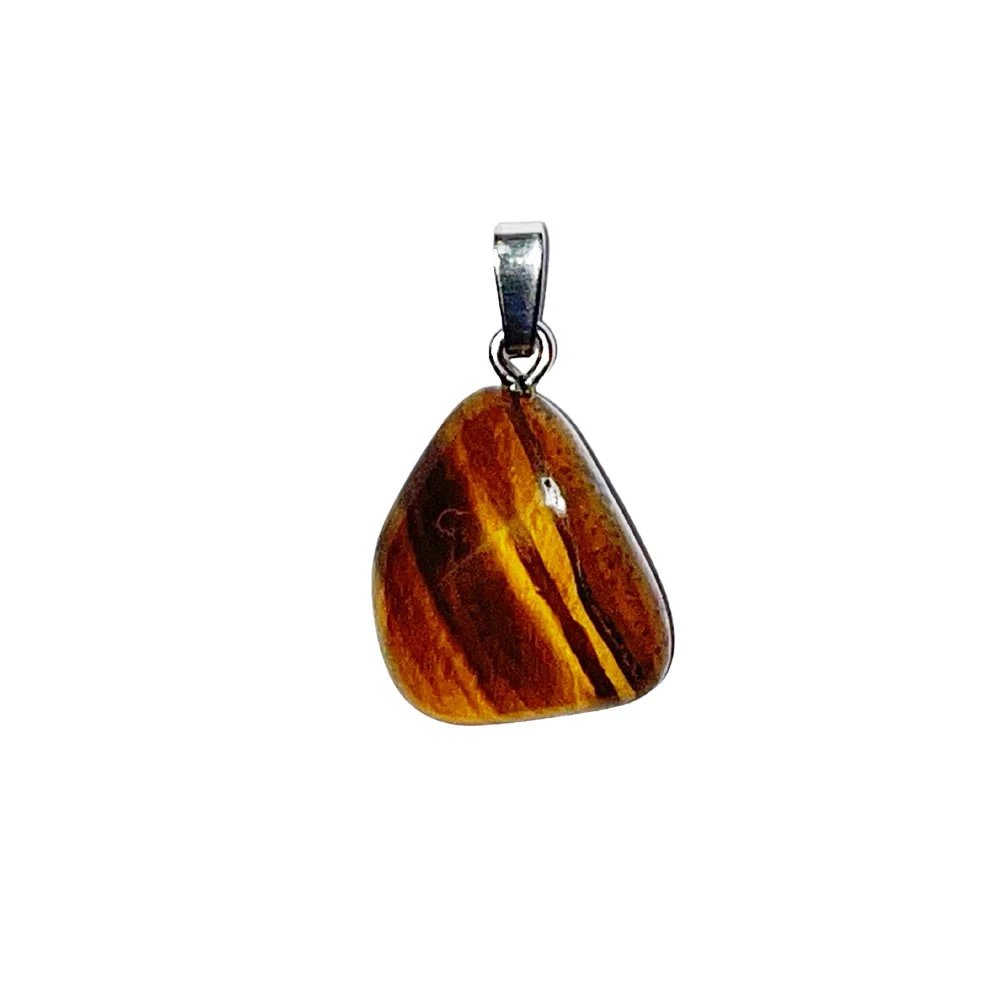
- Wear it as a pendant. At hardness 7 it takes daily wear easily, and a cabochon shows the chatoyant band beautifully.
How to cleanse & charge tiger’s eye
Most people like to “reset” a stone now and then — whether you think of it energetically or simply as keeping it clean and cared for. Tiger’s eye is hardy and, unlike amethyst, its colour is stable in light, so you don’t have to worry about it fading on a sunny shelf. That makes it one of the more forgiving stones to look after.
Good ways to cleanse tiger’s eye:
- Cool running water. A brief rinse is perfectly safe — it’s a hard quartz. Skip salt water and harsh chemicals.
- Sunlight. As a warm, solar stone, tiger’s eye is happy to recharge in a little gentle morning sun.
- Smoke. Pass it through incense, palo santo or sage smoke.
- Selenite. Rest it on a selenite plate overnight to clear and recharge it.
- Sound. A singing bowl or bell is a gentle, no-contact option.
Because tiger’s eye is so often worn — on a wrist or around the neck — many people simply cleanse it a little more regularly than a shelf stone, perhaps once a month or after a particularly intense stretch. Cleanse it whenever it feels right.
Types & colours of tiger’s eye
Most tiger’s eye is the familiar honey-gold, but the stone comes in a small family of colours — some natural, some coaxed out with gentle heat — and has a few close relatives worth knowing by name:
- Gold (golden) tiger’s eye. The classic — warm brown shot through with bands of amber and gold. This is the stone of confidence most people picture.
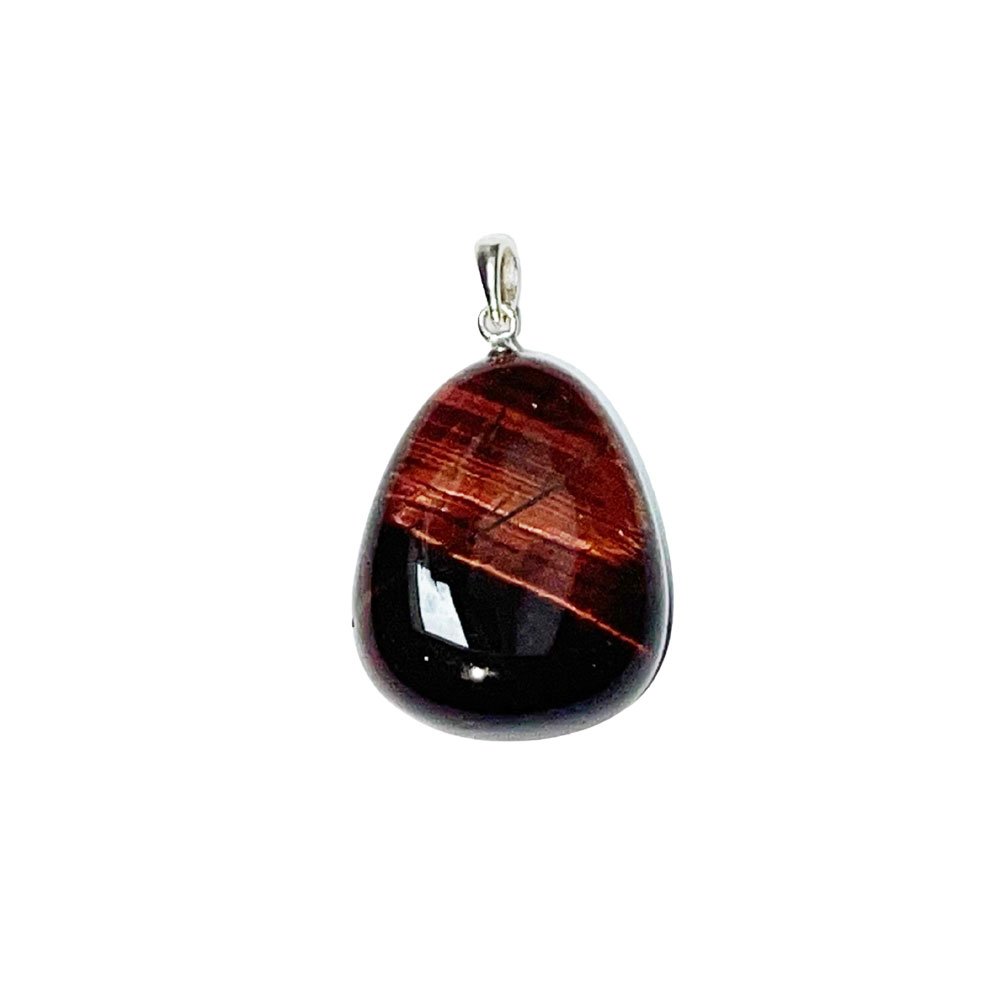
- Red tiger’s eye. Sometimes called ox eye or bull’s eye. A rich red-brown, usually produced by gentle heat treatment that oxidises the iron; associated with energy, motivation and a more fiery confidence.
- Blue tiger’s eye (hawk’s eye). The blue-grey earlier stage, before the iron oxidises to gold. Cooler and calmer in feel, and linked to clarity and calm communication.
- Pietersite. A swirling, brecciated cousin from Namibia and China, with chatoyant flashes of gold and blue. Nicknamed the “tempest stone.”
- Tiger iron. A handsome banded rock that layers tiger’s eye with red jasper and silvery hematite — prized for grounding.
The world’s finest tiger’s eye comes mainly from South Africa — the deposits of Griqualand West, in the Northern Cape, have supplied the market for generations — and from Western Australia, home to the famous Marra Mamba and Mount Brockman material. Good stone is also found in Namibia, India, Brazil and the United States.
Is tiger’s eye rare or valuable?
Tiger’s eye is wonderfully affordable. It’s abundant, easy to cut and polish, and produced in large quantities, so a tumbled stone or a beaded bracelet costs very little — part of what makes it such a friendly, everyday stone. It sits firmly in the world of semi-precious gemstones rather than fine gems, and that accessibility is a feature, not a flaw.
Where value does vary, it’s driven by the quality of the “eye.” The most prized pieces show a strong, sharp, well-centred band of chatoyancy that moves crisply across the stone, set against a rich, even colour with good contrast between the gold and brown layers. Skilled cutting matters enormously here: the lapidary has to orient the fibres correctly, or the eye won’t appear at all. Larger cabochons with a vivid, mobile band, and unusual colours like fine natural blue hawk’s eye or well-figured pietersite, command more — but for most buyers the honest advice is simply to choose the stone whose gleam you genuinely love.
How to tell real tiger’s eye from fake
Because tiger’s eye is inexpensive, outright fakes are less of an epidemic than with rare gems — but two things are very common: fiber-optic “cat’s-eye” glass sold as tiger’s eye, and dyed tiger’s eye in unnaturally vivid blues, reds, pinks or greens. A few honest checks help:
- Watch the band move. Real tiger’s eye shows a soft, slightly irregular band of light that slides as you tilt it, with natural variation along the stone. Fiber-optic glass has a band that’s too bright, too perfect and oddly mechanical.
- Look at the back. Fiber-optic glass often reveals a fine, regular honeycomb or grid pattern of the optic fibres — natural stone never does.
- Question the colour. Natural gold and red-brown are believable; electric blue, hot pink or lime green almost always mean dye.
- Feel the temperature. Natural quartz feels cool and warms slowly in the hand; glass warms quickly.
- Check the hardness (gently). At 7 on the Mohs scale, tiger’s eye will scratch glass, not the other way around.
None of this is about snobbery — dyed and glass stones can be perfectly pretty. It’s about paying for what you think you’re paying for. If provenance matters to you, buy from a seller who is clear about whether a stone is natural, heat-treated or dyed.
Genuine, ethically sourced tiger’s eye
If you’d like a piece of your own, Minerals Kingdom offers authenticated natural tiger’s eye — tumbled stones, cabochons, beads and jewellery, with the colour and treatment stated honestly.