
Amethyst
The violet quartz people reach for when they want to slow down.
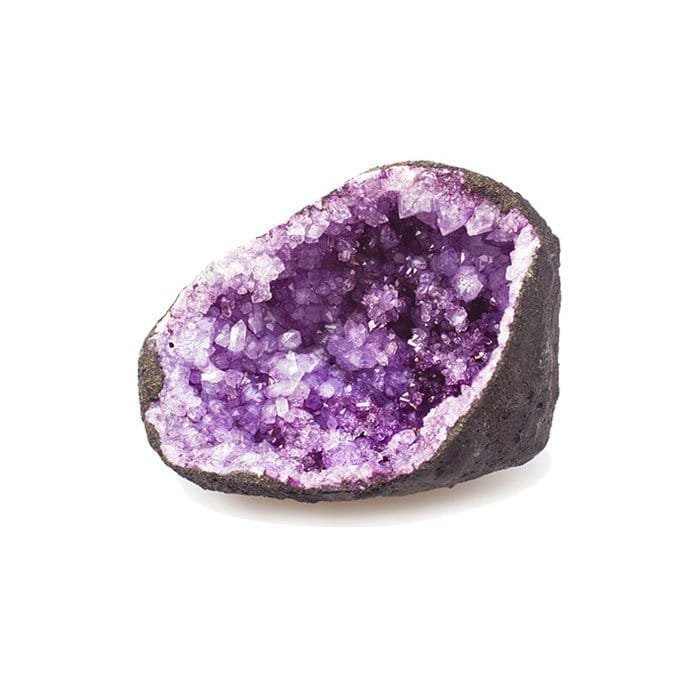
Amethystus · Quartz family
Amethyst is the violet variety of quartz, traditionally associated with calm, clarity and restful sleep. It’s the February birthstone, linked to the crown chakra, and one of the easiest crystals to live with: durable, affordable and beautiful. Below — what it means, how to use it, how to keep it, and how to tell a real stone from a fake.
Amethyst is the most familiar crystal in the world, and for good reason. Its deep violet colour, its long association with calm, and its sheer availability have made it the natural starting point for almost everyone who keeps stones. If you own a single crystal, there’s a fair chance it’s this one — and if you’re about to buy your first, it’s a lovely place to begin.
This guide covers everything worth knowing: what amethyst actually is, where its meaning comes from, the ways people use it, how to keep it clean and bright, the varieties you’ll meet, and — because you deserve the full picture — what’s tradition and what’s genuinely known. We’ll keep the lore and the facts clearly labelled.
What is amethyst?
Amethyst is the purple variety of quartz, one of the most common minerals on Earth. Chemically it’s silicon dioxide (SiO₂), the same material as clear rock crystal, citrine and smoky quartz. What sets amethyst apart is its colour: a violet that ranges from the palest lilac to a deep, wine-dark purple. That hue comes from tiny amounts of iron built into the crystal, combined with natural radiation in the ground, which together create what mineralogists call colour centres.
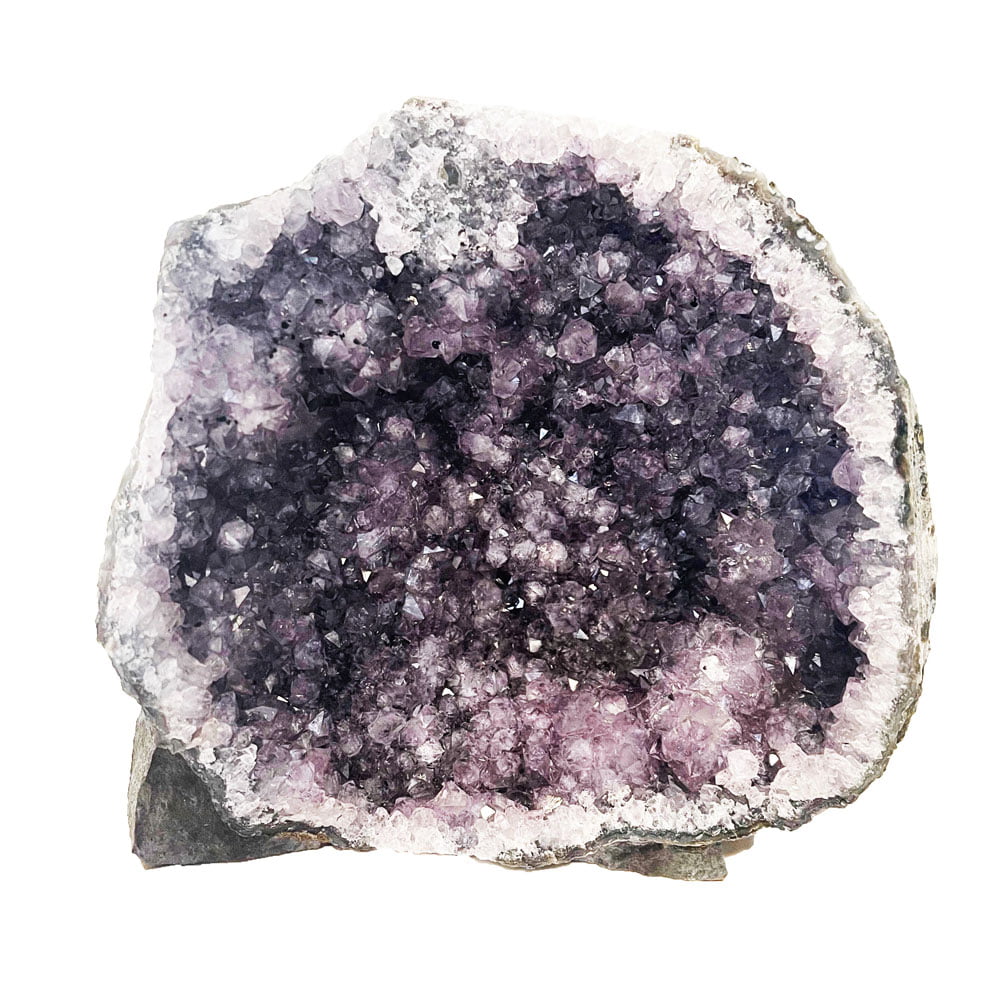
It grows when silica-rich water seeps into cavities in volcanic rock and, over a very long time, deposits quartz crystals along the walls. In the great deposits of southern Brazil and Uruguay, this happens inside gas bubbles trapped in ancient basalt, producing the hollow, crystal-lined pockets we call geodes. Crack one open and you find a glittering violet interior — a natural cabinet of curiosities in a single stone. On the Mohs scale of hardness amethyst rates a solid 7, which makes it durable enough for everyday jewellery and easy to care for.
One quirk worth knowing is that amethyst’s colour is sensitive to heat. Warm it enough and the violet shifts — most of the warm golden “citrine” sold today is in fact heat-treated amethyst, and gentler heating can turn it the soft green known as prasiolite. It’s the same mineral throughout; only the colour centres have changed. It’s also why months of strong sunlight can slowly drain a stone’s purple, a detail we’ll come back to when we talk about care.
Amethyst meaning & history
The name tells the oldest story. Amethyst comes from the Ancient Greek améthystos, meaning “not intoxicated.” The Greeks and Romans believed the stone could guard against drunkenness, and the wealthy carved drinking cups from it or wore it as an amulet at their feasts. Whether or not it kept anyone sober, the association stuck: for thousands of years amethyst has stood for a clear, sober, steady mind.
From there its symbolism widened. In the medieval church amethyst became a stone of piety and was set into bishops’ rings. Across many folk traditions it came to represent serenity, intuition and spiritual focus. Today most people meet amethyst in that same gentle register — as the stone you reach for when life feels loud and you want to turn the volume down.
A later legend, retold by Renaissance poets, gave the stone a romance to match its name. In it, the god of wine Dionysus pursues a maiden called Amethyste, who prays to be kept pure and is turned into a pillar of clear quartz; full of remorse, the god pours wine over the stone and stains it violet. It’s poetry rather than history — the tale post-dates the Greek name by many centuries — but it captures perfectly why amethyst has always stood for the clear, unclouded mind.
Amethyst healing properties
In the crystal tradition, amethyst is above all a stone of calm and clarity. It’s the one most often suggested for winding down an overactive mind, easing into sleep, and finding a little stillness for meditation or prayer. Practitioners also link it to intuition and spiritual awareness — which is why it so often appears in meditation spaces and on bedside tables.
People typically turn to amethyst for:
- Calm & stress. A grounding presence when the mind is racing.
- Sleep & rest. A traditional bedside stone for quieter nights.
- Clarity & focus. Said to settle scattered thoughts before meditation or study.
- Intuition. Long associated with the higher, more reflective chakras.
These are traditional and symbolic uses, not medical claims. Amethyst is a beautiful support for a calming ritual — it is not a treatment, and nothing here is intended to diagnose or cure any condition. If you’re struggling with sleep, anxiety or low mood, please also speak with a qualified healthcare professional.
Amethyst, the chakras, birthstone & zodiac
In chakra work, amethyst is associated with the crown chakra (Sahasrara) at the top of the head, and often the third eye (Ajna) between the brows — the centres linked to awareness, intuition and connection. That’s a natural fit for a stone whose whole reputation is about a calm, clear mind.
Amethyst is the birthstone for February, which makes it a popular and meaningful gift early in the year. It’s traditionally tied to the zodiac sign Pisces, and it’s the gemstone associated with the sixth wedding anniversary. For a February birthday or a thoughtful “slow down and rest” gift, few stones say it as gracefully.
How to use amethyst
You don’t need a ritual to benefit from a stone you simply enjoy looking at — but if you’d like to be more intentional, here are the most common ways people work with amethyst.
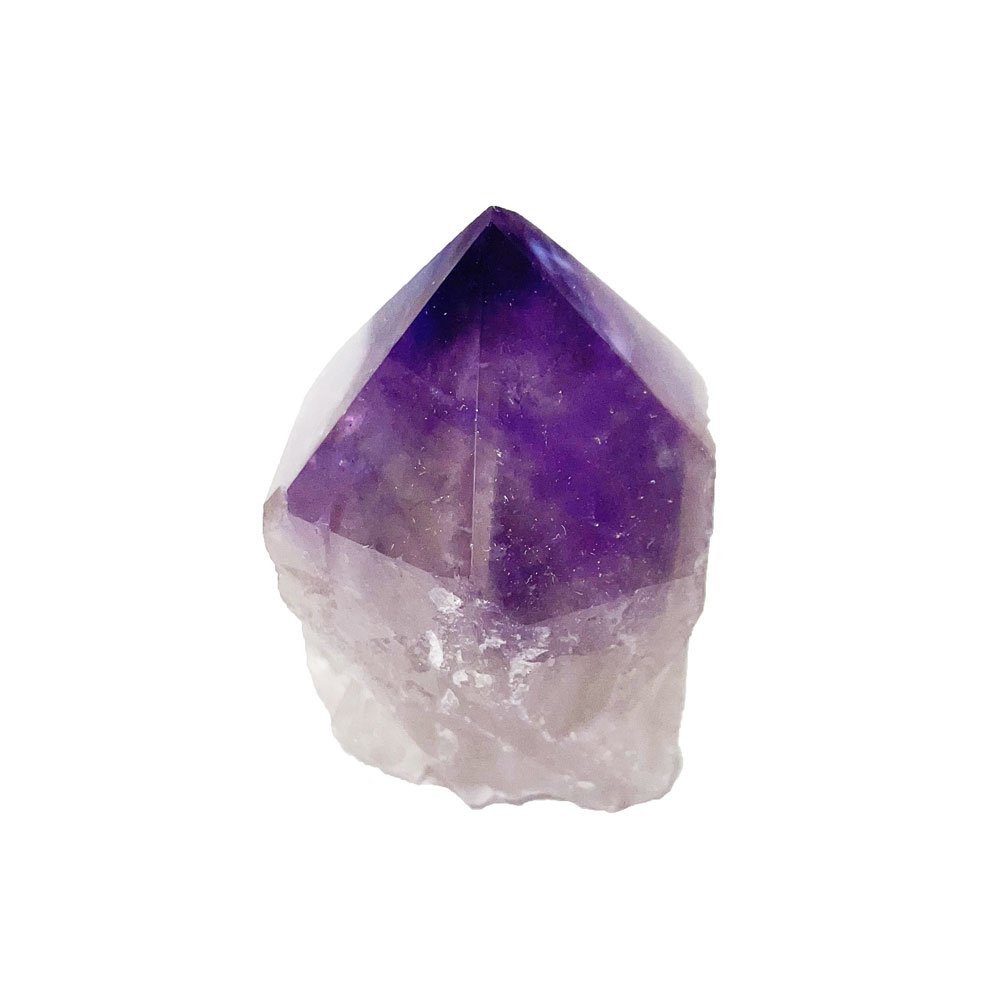
- Keep it where you rest. A tumbled stone, point or small druse on a nightstand is the simplest place to begin.
- Hold it while you breathe. Many people use a smooth tumbled stone as a focus for a few slow minutes of meditation.
- Carry a pocket stone. A small piece is a quiet, tactile reminder to pause during a busy day.
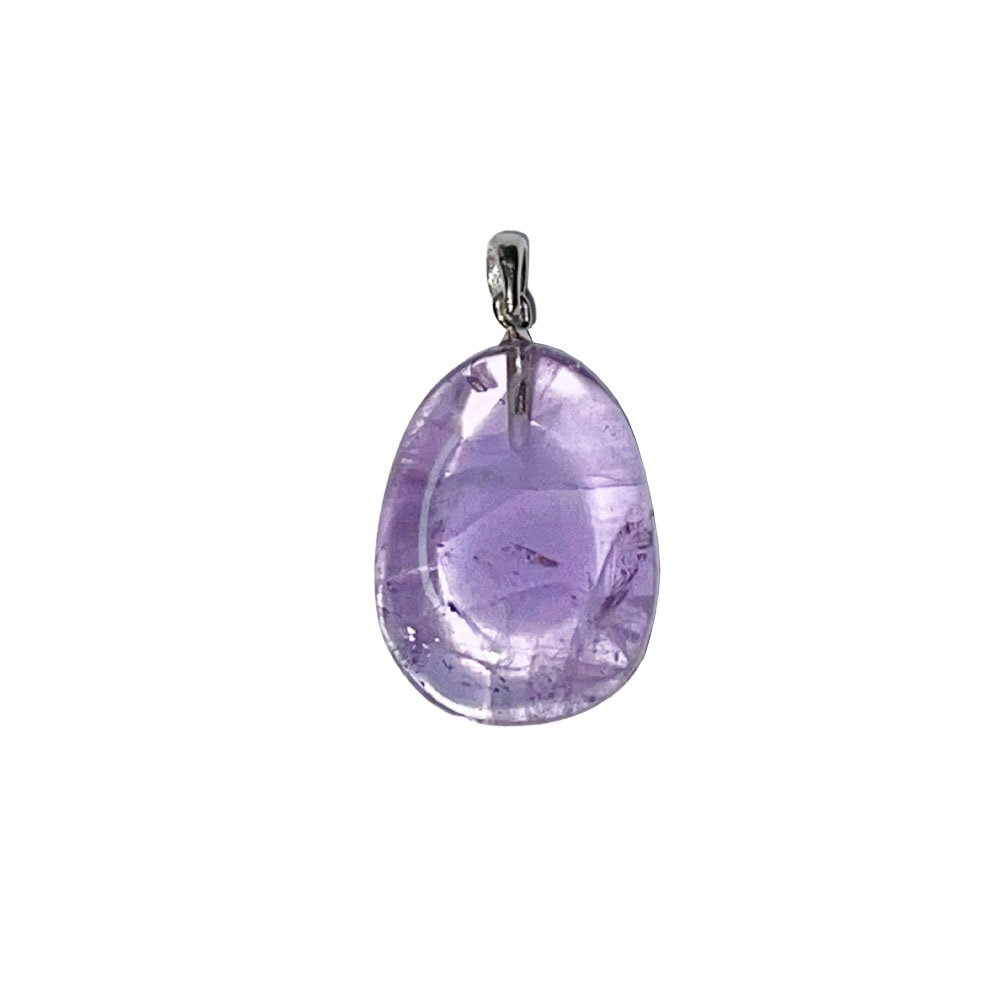
- Wear it. As a pendant or ring, amethyst keeps its meaning close — and, at hardness 7, it stands up to daily wear.
- Place a geode in a shared room. A larger druse makes a calm focal point in a living or working space.
How to cleanse & charge amethyst
Most people like to “reset” a stone now and then — whether you think of it energetically or simply as keeping it clean and cared for. Amethyst is hardy, but it has one quirk worth knowing: its violet colour can fade in strong, prolonged sunlight, so it’s not a stone to leave on a sunny windowsill for weeks.
Good ways to cleanse amethyst:
- Cool running water. A brief rinse is perfectly safe — amethyst is a hard quartz. Skip salt water and harsh chemicals.
- Moonlight. A night under the full moon is the classic, colour-safe method.
- Smoke. Pass it through incense, palo santo or sage smoke.
- Selenite. Rest it on a selenite plate overnight.
- Sound. A singing bowl or bell is a gentle, no-contact option.
To “charge” it, moonlight again works beautifully — and because an amethyst geode is itself often used to charge other stones, your amethyst rarely needs much. Cleanse whenever it feels right; many people simply do it once a month or after an especially intense few days.
Types of amethyst
“Amethyst” covers a surprising range of looks, from pale lavender to inky purple. A few varieties are worth knowing by name:
- Chevron amethyst. Banded with white quartz in striking “V” patterns.
- Ametrine. A natural blend of amethyst and golden citrine in one crystal, mostly from Bolivia.
- Brandberg. Prized Namibian crystals, often combining amethyst, clear and smoky quartz.
- Vera Cruz. Delicate, pale, slender crystals from Mexico, loved by collectors.
- Prasiolite (“green amethyst”). Amethyst that has turned green, almost always through heat treatment.
- Rose de France. A soft, pale lilac grade with a vintage charm.
Most of the world’s amethyst comes from Brazil and Uruguay, with superb material also from Zambia, Bolivia, Madagascar and even Arizona in the United States. Uruguayan amethyst is especially prized for its deep, saturated colour.
Is amethyst rare or valuable?
Amethyst was once treated as a precious gem — in antiquity it ranked alongside diamond, ruby, sapphire and emerald. That changed in the nineteenth century, when enormous deposits were found in Brazil and Uruguay and supply grew dramatically. Today amethyst is wonderfully affordable, which is part of why it makes such a friendly first crystal: a tumbled stone costs very little, and even a generous druse is within easy reach.
Value is still driven mainly by colour. The most prized amethyst is a deep, even purple with flashes of red or blue — historically described with romantic grades from “Rose de France” for the palest lilac up to “Deep Russian” or “Siberian” for the richest, rarest tones. Clarity, crystal size and origin matter too: clean, large, intensely coloured stones from Uruguay or Zambia command the highest prices. For most buyers, though, the honest advice is simple — choose the piece whose colour you genuinely love, at a size that suits where it will live.
How to tell real amethyst from fake
Amethyst is affordable enough that outright fakes are less common than with rare gems — but they exist, usually as dyed glass or, increasingly, as lab-grown amethyst (which is real quartz, just made by people). A few honest checks help:
- Look at the colour. Natural amethyst often shows uneven colour — zoning or banding, with deeper purple at the crystal tips. Perfectly even colour throughout can be a sign of glass or dye.
- Check for bubbles. Tiny round air bubbles inside point to glass, not crystal.
- Feel the temperature. Natural quartz feels cool and warms slowly; glass warms quickly in the hand.
- Test the hardness (gently). At 7 on the Mohs scale, amethyst will scratch glass, not the other way around.
Be aware that synthetic amethyst is chemically identical to the natural stone and can be almost impossible to spot by eye — only a gem laboratory can confirm it with certainty. If provenance matters to you, buy from a seller who is clear about where their stones come from.
Genuine, ethically sourced amethyst
If you’d like to start your own piece, Minerals Kingdom offers authenticated natural amethyst — raw druses, tumbled stones, points and jewellery.