Sugilite
A rare purple manganese mineral that only became a gemstone in the 1970s — proof that not every “ancient” crystal has an ancient story.
Manganese cyclosilicate · The purple healer
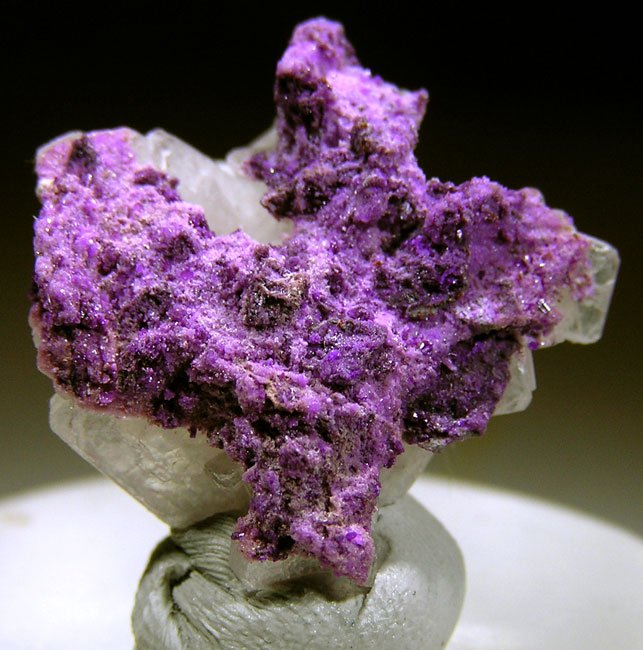
Sugilite is a rare manganese-bearing cyclosilicate, and the purple ones prized in the crystal world are coloured by manganese. It was first identified in 1944 in Japan by the geologist Ken-ichi Sugi, but the gem-quality violet material that made it famous only appeared in the late 1970s and 1980s, from the Wessels Mine in South Africa’s Kalahari manganese field. That makes sugilite genuinely modern: it has no ancient tradition, and its meanings were all assigned within living memory. In the crystal tradition it is a much-loved third-eye and crown stone, associated with spiritual protection and emotional healing. It is moderately hard (5.5–6.5 Mohs), genuinely rare, and often confused with charoite and other purple stones.
Most of the stones on this site come with centuries of folklore attached. Sugilite comes with almost none — and that is exactly what makes it interesting. It is a genuinely rare purple mineral that the world barely knew until the 1970s, and every “meaning” it now carries was invented, quite recently, by people who found its colour irresistible. It is a useful reminder that a crystal tradition is a living, changing thing, not an unbroken line from antiquity.
This guide covers what sugilite actually is, its brief and well-documented history, why it commands the prices it does, and how to tell it from the purple stones it is regularly muddled with.
What is sugilite?
Sugilite is a cyclosilicate — a ring-silicate — with a complex composition built around potassium, sodium, lithium, iron and aluminium. The vivid purple to magenta colour that makes it a prized gem comes from manganese in the structure; iron-rich sugilite, by contrast, is a dull brownish-yellow of interest mainly to mineralogists. Its Mohs hardness is 5.5 to 6.5, softer than quartz but firm enough for careful jewellery use.
Most gem sugilite is opaque to translucent, a dense violet often marbled with black and pink, and the rare translucent “gel” sugilite — deep, glowing and semi-transparent — is the most valuable form. It typically occurs intergrown with other Kalahari manganese minerals, which is why fine solid-colour material is scarce.
A modern stone — the honest history
Sugilite was first described in 1944 by the Japanese petrologist Ken-ichi Sugi, from a small occurrence in Japan — but that material was the dull iron-rich kind, and it attracted no attention beyond mineralogy. The stone the crystal world knows arrived decades later, when the Wessels Mine in the Kalahari began producing rich purple manganese-coloured sugilite in the late 1970s and through the 1980s.
This is worth stating plainly, because sugilite is sometimes given a mystical ancient pedigree it simply does not have. There is no folklore, no classical text, no traditional culture that used it — it was physically unavailable until the era of the modern crystal movement. Its associations were coined in the 1980s and after, notably by twentieth-century crystal-healing authors, and the name “Luvulite” that sometimes attaches to it is a trade name from the same period. None of this makes the stone less lovely; it just means we should be honest that its “meaning” is decades old, not millennia.
Sugilite healing properties
In the crystal tradition, sugilite is valued as a stone of spiritual protection, emotional healing and inner peace.
People typically turn to sugilite for:
- Spiritual protection. The signature modern use — a shielding, sheltering quality.
- Emotional healing. Associated with comfort during grief and difficulty.
- Inner peace. Read as calming, reassuring and quieting.
- Insight. A purple third-eye stone, linked to intuition and spiritual awareness.
These are traditional and symbolic uses — and, in sugilite’s case, quite recent ones — not medical claims. Sugilite is sometimes marketed for headaches, the nervous system or serious illness, which is association and marketing, not mechanism. There is no scientific evidence that any crystal treats, cures or prevents any illness, and none that sugilite affects the body or mind by any physical means. Enjoy it as a rare and beautiful modern gem; nothing here is intended to diagnose or treat any condition, and health concerns belong with a doctor.
Sugilite, the chakras & zodiac
Sugilite’s purple places it at the third-eye chakra (Ajna) and the crown chakra (Sahasrara) — the upper centres associated with intuition, spiritual awareness and connection. In this it sits alongside amethyst and lepidolite as one of the purple, calming, higher-chakra stones. For the wider framework, see our guide to the seven chakras and their crystals.
By zodiac, sugilite — being a modern stone — has looser associations, but is most often linked to Virgo.
How to use sugilite
- Wear it as jewellery. A cabochon pendant or ring, kept for gentle wear given its moderate hardness.
- Hold it in meditation. At the third eye or crown, for calm and insight.
- Carry a tumbled piece. A pocket stone for reassurance in hard times.
- Keep a specimen on display. Fine purple sugilite is a striking collector’s piece.
- Pair it with amethyst. A natural purple, higher-chakra combination.
How to cleanse & charge sugilite
Sugilite is moderately hard and reasonably robust, but sensible care keeps it at its best.
- Water. A quick rinse in cool water with mild soap is fine; avoid prolonged soaking.
- Keep it out of prolonged strong sunlight. As a manganese-coloured stone, extended sun may dull the purple over time.
- Avoid ultrasonic and steam cleaners. Better to hand-clean gently.
- Moonlight. A gentle overnight charge, entirely safe.
- Smoke. Sage, palo santo or incense.
- Selenite or sound. Contact-free and safe.
Types & origins
- Wessels Mine, South Africa. The source of essentially all gem-quality purple sugilite, from the Kalahari manganese field — the material that made the stone famous.
- Gel sugilite. The rare, translucent, glowing deep-purple grade — the most valuable form and the collector’s prize.
- Massive purple sugilite. Opaque violet, often marbled with black manganese oxide and pink — the common cabochon and bead material.
- Japanese and Canadian sugilite. The original 1944 Japanese occurrence and other localities, mostly the dull iron-rich, non-gem material.
Is sugilite rare or valuable?
Sugilite is genuinely rare and can be expensive — one of the more valuable of the popular crystal-healing stones, precisely because gem material comes essentially from a single mine. Value is driven by colour (a rich, even, saturated purple), translucency (gel sugilite commands a large premium over opaque material) and the absence of distracting black or brown patches. Because supply is limited and demand from collectors and the crystal market is steady, prices for fine translucent material are high. It is bought for its rarity and colour rather than as an everyday jewellery stone.
Real vs fake — charoite, dye & substitutes
Because it is scarce and pricey, sugilite attracts both honest confusion and deliberate substitution.
- Charoite. The commonest mix-up. Charoite is another purple stone but shows a distinctive swirling, fibrous, chatoyant pattern, whereas sugilite is more solid and even in colour. If the purple swirls and has a silky sheen, it is likely charoite.
- Dyed and stabilised material. Cheaper stones — including pale sugilite, magnesite or chalcedony — are sometimes dyed to imitate rich gel sugilite. Dye pools in cracks and looks flat; genuine gel sugilite has depth and an internal glow.
- Reconstituted and imitation. Ground powder in resin, or plastic imitations, circulate at the cheap end. Look for a plastic feel, bubbles and a suspiciously low price for a “gel” grade.
- Other purple stones. Purple lepidolite (softer, flaky) and dyed purple agate are sometimes passed off as sugilite; hardness and structure separate them.
The workable rule: be sceptical of cheap “gel” sugilite, watch for charoite’s swirls, and buy rare, pricey material only from sellers who identify it properly.
Genuine, correctly identified sugilite
If you’d like a piece of your own, Minerals Kingdom offers authenticated natural sugilite — properly identified and not confused with charoite or dyed substitutes.