Red Jasper
The deep brick-red stone of grounding and grit — a steady “warrior stone” for strength, stamina and calm nerve.
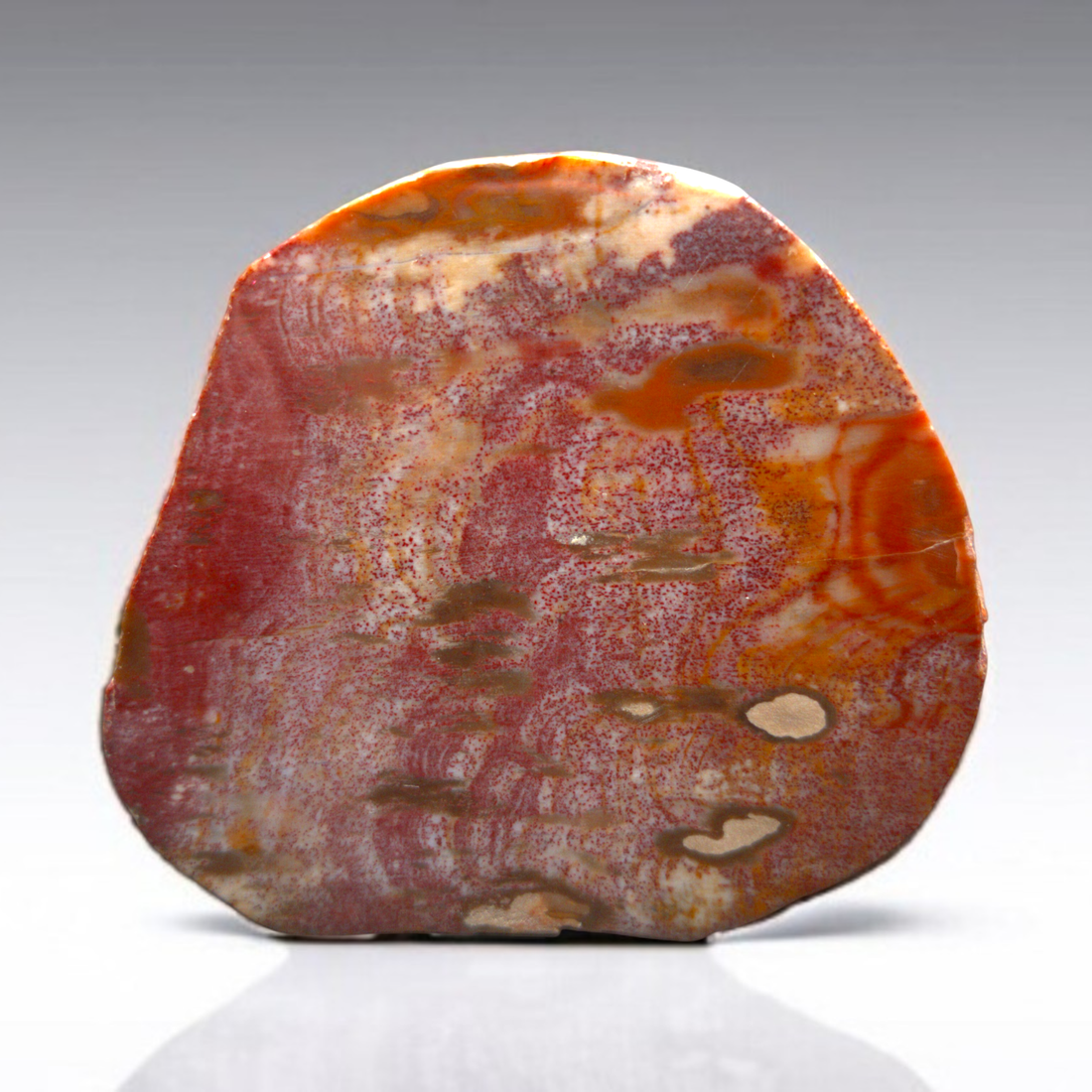
Quartz (chalcedony) · The warrior stone
Red Jasper is an opaque, brick-red variety of quartz (microcrystalline chalcedony), coloured by iron. In the crystal tradition it’s the “warrior stone,” reached for to feel grounded, strong and steady — a root-chakra stone for stamina, courage and calm nerve under pressure, popular with athletes and anyone facing a big push. It’s tough (6.5–7 Mohs), water-safe and low-maintenance, one of the easiest crystals to live with. Below — meaning, how to use it, how to keep it, and how to spot dyed imitations.
If crystals had a stone for holding steady when life speeds up, it would be red jasper. Deep, matte and earth-red, it feels solid in the hand — and the crystal tradition treats it that way, as a grounding anchor for body and nerve. It’s the stone people reach for before a challenge, during a stressful stretch, or when they simply feel scattered and want to come back down to earth. Humble, tough and inexpensive, it’s a true everyday workhorse.
This guide covers what red jasper actually is, where its “warrior” reputation comes from, how people use it, how to keep it, and how to tell natural jasper from dyed stand-ins.
What is red jasper?
Red Jasper is a form of jasper — an opaque, microcrystalline variety of quartz (chalcedony). Its deep brick-to-brown red comes from fine inclusions of iron oxide (hematite), and shades range from earthy terracotta to a rich blood red, sometimes patterned with darker veining. Being quartz, it’s hard and durable, sitting at 6.5 to 7 on the Mohs scale.
Jasper is found worldwide and has been used by humans for tens of thousands of years — for tools, seals and ornaments. Because it’s so common and takes a fine polish, red jasper is one of the most affordable and hard-wearing stones you can own.
Red Jasper meaning & history
Few stones have as long a human story. Red Jasper was worn by ancient warriors and hunters for courage and protection, carved into seals and amulets in Egypt and Mesopotamia, and prized across antiquity as a stone of the blood, the earth and endurance. Its very name reaches back through Latin and Greek to older words for “spotted stone.”
In the modern crystal tradition, red jasper became the “warrior stone” and the great grounding crystal: a stone for stamina, determination and steady nerves. Its deep, earthy red made it a natural symbol of vitality and staying power — strength that endures rather than flares.
Red Jasper healing properties
In the crystal tradition, red jasper is valued as a stone of grounding, strength and endurance.
People typically turn to red jasper for:
- Grounding. The classic root-chakra stone for feeling steady and secure.
- Strength & stamina. A “warrior stone” for endurance and physical drive.
- Courage. Said to steady the nerves before a challenge.
- Emotional stability. A calming anchor in stressful, chaotic stretches.
These are traditional and symbolic uses, not medical claims. Red jasper is sometimes sold as a remedy for circulation, energy or physical stamina — there is no scientific evidence that any crystal treats illness or boosts athletic performance. Enjoy red jasper as a grounding ritual and a beautiful object; it is not a treatment, and nothing here is intended to diagnose or cure any condition.
Red Jasper, the chakras & zodiac
Red Jasper is linked above all to the root chakra (Muladhara), at the base of the spine — the centre of safety, grounding and physical vitality. Its deep red is felt as steadying and strengthening, drawing scattered energy back down into the body. It’s a favourite base-of-the-body stone for anyone who feels anxious, ungrounded or “in their head.”
By zodiac it’s most often associated with Aries and Scorpio, whose drive and intensity it’s said to steady. It has no birthstone month, but it’s a solid, encouraging gift for anyone facing a big effort or a stressful season.
How to use red jasper
Most uses revolve around grounding, endurance and steady nerve.
- Carry a tumbled stone. A pocket anchor for anxious or scattered days.
- Hold it before a challenge. A grounding pause before a workout, exam or big task.
- Keep it at your feet in meditation. To draw energy down and feel rooted.
- Wear it as jewellery. A red jasper bracelet keeps its steadying presence with you through busy days.
- Place it in your workspace or gym bag. A reminder of stamina and follow-through.
- Grid it at home. A grounding stone for a calm, stable space.
How to cleanse & charge red jasper
Red jasper is quartz — tough and easy to care for.
- Water. A cool rinse under running water is perfectly safe.
- Smoke. Sage, palo santo or incense.
- Earth. Fittingly, burying it in soil overnight suits this grounding stone.
- Selenite or quartz. Rest it on a plate or cluster overnight.
- Sound & moonlight. Both work well for beads and small pieces.
Red jasper is one of the low-maintenance stones: it tolerates water and won’t fade in normal light. Avoid only harsh chemicals and hard knocks. Because it’s a grounding stone, a night in the earth or on a windowsill is a lovely recharge. Cleanse it after especially draining or stressful stretches.
Types & colours
“Jasper” covers a huge family; red jasper has a few close cousins:
- Red jasper. The classic solid brick-to-blood red.
- Brecciated jasper. Red jasper broken and re-cemented, veined with grey hematite.
- Poppy jasper. Red jasper with orbicular “poppy” flower-like patterns.
- Red-and-green (bloodstone-like) mixes. Sometimes sold alongside red jasper.
Is red jasper rare or valuable?
Red Jasper is very affordable and abundant — tumbles, beads, palm stones and towers all cost little, which is part of its everyday appeal. Value rises modestly for fine even colour, attractive patterning (poppy or brecciated) and larger carvings, but this is not a stone people buy as an investment. For daily use, it’s about as budget-friendly and hard-wearing as crystals get.
Quality comes down to the richness and evenness of the red, an appealing pattern and a good polish. The main thing to check is that a cheap “red” stone hasn’t simply been dyed (see below).
How to tell real red jasper from fake
Real jasper is rarely faked outright, but pale or grey stone is sometimes dyed to a brighter red, and dyed howlite or magnesite can stand in for it.
- Natural, earthy colour. Real red jasper is a deep, slightly muted brick red; a neon, candy-red uniform colour suggests dye.
- Colour in the cracks. Dye tends to pool darker in surface fissures — inspect closely.
- Hardness. Jasper is quartz (6.5–7) and scratches glass; softer dyed stand-ins (howlite is ~3.5) do not.
- Even, stony body. Real jasper is opaque and stony throughout, with no glassy bubbles.
- Wipe test. A quick wipe with acetone on a hidden spot can lift some surface dyes (test gently).
Genuine, ethically sourced red jasper
If you’d like a piece of your own, Minerals Kingdom offers authenticated natural red jasper — tumbles, palm stones, bracelets and towers.