Carnelian
The sunset stone — warm orange courage for the days you need to begin.
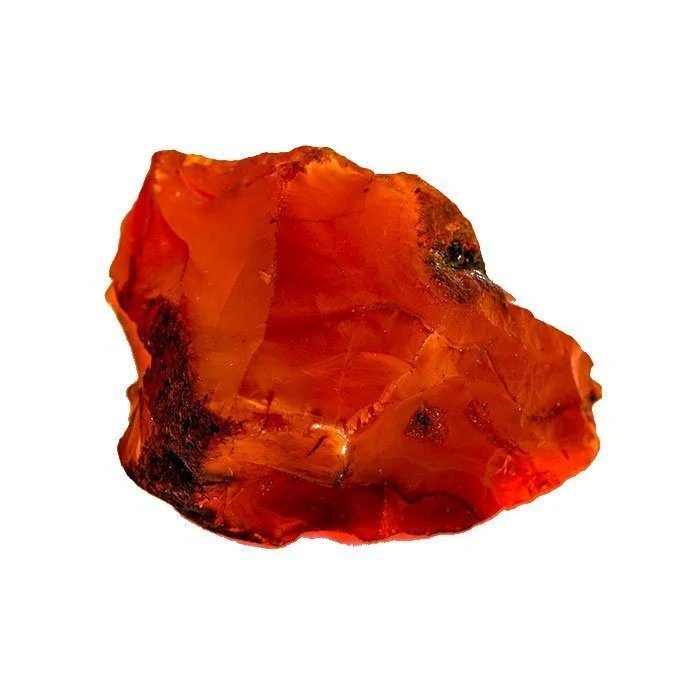
Cornaline · Chalcedony family
Carnelian is the warm orange-to-red variety of chalcedony — a form of quartz — and the crystal tradition’s great stone of courage, motivation and creative drive. Tied to the sacral chakra, it’s the piece people reach for to stop procrastinating and start. It’s hard, water-safe and affordable. Below — what it is, where its fiery meaning comes from, how to use and wear it, how to keep it, and how to tell natural carnelian from dyed agate.
If amethyst is the stone you reach for to slow down, carnelian is the one you reach for to get going. Its warm, glowing orange — somewhere between a ripe apricot and a low sun — has made it a symbol of vitality and nerve for thousands of years. It’s the crystal people keep on the desk when a project has stalled, or wear on a wrist before something daunting: a stone of action, confidence and creative fire.
This guide covers everything worth knowing: what carnelian actually is, where its fiery reputation comes from, the ways people use and wear it, how to keep its colour, the close cousins it’s confused with, and — because it matters here — how to tell a natural stone from a dyed agate. As always, we’ll keep the lore and the facts clearly labelled.
What is carnelian?
Carnelian is a reddish-orange variety of chalcedony, which is itself a form of quartz — silicon dioxide (SiO₂) — but one made of crystals so fine they can’t be seen with the naked eye. Where amethyst and clear quartz grow as big, glassy points, chalcedony is dense, waxy and translucent, with no visible crystal faces. Carnelian’s warm colour comes from tiny amounts of iron oxide woven through the stone; the more iron, the deeper the red.
On the Mohs scale it rates around 6.5 to 7 — hard, tough and durable, which is exactly why the ancient world prized it for seals and signet rings, and why it stands up so well to everyday jewellery. It’s also water-safe, a useful thing to know when it comes to cleaning it.
Carnelian shades imperceptibly into its browner sibling, sard: the line between them is loose, and many stones are really sard-carnelian. It’s also closely related to the orange-and-white banded stone called carnelian agate. This family resemblance matters when you go shopping, because a great deal of inexpensive “carnelian” on the market is actually pale agate that has been dyed and heat-treated to a vivid orange — more on telling them apart below.
Carnelian meaning & history
The name itself is about colour and warmth. Carnelian most likely comes from the Latin carneus — “flesh-coloured” — though it’s often linked to cornum, the cornel cherry, whose translucent red fruit the stone resembles. By either route, the word points to the same thing: a living, blood-warm orange.
Few stones have been worn as long. In Ancient Egypt, carnelian was a stone of life and vitality, set into jewellery and amulets and laid with the dead to energise the journey beyond; it was associated with the goddess Isis. The Greeks and Romans carved it into signet rings and seals — and there was a practical reason as well as a beautiful one: hot sealing wax doesn’t stick to carnelian, so it makes a perfect stamp. Roman soldiers are said to have worn it for courage in battle, and across many cultures it became a talisman against fear and hesitation.
That long history settled into a clear meaning. Carnelian is read as the stone of courage, action and warm vitality — the bold, generous, get-up-and-go energy of the setting sun. Where rose quartz softens the heart and amethyst quiets the mind, carnelian lights a fire under you.
Carnelian healing properties
In the crystal tradition, carnelian is above all a stone of motivation and confidence. It’s the one most often suggested for shaking off procrastination, finding the nerve to act, and rekindling enthusiasm when energy and interest have drained away. Because it’s linked to the sacral chakra — the centre of creativity and drive — it’s also a favourite of artists, performers and anyone trying to get a stalled project moving again.
People most often turn to carnelian for:
- Courage & confidence. A warm talisman for nerve before a challenge or a bold decision.
- Motivation & drive. The classic antidote to procrastination and “I’ll do it tomorrow.”
- Creativity. Long called the artist’s stone, said to get ideas and energy flowing.
- Vitality & passion. Associated with warmth, enthusiasm and zest for life.
These are traditional and symbolic uses, not medical claims. Carnelian is a lovely, energising focus for building momentum and confidence — it is not a treatment, and nothing here is intended to diagnose or cure any condition. If you’re struggling with low energy, low mood or motivation, please also speak with a qualified professional.
Carnelian, the chakras & zodiac
In chakra work, carnelian is most strongly tied to the sacral chakra (Svadhisthana), the energy centre below the navel associated with creativity, drive, pleasure and emotional flow — a natural home for a warm orange stone. Its grounding, energising quality also connects it to the root chakra — the same fiery, energising territory as stones like vanadinite — which is part of why it’s described as a stone that makes you feel both fired-up and steady enough to actually act.
Carnelian isn’t a traditional birthstone, but in astrology it’s most often associated with Virgo — said to lend warmth and spontaneity to an analytical sign — as well as fiery Leo, and sometimes Taurus and Cancer. As a warm, vital stone it’s connected to the element of Fire.
How to use carnelian
Because carnelian is a “doing” stone, most of the ways people use it are about keeping that bold, warm energy close while they act.
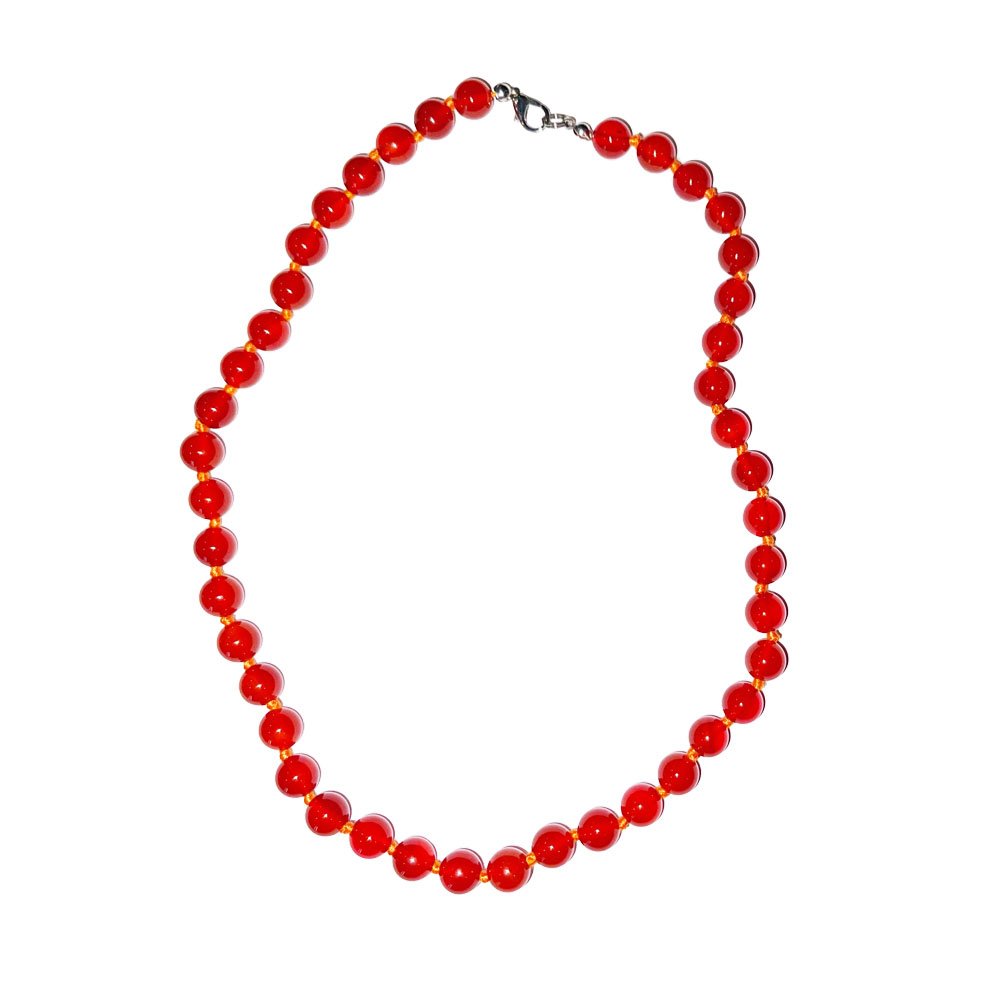
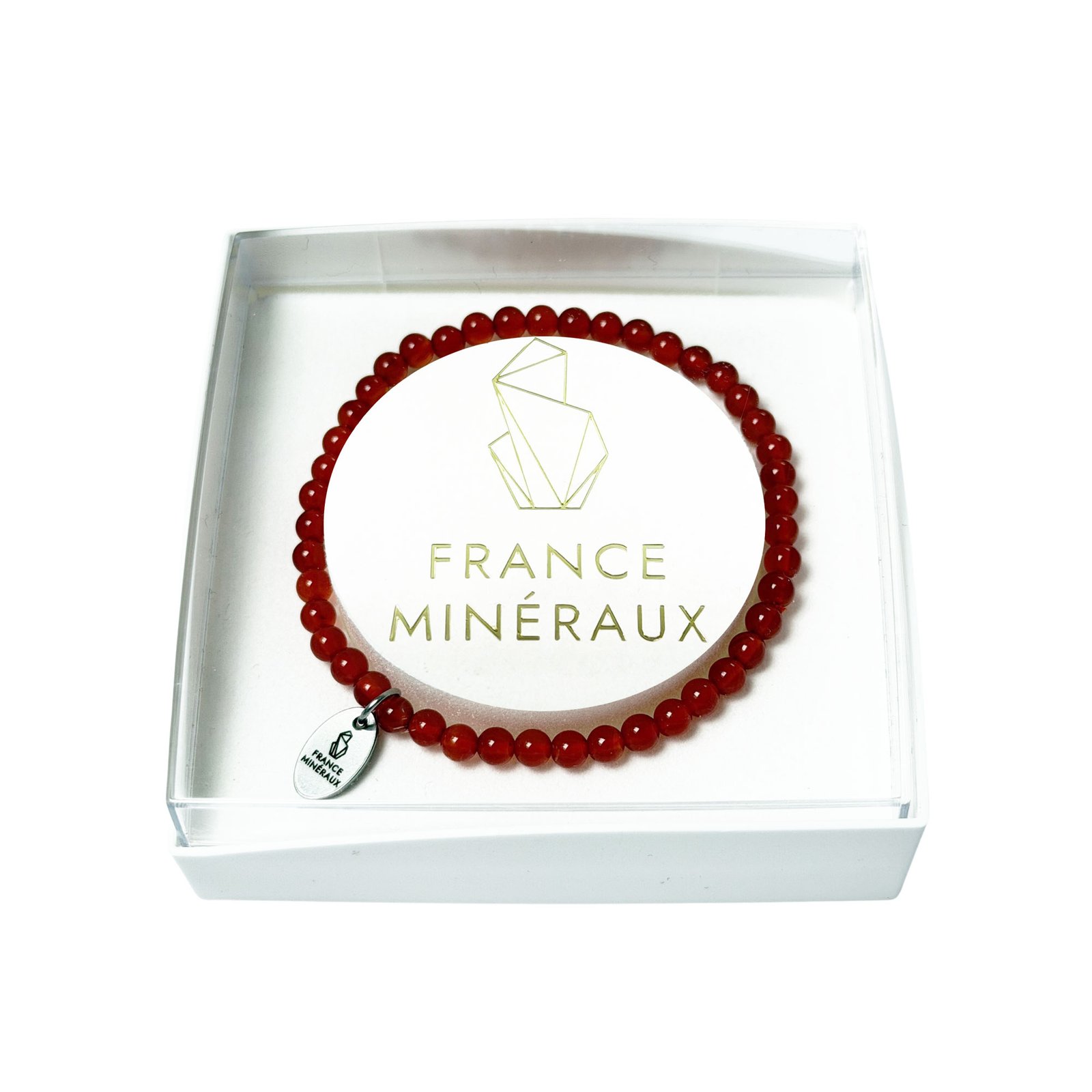
- Wear it as a bracelet. The most popular way — a beaded carnelian bracelet keeps the stone on your pulse through a demanding day.
- Keep one on your desk. A tumbled stone or carving where you work, as a focus for motivation and follow-through.
- Carry a pocket stone. A smooth piece is a tactile reminder to be bold before a meeting, audition or interview.
- Use it in creative work. Many artists and writers keep carnelian on the desk or studio table to “keep the ideas moving.”
- Place it on the sacral chakra. Rest a stone on the lower abdomen during meditation to focus on creativity and drive.
How to cleanse & charge carnelian
Most people like to “reset” a stone now and then — whether you think of it energetically or simply as keeping it clean. The good news is that carnelian is one of the easier crystals to look after: as a hard quartz it’s water-safe, so a brief rinse won’t hurt it. Its one mild sensitivity is light — like other iron-coloured quartz, very long, harsh sun exposure can slowly dull the orange, so it isn’t a stone to bake on a sunny windowsill for months.
Good ways to cleanse carnelian:
- Cool running water. A brief rinse is perfectly safe — it’s a hard quartz. Skip salt water and harsh chemicals.
- Moonlight. A night under the full moon is a gentle, colour-safe method.
- Smoke. Pass it through incense, palo santo or sage smoke.
- Selenite. Rest it on a selenite plate overnight to clear and recharge it.
- Brief sunlight. As a warm, solar stone carnelian enjoys a little gentle morning sun — just don’t leave it baking for days.
To charge it, a short spell of morning sun or a night of moonlight both suit its warm character. Cleanse it whenever it feels right — many people do so monthly, or whenever they’ve leaned on it through an intense, demanding stretch.
Types & colours of carnelian
“Carnelian” covers a warm range from pale apricot to deep brick-red, and it sits within a small family of related chalcedonies worth knowing by name:
- Carnelian. The classic translucent orange to orange-red stone, coloured by iron.
- Sard. A browner, darker sibling; the boundary with carnelian is loose, and many stones are really “sard-carnelian.”
- Carnelian agate. Carnelian banded with other chalcedony — orange with stripes or zones of white or grey.
- Sardonyx. Sard layered with white onyx in straight bands, long carved into cameos.
- Dyed agate. Pale, plentiful agate dyed and heated to a vivid, even orange and sold as carnelian — common, and not always disclosed.
Most natural carnelian today comes from India — especially the Deccan Traps near Gujarat, where stones are traditionally sun-ripened to deepen their colour — along with Brazil, Uruguay, Madagascar and parts of the United States.
Is carnelian rare or valuable?
Carnelian is abundant and very affordable — a tumbled stone or a beaded bracelet costs very little, which is part of why it’s such a friendly, everyday crystal. It sits firmly among the semi-precious stones rather than the fine gems.
Where value does vary, it’s driven by colour and naturalness. The most prized carnelian is a rich, even, glowing orange-red with good translucency and no obvious banding — and, increasingly, a stone that is naturally coloured rather than dyed. Because so much cheap material is dyed agate, genuinely natural, well-coloured carnelian is quietly sought after. For most buyers, though, the honest advice is the same as ever: choose the piece whose warmth you genuinely love, and pay a natural-stone price only for a natural stone.
How to tell real carnelian from dyed agate
The most common “fake” carnelian isn’t really a fake at all — it’s dyed and heat-treated agate, which is still a natural stone, just colour-enhanced and often sold without that being mentioned. A few honest checks help you read what you’re holding:
- Hold it up to the light. Natural carnelian shows a soft, cloudy, uneven distribution of colour. Dyed agate often reveals sharp stripes or bands of colour where the dye followed the agate’s layers.
- Look for colour that’s too perfect. A flat, intensely uniform orange is a warning sign; natural colour varies across the stone.
- Feel the temperature. Natural chalcedony feels cool and warms slowly in the hand; glass imitations warm quickly.
- Check the hardness (gently). At around 7 on the Mohs scale, carnelian will scratch glass, not the other way around.
None of this makes dyed agate worthless — it can be perfectly pretty. It simply means you should know what you’re buying, and pay a natural-carnelian price only for natural carnelian. If provenance matters to you, buy from a seller who states clearly whether a stone is natural, heat-treated or dyed.
Genuine, ethically sourced carnelian
If you’d like a piece of your own, Minerals Kingdom offers authenticated natural carnelian — tumbled stones, beads, bracelets and jewellery, with colour and any treatment stated honestly.