
Calcite
The most common carbonate on Earth — the mineral of limestone, marble and cave stalactites, the clear “Iceland spar” that splits a line in two, and in the crystal world a gentle, colour-by-colour stone of cleansing, clarity and new energy.
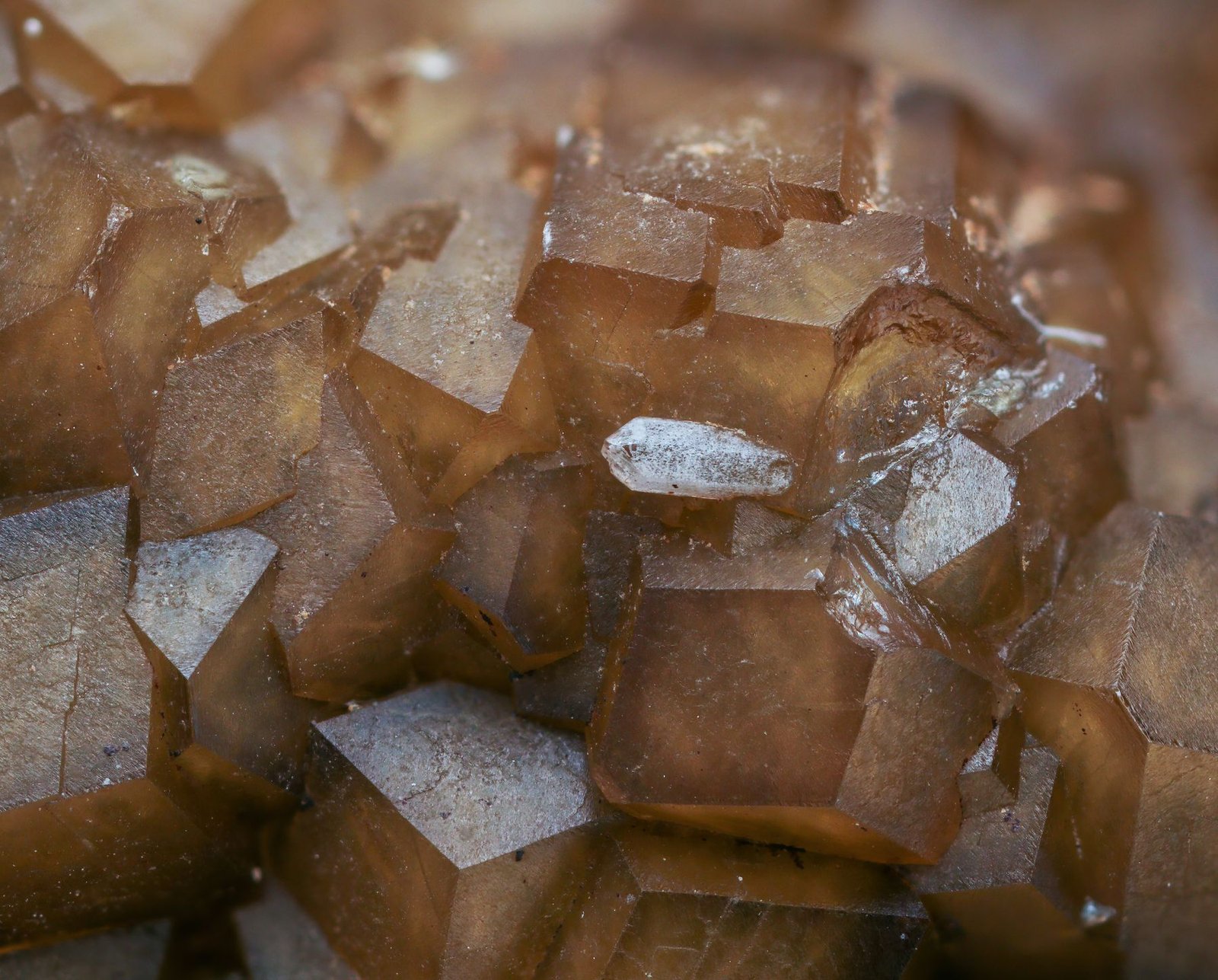
Calcium carbonate · Cleansing & clarity
In short Calcite is calcium carbonate, CaCO3, crystallising in the trigonal system — the most common and stable carbonate mineral on the planet and the main ingredient of limestone, chalk, marble and travertine. It is the reference mineral for 3 on the Mohs scale, breaks along three perfect rhombohedral cleavages, fizzes in dilute acid, and in its clear form, Iceland spar, shows a spectacular double refraction. It comes in more colours and crystal shapes than almost any other mineral. The crystal tradition reads it as a stone of cleansing, clarity, motivation and gentle renewal, with each colour given its own focus — symbolic uses, this guide explains, rather than medical ones.
Calcite is everywhere, and that is precisely what makes it remarkable. The white cliffs of Dover, the marble of Greek temples, the stalactites dripping from a cave ceiling and the shells of countless ancient sea creatures are all, at heart, the same mineral. Yet the very same substance also grows as glowing orange chunks, sea-green masses, honey-gold rhombs and water-clear crystals that make a single line of text appear twice.
This guide covers what calcite actually is, why a common building stone became a key to the science of light, what the crystal tradition says about each of its many colours, and how to look after — and correctly identify — a stone that is softer and more sensitive than it looks.
What is calcite?
Calcite is calcium carbonate, CaCO3, crystallising in the trigonal system. It is the most stable form of that chemistry at the Earth’s surface; its polymorph aragonite has exactly the same formula but a different, orthorhombic structure, and over geological time tends to convert into calcite. Calcite forms in almost every geological setting — precipitated from seawater and by living organisms, deposited by groundwater in caves and veins, recrystallised under heat and pressure into marble, and grown in hydrothermal cavities as fine crystals. How the same ingredients can build such different results is explored in our guide to how crystals form.
A few physical properties identify it reliably. Calcite is the reference mineral for 3 on the Mohs scale: a copper coin or steel knife scratches it, a fingernail does not. It has three directions of perfect cleavage, so it breaks into neat slanted boxes called rhombohedra. Its density is low, around 2.71. It effervesces in cold dilute hydrochloric acid — the classic field test that distinguishes it from look-alikes such as quartz and fluorite. And few minerals rival its range of crystal habits: mineralogical databases list hundreds of distinct forms, from pointed “dog-tooth” scalenohedrons to flat “nail-head” crystals, prisms and rhombs. That variety makes it a favourite teaching example in our overview of the seven crystal systems.
Calcite meaning & history
The name comes from the Latin calx, “lime,” the burnt-limestone powder used since antiquity for mortar, plaster and whitewash. Humanity has lived with calcite for as long as it has built: the Egyptian pyramids were faced with limestone, Roman concrete relied on lime, and the marble of Carrara and Paros gave sculptors their most famous medium. Banded calcite from cave deposits was carved into vessels in ancient Egypt under the name “alabaster,” a term that today more often refers to fine-grained gypsum.
The modern crystal world reads calcite through its sheer abundance and its many colours. Because it is so common and so varied, it is treated as an approachable, everyday stone of cleansing and renewal — a crystal said to “clear out the old” and energise the new, with the colour of each piece pointing to where that fresh energy is directed. It is often recommended to beginners for exactly that reason: affordable, gentle and easy to find.
Iceland spar & double vision
The most scientifically celebrated calcite is Iceland spar, an optically pure, colourless variety once mined at Helgustaðir in eastern Iceland. Place a clear rhomb of it on a printed page and every letter appears twice. This is double refraction (birefringence): light entering the crystal splits into two rays that travel at different speeds and in different directions. Calcite’s birefringence is unusually strong, which is why the effect is visible to the naked eye.
The Danish scientist Rasmus Bartholin described the phenomenon in 1669, and Iceland spar went on to play a real role in the study of polarised light; for decades, calcite prisms were standard components in polarising microscopes. Some researchers have also proposed that medieval Norse sailors may have used a calcite “sunstone” to locate the sun through cloud, and a calcite crystal recovered from a 16th-century shipwreck off Alderney has been studied in that light. It remains a hypothesis rather than an established fact, but it is a fine example of how an ordinary mineral can carry an extraordinary story.
Calcite healing properties
In the crystal tradition, calcite is valued as a stone of cleansing, clarity and renewed energy.
People typically turn to calcite for:
- Energetic cleansing. Its signature association — read as clearing stagnant energy from a space or a person and making room for something new.
- Clarity & learning. Clear and honey calcite especially are linked to focus, study and seeing a situation from a fresh angle.
- Motivation & momentum. Orange and honey varieties are traditionally carried to encourage drive, creativity and follow-through.
- Calm & emotional balance. Green, blue and pink calcite are associated with a soothed heart, gentle communication and kindness to oneself.
These are traditional and symbolic uses, not medical claims. There is no scientific evidence that any crystal treats, cures or prevents any illness, and calcite has no proven effect on energy, mood, learning or health. Nothing here is intended to diagnose, treat or prevent any condition, and no crystal is a substitute for medical care; concerns about your physical or mental health belong with a doctor or other qualified professional.
Calcite colours & their meanings
Pure calcite is colourless; traces of other elements and tiny inclusions create its many hues. The crystal tradition assigns each colour its own emphasis:
- Clear (optical) calcite. Iceland spar — associated with clarity, perspective and amplifying intention, much like clear quartz.
- Orange calcite. A glowing, cheerful stone, usually from Mexico, linked to creativity, confidence and playful energy — a softer companion to carnelian.
- Honey calcite. Golden and translucent, read as a stone of steady motivation and confident decision-making.
- Green calcite. A pale, often milky green, associated with renewal, growth and a calm heart.
- Blue calcite. A soft sky-blue, linked to relaxation and gentle, honest communication.
- Pink calcite. Manganese-bearing “mangano calcite” and the vivid magenta cobaltoan calcite, both traditionally read as stones of compassion and self-love.
Calcite, the chakras & zodiac
Because it occurs in almost every colour, calcite is one of the few stones assigned to every chakra, following the usual colour logic: orange calcite to the sacral, honey and yellow to the solar plexus, green and pink to the heart, blue to the throat, and clear or white calcite to the crown. This makes it a popular, affordable choice for building a full chakra set. For the wider framework, see our guide to the seven chakras and their crystals.
By zodiac, calcite is most often linked to Cancer, with individual colours sometimes given to other signs — orange calcite to Leo, for example.
How to use calcite
- Keep a raw chunk or tumbled stone on your desk. Orange and honey calcite are popular study and work companions.
- Place a piece in a room you want to “freshen.” Calcite’s cleansing association makes it a common choice for a new home or a cluttered space.
- Hold it in meditation. Choose the colour that matches the chakra or intention you are working with.
- Use a clear rhomb as a reminder of perspective. Watching a line double through Iceland spar is a simple, mindful exercise in seeing differently.
- Handle jewellery with care. At Mohs 3 with perfect cleavage, calcite scratches and chips easily, so pendants suit it far better than rings or bracelets.
How to cleanse & charge calcite
- Keep water brief. Calcite is very slightly soluble and soft; a quick rinse and immediate drying is fine, but never soak it.
- Never use salt, vinegar or lemon juice. Salt scratches the surface, and any acid attacks calcium carbonate — it will literally fizz and etch.
- Smoke, sound, moonlight or selenite are the safest, dry methods for a delicate stone.
- Limit strong sunlight for coloured pieces; a gentle moonlight charge is a sensible default.
- Avoid ultrasonic cleaners, steam and sudden temperature changes, which can open the cleavage planes and split the crystal.
Our general guide to cleansing and charging crystals covers each method in more detail, including which stones tolerate water and which do not.
Types & origins
- Iceland spar. Water-clear optical calcite, historically from Iceland; today also from Mexico, China and elsewhere.
- Dog-tooth and nail-head calcite. Collector crystal habits — pointed scalenohedrons and flat-topped crystals — often found with fluorite, galena and other ore minerals.
- Mexican colour calcite. The massive orange, honey, green and blue material sold as tumbled stones and polished pieces.
- Cobaltoan calcite. Brilliant pink-magenta, coloured by cobalt, from the Democratic Republic of Congo and Morocco.
- “Mexican onyx” and travertine. Banded cave and spring deposits carved into bowls, eggs and decorative objects.
Calcite is found worldwide, with notable material from Mexico, Iceland, the United States, China, Brazil, Morocco and the DR Congo. It is an inexpensive and abundant stone: value comes from colour, clarity and the quality of crystal form, with fine, sharp, well-coloured crystals and optically clean Iceland spar commanding collector prices while tumbled colour calcite remains very affordable.
Real vs fake
- Trade names. “Mexican onyx” and “onyx marble” are banded calcite, not true onyx, which is a chalcedony like black onyx. Neither is fake, but the name should be understood.
- Dyed calcite. Pale or white calcite is sometimes dyed vivid colours; dye concentrates along cracks and cleavage lines, and unnaturally bright, uniform colour is a warning sign.
- Calcite sold as other stones. Dyed or white calcite occasionally passes as jade, turquoise or other pricier gems; its low hardness and acid reaction give it away.
- Glass and resin. Moulded imitations lack calcite’s rhombohedral cleavage, may contain bubbles and do not show double refraction.
- The simple tests. Genuine calcite scratches with a steel knife, splits into rhombs, and clear pieces double an image placed beneath them.
The workable rule: expect soft, cleavable stone at a modest price, and be wary of neon colours. For the wider method, see our guide to spotting dyed and imitation stones.
Genuine, correctly identified calcite
If you’d like a piece of your own, Minerals Kingdom offers authenticated natural calcite — from colour calcite to crystal specimens — correctly labelled and honestly described, with any dyeing disclosed.
Calcite pairs well with
Frequently asked questions
What is calcite good for?
Traditionally, calcite is used for energetic cleansing, clarity, motivation and emotional balance, with each colour given its own focus. These are symbolic, traditional uses, not proven medical effects. No crystal treats illness, and calcite is not a substitute for medical care.
Can calcite go in water?
Only briefly. Calcite is soft and very slightly soluble, so a quick rinse followed by thorough drying is fine, but avoid soaking, salt water and anything acidic such as vinegar or lemon juice. Dry methods like smoke, sound, moonlight or selenite are safest.
How can I tell if calcite is real?
Genuine calcite is soft (Mohs 3) and scratches with a steel knife, breaks into slanted rhombic blocks, and fizzes in dilute acid. Clear pieces show double refraction. Very bright, uniform colours may indicate dye.
What is the difference between calcite and aragonite?
Both are calcium carbonate, CaCO3, but calcite is trigonal and aragonite orthorhombic. That makes them polymorphs. Calcite is the more stable and common of the two, and aragonite gradually converts to calcite over geological time.
What chakra is calcite?
It depends on colour. Orange calcite is linked to the sacral chakra, honey and yellow to the solar plexus, green and pink to the heart, blue to the throat, and clear calcite to the crown.
What crystals pair well with calcite?
Aragonite, its carbonate twin, suits it naturally; clear quartz shares its association with clarity; and citrine is a common partner for honey and orange calcite in motivation-themed groupings.
Image credits · Hero and buy-box: calcite crystals, macro — photo Gleb Korovko / Pexels (Pexels License).
Sources · Mindat.org, “Calcite” mineral data; Handbook of Mineralogy (Mineralogical Society of America), “Calcite”; Encyclopædia Britannica, “Calcite”; Le Floch et al. (2013), Proceedings of the Royal Society A, on the Alderney shipwreck calcite.