
How to Cleanse & Charge Crystals
Every method, side by side — and, just as important, which stones you must never soak, salt or leave in the sun.
Cleansing & charging · Ritual
“Cleansing” a crystal is a symbolic reset; “charging” is setting a fresh intention. The gentlest all-purpose methods suit any collection: moonlight, smoke (sage or palo santo), a selenite plate, or the sound of a singing bowl. Water and salt work for hard, non-porous stones but will damage soft or soluble ones — never soak selenite, malachite or other soft, water-sensitive crystals. Keep coloured quartzes such as amethyst, citrine and rose quartz out of long, strong sun, which fades them. Most people cleanse about once a month, or after heavy use.
Ask ten crystal lovers how they cleanse their stones and you’ll get ten answers — moonlight, smoke, running water, a bed of salt. The good news is that there’s no single correct method, only methods that suit different stones. The essential thing is to match the technique to the crystal, because a few popular approaches will quietly ruin softer or water-soluble minerals. This guide lays out every common method, what it’s good for, and where it can do harm.
First, a clear-eyed word about what “cleansing” actually is.
What cleansing and charging really mean
In the crystal tradition, cleansing is described as clearing a stone of stale or unwanted energy so it feels “fresh” again, and charging as filling it with intention for the purpose you’d like it to support. It’s best understood as a mindful ritual — a way of pausing, resetting your own focus, and renewing your relationship with the object. Treat it in that spirit and it becomes a calming practice; there’s no need to claim it does anything measurable to the stone itself.
Water
A quick rinse under cool running water is a traditional cleanse — but only for hard, non-porous stones such as clear quartz, amethyst and agate. Water is genuinely risky for others: soft and fibrous selenite can dissolve and disintegrate, malachite is soft and can release copper, and porous or veined stones like lapis lazuli and turquoise can be damaged. As a rule of thumb, stones below about 5 on the Mohs hardness scale, and anything ending in “-ite” that looks fibrous or chalky, should be kept dry. When in doubt, don’t soak.
Smoke (smudging)
Passing a crystal through the smoke of sage, palo santo, cedar or incense is one of the safest, most universal methods — it touches nothing, so it can’t scratch, fade or dissolve anything. It suits every stone in a mixed set, which is why it’s a favourite for cleansing several crystals at once. Waft the smoke around the stone for a few moments with your intention in mind.
Moonlight
Leaving crystals out overnight under the moon — especially a full moon — is gentle, popular and safe for essentially everything, including the light-sensitive stones that sunlight would fade. A windowsill is fine. This is the method to reach for when you’re not sure what a stone can tolerate.
Sunlight
Sunlight is often used for “charging,” and brief exposure is fine for many stones. But treat it with caution: strong, prolonged sun fades the colour of many crystals, including amethyst, citrine, rose quartz and fluorite. Keep sun sessions short, and prefer moonlight for anything coloured and translucent.
Selenite plates and sound
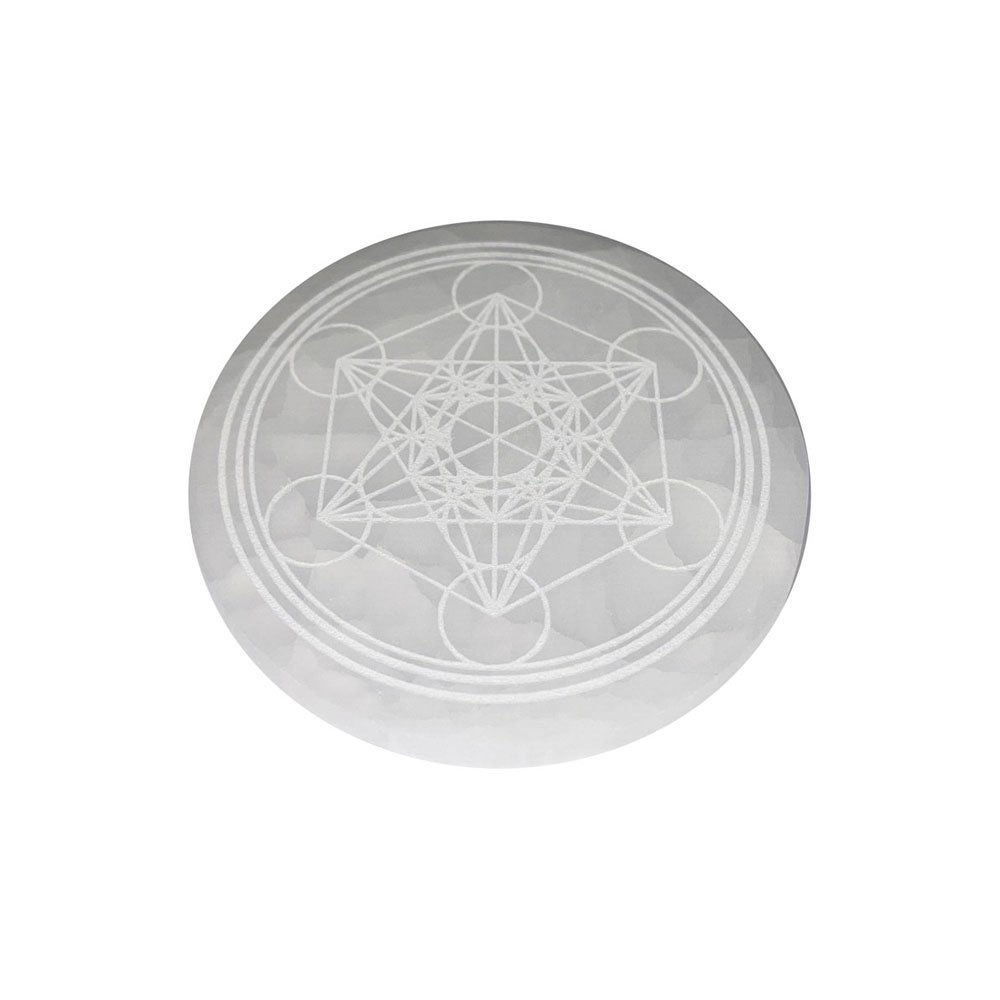
Two elegant, contact-safe methods. A selenite charging plate (pictured above) is used to rest other stones on for a few hours; ironically, selenite itself must stay dry. Sound — a singing bowl, tuning fork or bell — is said to cleanse through vibration and can reset a whole shelf of crystals at once without touching them. Both are ideal for delicate or mixed collections.
Salt and earth
Burying a stone in dry salt, or resting a grounding stone briefly on the earth, are traditional methods — but salt is abrasive and drying and can pit or damage softer and porous stones, so reserve it for hardy pieces like clear quartz. Dry salt is safer than saltwater. Resting a robust grounding stone such as black tourmaline on soil is low-risk and fits its earthy character.
Cleansing and charging are symbolic, spiritual practices, not medical or scientific procedures. They can be a lovely, calming ritual, but crystals are not a treatment and nothing here is intended to diagnose, treat or cure any condition. If you’re struggling with your health, please speak with a qualified professional. The care advice above is simply about protecting the physical stone from damage.
Charging and setting an intention
Once a stone is cleansed, “charging” it is really about you: hold it, take a slow breath, and quietly name the quality you’d like it to support — calm, focus, courage. Some people pair this with moonlight, sunlight or a selenite plate; others simply do it in a moment of stillness. To give a stone one specific, lasting intention rather than a general top-up, see our guide to programming a crystal. The ritual matters more than the method, and it works well alongside a broader practice such as the one in our guide to the seven chakras and their crystals.
How often should you cleanse?
There’s no rule, but a sensible rhythm is about once a month, plus a cleanse when a crystal is brand new, after it’s been handled by many people, or following a period of intensive use. Trust your own sense of when a stone feels like it needs a reset — the practice is for your benefit as much as the stone’s.
Match the method to the mineral, lean on the gentle options for anything delicate, and cleansing becomes a safe, grounding habit rather than a risk to your collection.
Selenite plates & natural crystals
Minerals Kingdom offers authenticated selenite charging plates, wands and natural stones for building and caring for your collection.