
Selenite
Moonlight made solid — the clearing stone that cleanses every other crystal.
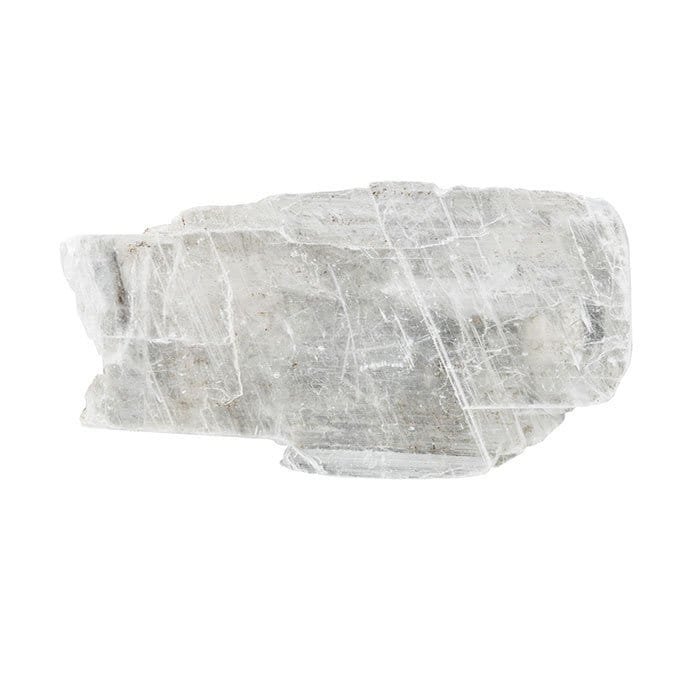
Gypsum · Crown chakra
Selenite is a luminous, white-to-translucent variety of gypsum, named after the Greek moon goddess Selene. In the tradition it’s the stone of clarity, calm and clearing — famous as the crystal you use to cleanse and recharge all your other stones. It’s tied to the crown chakra. One thing matters more than anything else with selenite: it’s soft and water-soluble, so it must be kept dry. Below — what it is, where its meaning comes from, how to use a wand and charging plate, how to care for it, and how it differs from satin spar.
Selenite looks exactly like its name suggests: a piece of moonlight that someone managed to hold still. Its silky, white-to-glassy crystals seem to glow with a soft inner light, and that luminous quality has made it one of the most beloved stones in any collection. But selenite has a very practical claim to fame too — it’s the stone almost everyone reaches for to cleanse their other crystals, which makes it the quiet caretaker of the whole cabinet.
This guide covers everything worth knowing: what selenite actually is (and why it behaves so differently from quartz), where its moonlit name comes from, how people use wands and charging plates, the one care rule you must never break, the forms it takes, and how to tell it from its close cousin satin spar. As always, we’ll keep the lore and the facts clearly labelled.
What is selenite?
Here’s the first surprise: unlike amethyst, citrine and clear quartz, selenite isn’t quartz at all. It’s a crystalline form of gypsum — hydrated calcium sulfate (CaSO₄·2H₂O), the same mineral used to make plaster and drywall. That different chemistry changes everything about how you treat it. Where quartz is hard and tough, selenite is remarkably soft: just 2 on the Mohs scale, soft enough to scratch with a fingernail.
It’s also water-soluble. Gypsum slowly dissolves in water, so a selenite crystal left in a glass or a damp dish will cloud, etch and eventually fall apart. This single fact is the most important thing to know about the stone, and we’ll come back to it — but the short version is: keep selenite dry, always.
Selenite forms when mineral-rich water evaporates from ancient lakes and lagoons, leaving gypsum behind to crystallise — sometimes into truly colossal crystals, like the famous metres-long beams in Mexico’s Cave of the Crystals. Most of the polished “selenite” you’ll meet has a beautiful silky, fibrous shimmer; that pearly sheen is technically a closely related gypsum called satin spar, which we’ll untangle below.
Selenite meaning & history
The name is pure poetry. Selenite comes from Selene, the Greek goddess of the moon — a nod to the soft, lunar glow of the polished stone. That lunar association has shaped its meaning ever since: selenite is read as a stone of moonlight, clarity and quiet peace, gentle where so many crystals are bold.
Gypsum itself has been worked since antiquity — the transparent variety was once used as window panes (the Romans called clear gypsum lapis specularis) and carved into small ornaments. But in the modern crystal tradition selenite found a very particular niche: it became the great cleanser. Practitioners describe it as a high, fine, “liquid light” energy that clears stagnation and lifts the mood of a room — and, crucially, that recharges other crystals placed beside it.
That reputation as the stone that looks after the other stones is really what makes selenite indispensable. It’s less a specialist and more a housekeeper of energy: the calm, clear presence you keep on the shelf to keep everything else fresh.
Selenite healing properties
In the crystal tradition, selenite is above all a stone of clarity and clearing. It’s the one most often suggested for calming a busy mind, lifting the feel of a space, and — its signature role — cleansing and charging other crystals. Because its energy is described as so high and gentle, it’s also a favourite for meditation and for anyone who finds bolder stones a little much.
People typically turn to selenite for:
- Clearing & cleansing. The classic stone for resetting other crystals and clearing a room.
- Calm & peace. A soft, soothing presence said to quiet mental chatter.
- Clarity & focus. Associated with a clear head and clear decisions.
- Connection. Long linked to the higher chakras and a sense of spaciousness.
These are traditional and symbolic uses, not medical claims. Selenite is a lovely focus for a calm, clearing ritual — it is not a treatment, and nothing here is intended to diagnose or cure any condition. (And a practical safety note: don’t make a selenite “elixir” by soaking it in drinking water — it dissolves, and gypsum isn’t meant to be ingested.)
Selenite, the chakras & the cleanser
In chakra work, selenite is linked to the crown chakra (Sahasrara) at the top of the head, and often the third eye and the “soul star” just above the crown — the centres associated with clarity, awareness and connection. Its luminous, almost weightless quality is a natural fit for these higher, more reflective energies.
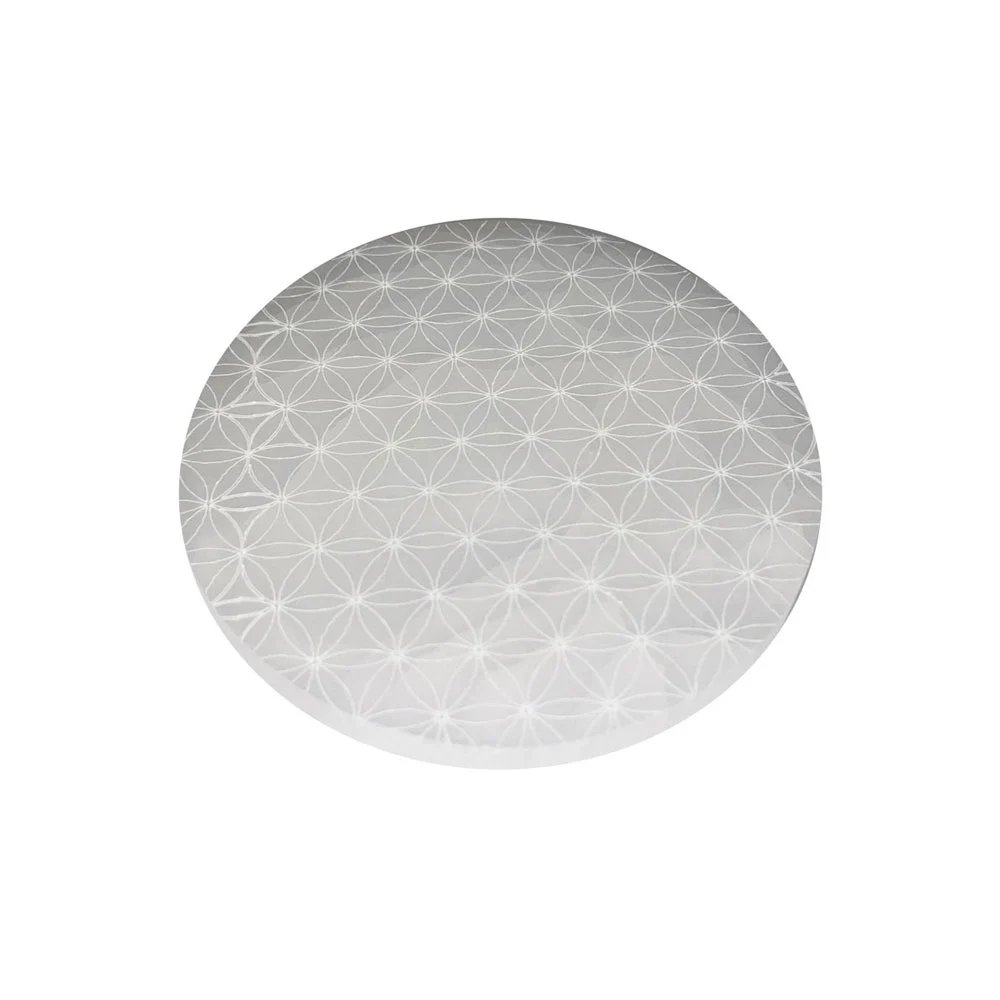
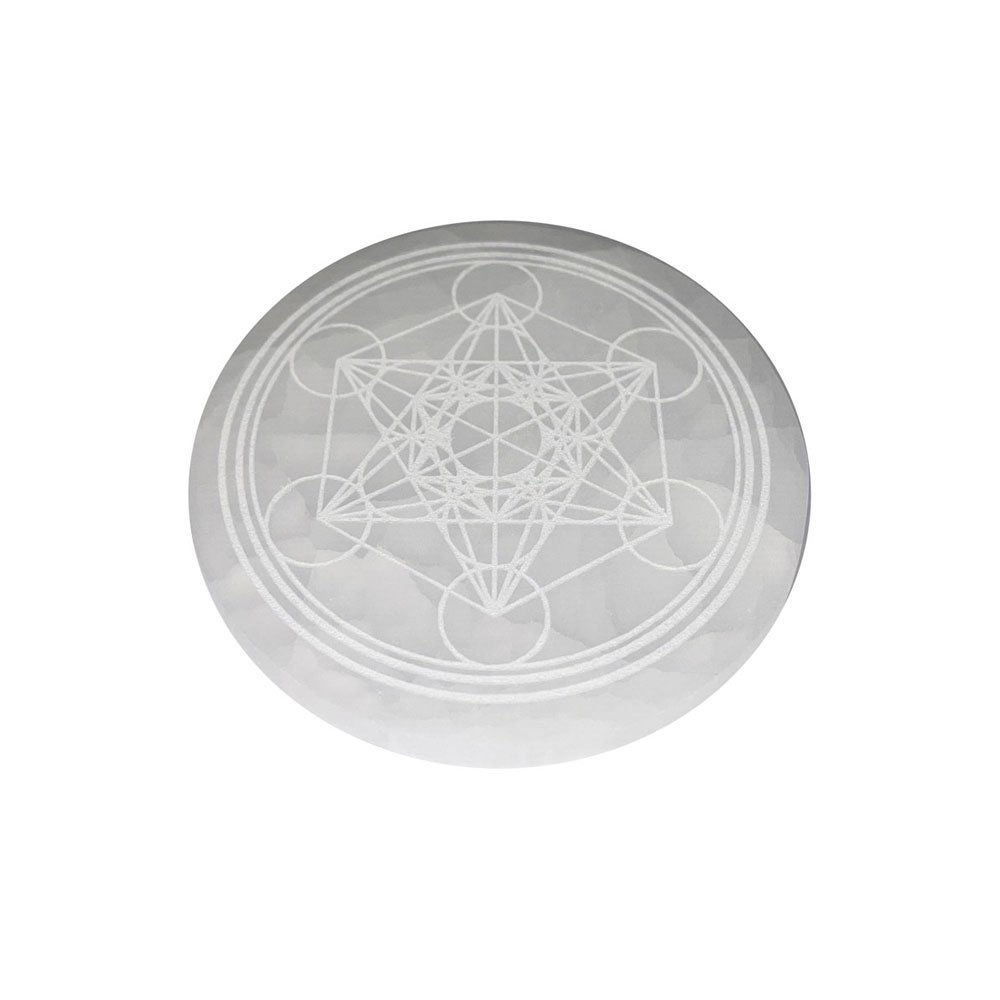
But selenite’s most famous job cuts across all the chakras: it’s the tradition’s go-to cleanser. A selenite plate, bowl or wand is used to clear and recharge other stones, and many people keep a piece simply to “tidy” the energy of a whole crystal collection. It’s the rare stone that’s valued as much for what it does for other crystals as for itself.
How to use selenite
Selenite is wonderfully versatile, and most of its uses revolve around clearing — both spaces and other stones. Just remember the golden rule: handle it gently and keep it dry.
- Charge other crystals. Lay tumbled stones or jewellery on a selenite plate overnight to cleanse and recharge them — its signature use.
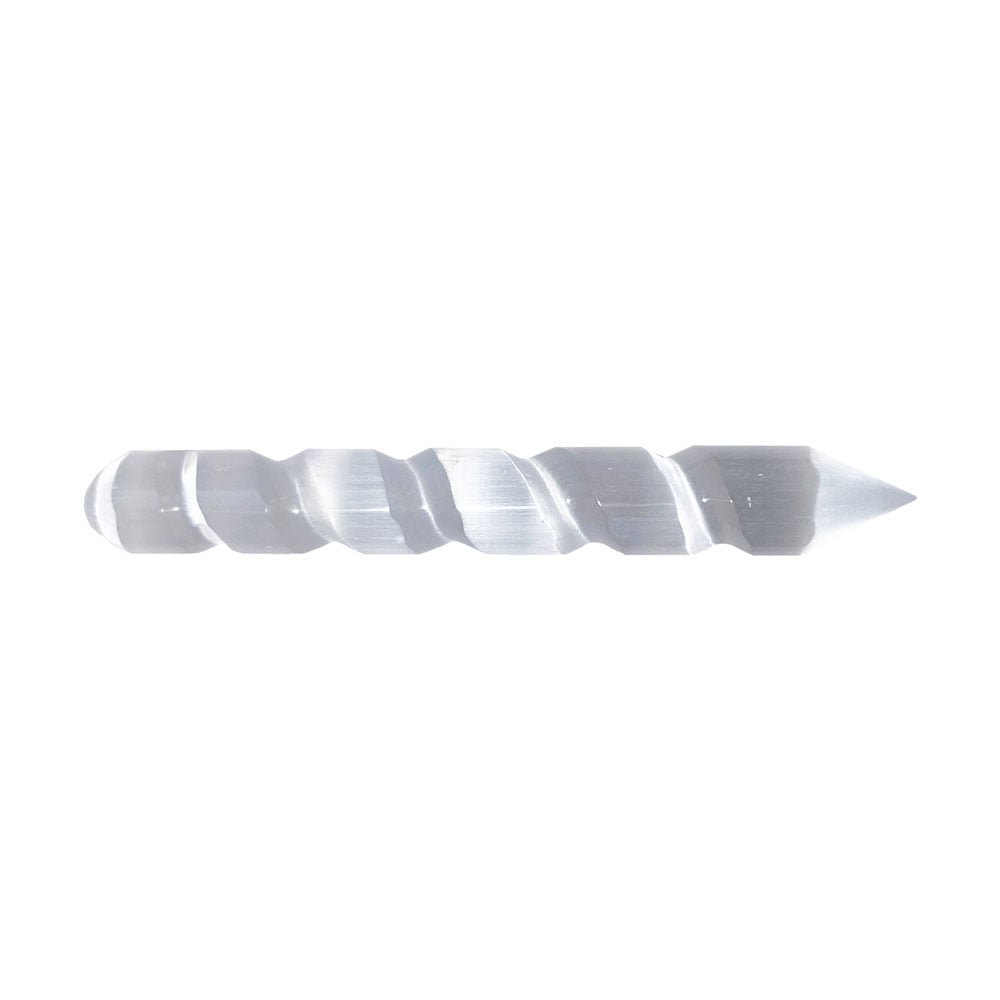
- Sweep with a wand. Move a selenite wand slowly a few inches above the body or an object to “comb” and clear the energy field.
- Place a tower in a room. A selenite tower or lamp makes a calm focal point and is said to lift the mood of a space.
- Meditate with it. Hold or sit near a piece as a focus for stillness and clarity.
- Keep it by your other stones. A small piece on the shelf is the easy way to keep a collection feeling fresh.
How to cleanse & care for selenite
This is the section that matters most, so we’ll be blunt: never put selenite in water. Because it’s gypsum, water clouds, etches and slowly dissolves it — a soak will ruin a piece, and even a damp cloth or humid bathroom over time will dull that lovely sheen. Selenite is also soft (hardness 2), so it scratches easily and should be handled and stored with a little care, away from harder stones that could nick it.
The good news is that selenite barely needs cleansing at all — it’s widely considered self-clearing, which is exactly why it’s used to cleanse everything else. When you do want to refresh it, use water-free methods:
- Smoke. Pass it through incense, palo santo or sage smoke.
- Moonlight. A night under the full moon — fitting for the moon’s own stone.
- Sound. A singing bowl or bell clears it with no contact at all.
- Dry sunlight. A short spell of gentle sun is fine; just keep it dry.
To “charge” it, moonlight is the traditional favourite. And because selenite is the stone that recharges others, you’ll find it rarely asks for much in return.
Types & forms of selenite
“Selenite” is used loosely in shops to cover several closely related forms of gypsum. The names are worth knowing:
- Selenite (true). The transparent, glassy, colourless form — sometimes in clean tabular crystals you can almost read through.
- Satin spar. The fibrous, silky, pearly form with a cat’s-eye shimmer. Most towers, wands, plates and lamps sold as “selenite” are actually satin spar.
- Desert rose. Gypsum that has crystallised into rosette shapes in sandy ground, trapping grains of sand.
- Gypsum flower & “fishtail.” Branching and angel-wing forms prized by collectors.
- Peach & orange selenite. Iron-tinted varieties with a warm, soft colour.
Fine selenite comes from Morocco (much of the satin spar on the market), Mexico (home of the giant Naica crystals), and from the United States, Madagascar, Poland and beyond. It’s found wherever ancient seas and lakes once dried away.
Is selenite rare or valuable?
Selenite is abundant and very affordable — towers, plates and wands are among the most accessible crystals you can buy, which is part of why it’s such a practical everyday stone for clearing. You can keep a generous piece without spending much at all.
Where value rises, it’s about clarity, size and form: large, water-clear true selenite crystals, well-formed desert roses, and unusual colours like clean peach selenite are more collectible. But for the everyday job of cleansing your other stones, an inexpensive plate or tower does the work beautifully — there’s no need to chase a premium piece.
Caring for selenite & spotting fakes
Because selenite is cheap, deliberate fakes are uncommon — the bigger risks are simply mistreating it or confusing it with another mineral. A few honest checks and care tips:
- It’s soft. Real selenite scratches with a fingernail or a coin. Anything that resists is probably glass, resin or a harder stone sold under the wrong name.
- It’s light and silky. Genuine satin spar has a distinctive fibrous, pearly shimmer and feels lighter than quartz.
- Don’t confuse it with clear quartz. They look alike, but quartz is hard and water-safe while selenite is soft and water-soluble — treating selenite like quartz (a quick rinse) will damage it.
- Keep it dry, always. No water cleansing, no damp shelves, no humid bathrooms.
- Store it apart. Keep it away from harder crystals that could scratch its soft surface.
Treat selenite gently and it will keep its moonlit glow for years. Treat it like quartz and it won’t — which is the single most common way people accidentally ruin a piece.
Genuine selenite — towers, plates & wands
If you’d like a piece of your own, Minerals Kingdom offers authenticated natural selenite — charging plates, towers, wands and tumbled stones, ideal for cleansing the rest of your collection.