
Fake vs Real Crystals
Dyed howlite, glass “quartz,” bonded turquoise — the common tricks, the treatments that are perfectly normal, and how to tell the difference.
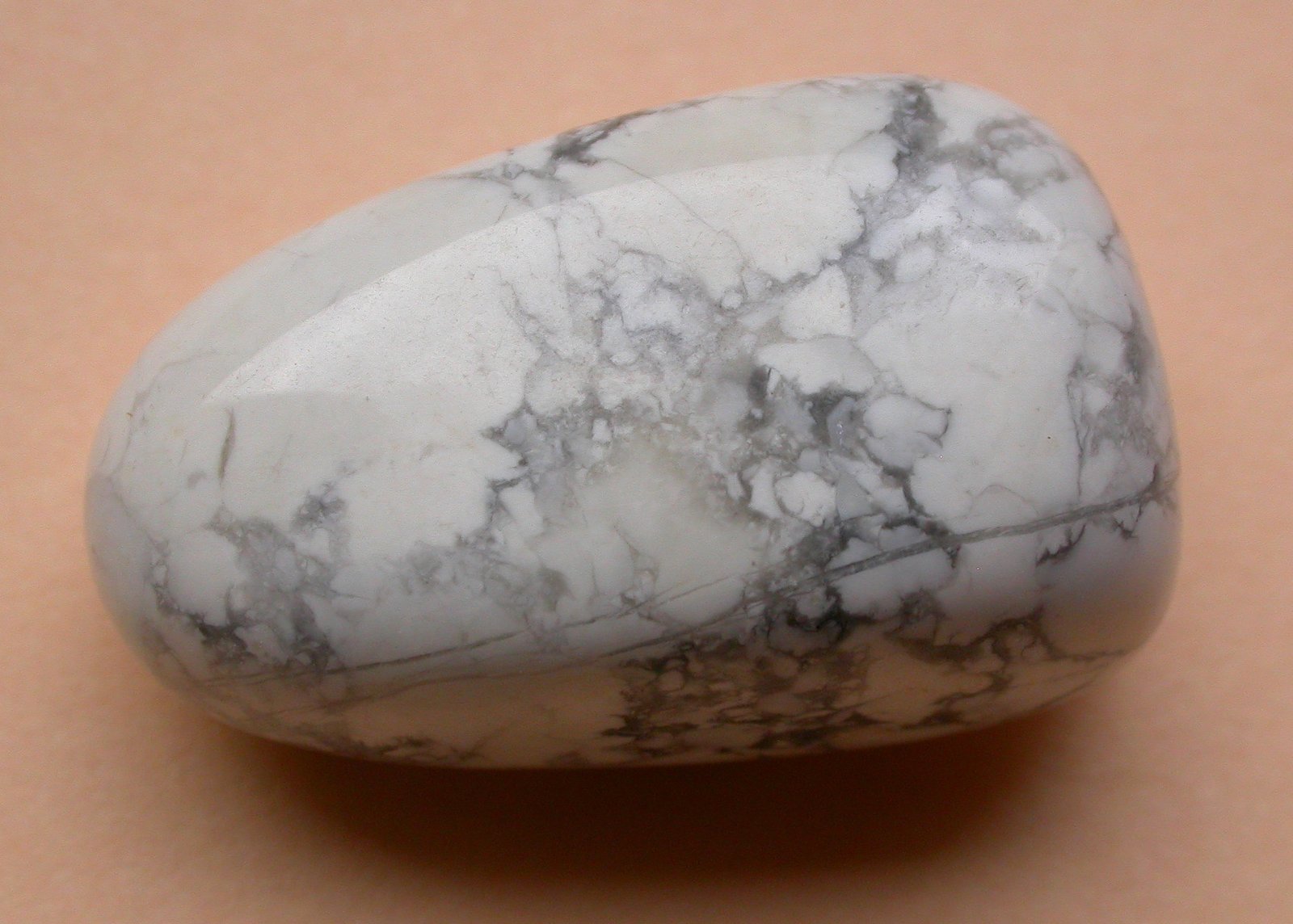
Dyed & fake stones · What to check
Not every “crystal” on sale is what its label says. The big giveaways are dyeing (porous white stones like howlite and magnesite coloured to fake turquoise or lapis), glass imitations (often with tell-tale bubbles and impossibly even colour), and reconstituted or bonded material (crushed stone set in resin). Some treatments, by contrast, are completely normal when disclosed — most commercial citrine is heat-treated amethyst, and lab-grown stones are real, just not natural. Learn a few visual checks and one rule of thumb — if the colour and price look too good to be true, they probably are.
The crystal world has a quiet honesty problem. Alongside genuine stones sit dyed lookalikes, moulded glass and resin blends — some sold in innocence, some not. None of this needs to make you anxious; it just pays to shop with your eyes open. Most fakes betray themselves with a handful of visual clues, and the treatments that are legitimate are easy to understand once someone spells them out. Here’s a practical, honest field guide.
Why fakes and imitations exist
Two reasons, mostly. Some genuinely desirable stones — turquoise, fine lapis, top amethyst — are rare or expensive, so cheaper materials get dressed up to imitate them. And some effects simply sell better: an impossibly vivid blue or a rainbow shimmer moves faster than a subtle natural stone. The result is a market where “too perfect” is often a warning sign rather than a selling point.
Dyed stones
Dyeing is the most common trick. Pale, porous minerals soak up colour readily, so they’re tinted to impersonate pricier stones. The textbook case is howlite — naturally white with grey veins (pictured above) — which is dyed blue to imitate turquoise, and sometimes deep blue to mimic lapis lazuli. Grey magnesite gets the same treatment, and cheap banded agate is routinely dyed in electric blues, pinks and purples never seen in nature.
How to spot it: look for colour pooling in cracks and crevices (dye concentrates where it soaks in), an unnaturally uniform or too-vivid hue, and colour that rubs off onto a cotton pad dampened with a little acetone. Real turquoise also tends to have natural matrix veining rather than a flawless even blue.
Glass and plastic imitations
Glass is the classic stand-in for clear and coloured quartz, and plastic for cheaper beads. The giveaways are physical: trapped round air bubbles (real crystal doesn’t contain perfect spherical bubbles), a warm feel (glass and plastic warm up faster in the hand than stone, which stays cool), mould seams, and too-flawless clarity or colour. Much so-called “aura” quartz is real quartz with a metallic coating — not a fake exactly, but a treatment that should be disclosed. Beware the very shiny, very cheap “clear quartz” sphere with a bubble inside.
Reconstituted and bonded material
Here, real stone is crushed to powder and set in resin or glue, then shaped. “Reconstituted” or “stabilised” turquoise and bonded malachite are common. Stabilising genuinely porous turquoise is an accepted practice when disclosed, but heavily resin-bonded material is closer to a composite than a solid stone. Clues include a slightly plasticky lustre, suspiciously even patterning, low weight, and a warm, resinous feel.
Treatments that are perfectly normal
Not every altered stone is a “fake.” Several treatments are standard and accepted as long as the seller discloses them:
- Heat treatment. Most commercial citrine is heat-treated amethyst — it’s still real quartz, just warmed to shift the colour. Much aquamarine and blue topaz is heated or irradiated too.
- Stabilising. Impregnating porous turquoise with resin to harden it is routine and acceptable when stated.
- Coating. “Aura” quartz is real quartz with a bonded metallic finish.
The issue is never treatment itself — it’s undisclosed treatment sold as untreated natural stone.
Lab-grown vs natural
Lab-grown crystals (synthetic quartz, lab amethyst, synthetic corundum) are chemically and physically real — genuinely the same mineral, just grown in a lab rather than the ground. They aren’t “fake,” but they should be sold as lab-grown, not passed off as natural, and they usually cost far less. If a rare stone is priced like a bargain, a lab origin (or a dye job) is a likely explanation.
This is a guide to authenticity and value, not health. Whether natural, treated or lab-grown, crystals are used in the healing tradition as a symbolic focus for reflection — not as medicine. No crystal treats, cures or prevents any illness, and nothing here is intended to diagnose or treat any condition. Buy honestly labelled stones because you value them, and see a qualified professional for any health concern.
Simple tests you can do
- Look into the cracks. Dye pooling in crevices is the single clearest sign of a coloured stone.
- Feel the temperature. Real stone stays cool to the touch; glass and plastic warm quickly.
- Hunt for bubbles and seams. Round bubbles or a mould line mean glass or resin, not crystal.
- Weigh it in your hand. Glass and resin composites often feel too light for a real mineral.
- Check the colour honestly. Electric, perfectly even colour in a normally subtle stone is a red flag.
- Mind the price and the story. A “rare” stone sold cheap, from a seller who can’t name its origin or treatment, deserves scepticism.
Pair these checks with a reputable seller and you’ll rarely go wrong. If you’re just starting out, our guide to choosing your first crystal and to caring for your stones will help you build a collection you can trust.
Honestly labelled natural crystals
Minerals Kingdom offers authenticated natural crystals with clear descriptions — so you know whether a stone is natural, treated or dyed before you buy.