Obsidian
Volcanic glass — the mirror stone of protection, grounding and hard truths.
Obsidienne · Volcanic glass
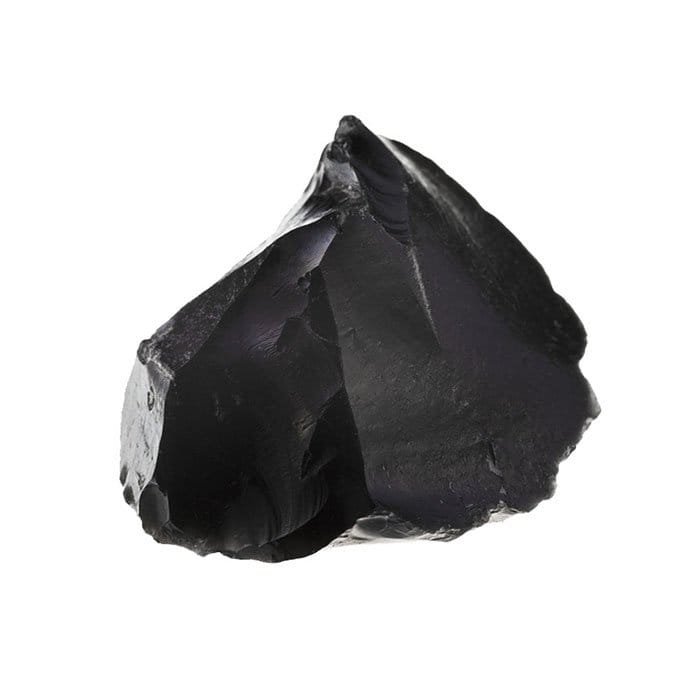
Obsidian is natural volcanic glass — not a crystal at all, but lava that cooled too fast to form crystals. In the tradition it’s a powerful stone of protection, grounding and truth, tied to the root chakra and long used as a mirror for scrying and shadow work. It’s striking, affordable and comes in beautiful varieties. Below — what it is, where its mirror-meaning comes from, how to use it, how to cleanse it, the types you’ll meet, and how to tell it from man-made glass.
Obsidian is the dark, glassy outsider of the crystal world — and that’s exactly why people love it. It isn’t a crystal in the strict sense at all, but a natural glass born when volcanic lava cools so quickly that no crystals have time to form. The result is a deep, mirror-black stone with an edge of mystery, long associated with protection, truth and the courage to look at what we’d rather not. Where rose quartz comforts and citrine cheers, obsidian is the stone that holds up a mirror.
This guide covers everything worth knowing: what obsidian actually is (and why it’s technically not a mineral), where its reputation as the mirror stone comes from, the ways people use it for protection and grounding, how to care for it, the striking varieties you’ll meet, and how to tell natural volcanic glass from the man-made kind. As always, we’ll keep the lore and the facts clearly labelled.
What is obsidian?
Obsidian is a natural volcanic glass. When silica-rich lava erupts and cools extremely fast — often where it meets air or water — its atoms are frozen in place before they can organise into a crystal lattice. Because it has no crystal structure, mineralogists class it not as a mineral but as a mineraloid: glass, essentially, made by a volcano rather than a furnace.
That glassy nature gives obsidian its two signatures. First, a conchoidal fracture: break it and it chips in smooth, curved, shell-like surfaces with edges sharper than surgical steel — which is why ancient peoples knapped it into blades, arrowheads and tools, and why it has even been used for modern scalpel edges. Second, a high, mirror-like polish. On the Mohs scale it sits around 5 to 5.5 — softer than quartz and, being glass, brittle — so it’s handsome but wants a little more care than a tumbled agate.
Most obsidian is a deep, even black, coloured by tiny amounts of iron and magnesium. But trapped gas bubbles, mineral crystallites and thin internal layers can create a remarkable family of varieties — silvery and golden sheens, rainbow iridescence, white “snowflakes” and mahogany swirls — which we’ll come to below.
Obsidian meaning & history
Obsidian’s meaning is bound up with its oldest use: the mirror. Polished into a dark, reflective disc, it became the scrying glass of seers and the looking-glass of whole civilisations. In Mesoamerica it was sacred to the Aztec god Tezcatlipoca — whose name means “smoking mirror” — and obsidian mirrors were used for divination and ritual. The same stone, knapped to a razor edge, armed the blades and ceremonial knives of the Aztec and Maya.
Its name comes to us through Latin: Pliny the Elder recorded a stone called obsidianus, said to be named after one Obsius who discovered it. Across cultures the thread is consistent — obsidian is the stone of truth, protection and the unseen: a mirror that shows you what is really there, and a shield against what means you harm.
That double role — mirror and shield — is exactly how it’s read today. Obsidian is the crystal of honest self-examination and firm boundaries: the stone you reach for to ground yourself, to feel protected, and to face a truth you’ve been avoiding.
Obsidian healing properties
In the crystal tradition, obsidian is above all a stone of protection and grounding. It’s the one most often suggested for shielding against negativity, anchoring a scattered mind back into the body, and creating a sense of safety. Because of its mirror heritage it’s also the classic stone of shadow work — gently surfacing what’s been buried so it can be looked at and released.
People most often turn to obsidian for:
- Protection. A traditional psychic shield against negativity and ill intent.
- Grounding. A heavy, earthy anchor for an anxious or scattered mind.
- Truth & clarity. The mirror stone, said to cut through illusion and self-deception.
- Emotional release. A support for shadow work, boundaries and letting go.
These are traditional and symbolic uses, not medical claims. Obsidian is often described as a powerful, even confronting stone — many people work with it gently and pair it with something soothing. It is not a treatment, and nothing here is intended to diagnose or cure any condition. If you’re working through difficult emotions, please also reach out to a trusted person or a qualified professional.
Obsidian, the chakras & zodiac
In chakra work, obsidian is firmly a root chakra (Muladhara) stone — the centre at the base of the spine associated with safety, stability and being grounded in the body. Its heavy, dark, earthy character is a natural fit, and it’s often placed at the feet or the base of the spine in a layout, or used as an “Earth Star” anchor below the body to draw scattered energy back down.
Obsidian isn’t a birthstone, but in astrology it’s most often associated with intense, truth-seeking Scorpio, and sometimes with Sagittarius and Capricorn. As a dark, protective, earth-born stone it’s connected to the element of Earth.
How to use obsidian
Because obsidian is a protective, grounding stone, most of the ways people use it are about safety, anchoring and honest reflection.
- Place it by the door. A piece near the entrance of a home is a long-standing way to “guard the threshold.”
- Hold it to ground. Sit with a stone in each hand, or at your feet, and breathe — a simple way to feel anchored when the mind is racing.
- Use it as a mirror. A polished obsidian sphere or disc is the traditional tool for quiet, reflective scrying.
- Carry or wear it. A tumbled stone in a pocket, or a bracelet, keeps its protective association close; in feng shui a black obsidian bracelet is often worn on the left wrist.
- Keep an Apache tear for grief. The gentler, translucent variety is a traditional comfort stone for sorrow and letting go.
How to cleanse & charge obsidian
Obsidian is described as a stone that absorbs a great deal, so many people like to cleanse it more often than other crystals. A couple of practical points matter: it’s glass, so it’s brittle and chips or scratches more easily than quartz — handle it gently and keep it away from harder stones. And while a quick rinse won’t dissolve it, salt can scratch the polish, so it’s best avoided.
Good ways to cleanse obsidian:
- Smoke. Pass it through incense, palo santo or sage smoke — a favourite for such an absorbent stone.
- Moonlight. A night under the full moon is gentle and reliable.
- Selenite. Rest it on a selenite plate overnight to clear and recharge it.
- Sound. A singing bowl or bell clears it with no contact at all.
- Brief water. A quick rinse in cool water is fine; skip salt water and don’t knock it against the tap.
Its colour won’t fade, so a little sunlight is safe too. Because obsidian is so often used for protection and shadow work, cleanse it whenever it feels heavy or after an intense session — many people do so weekly rather than monthly.
Types of obsidian
Obsidian’s varieties are some of the most beautiful in any cabinet, each created by what’s trapped inside the glass:
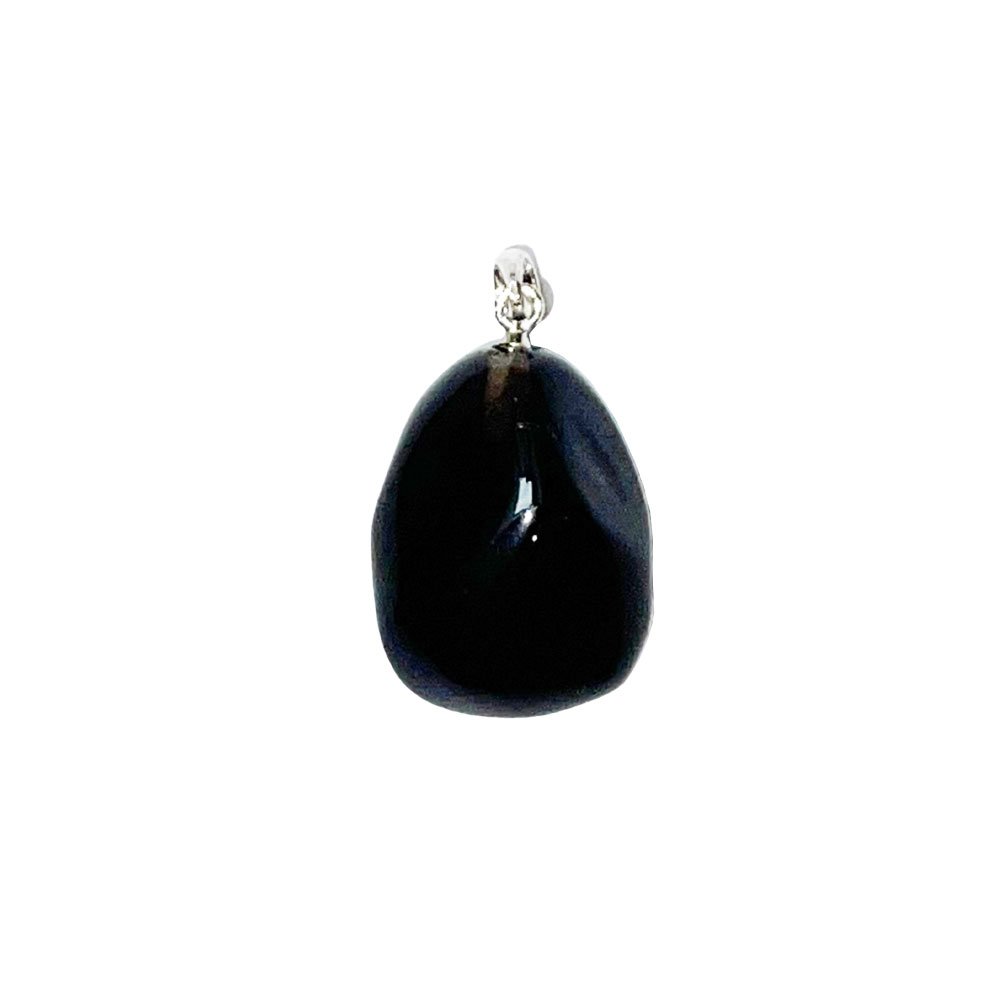
- Black obsidian. The classic — deep, even, mirror-black. The most protective and most used.
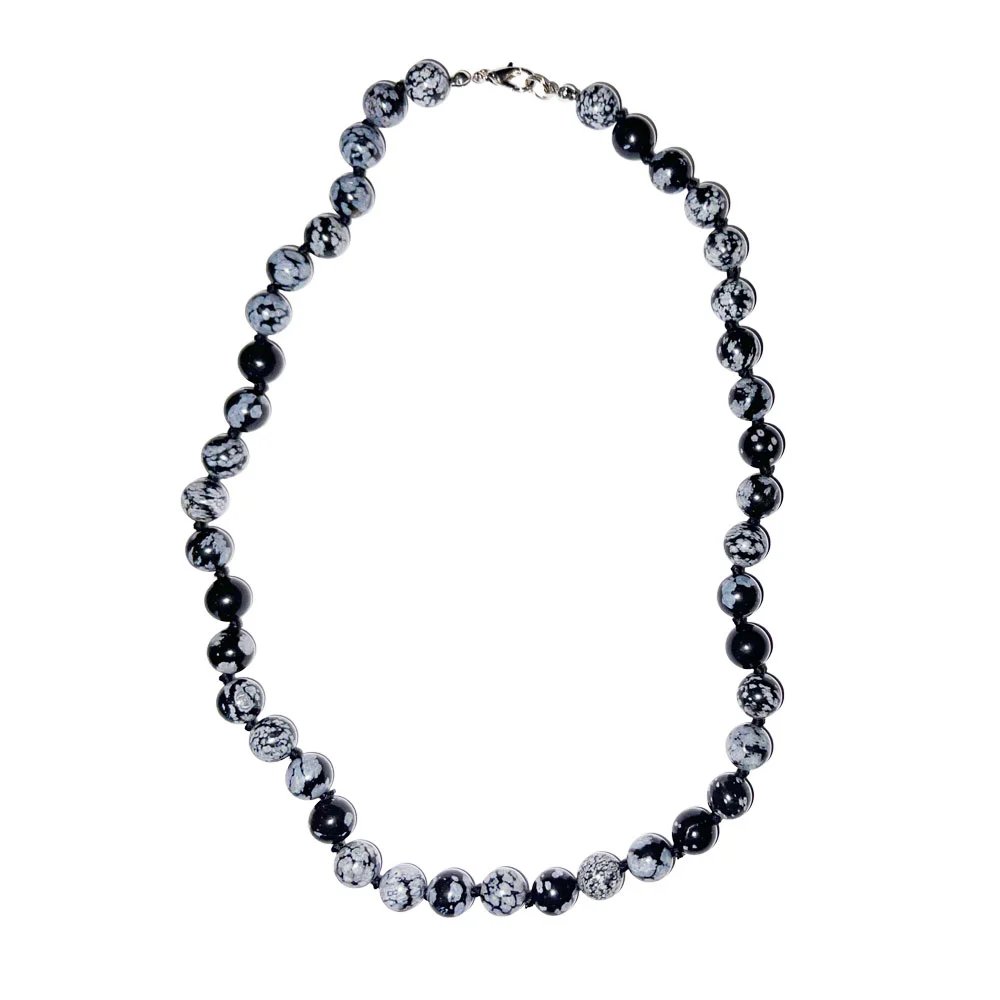
- Snowflake obsidian. Black glass dotted with grey-white “snowflakes” of the mineral cristobalite; read as a calmer, more balancing stone.
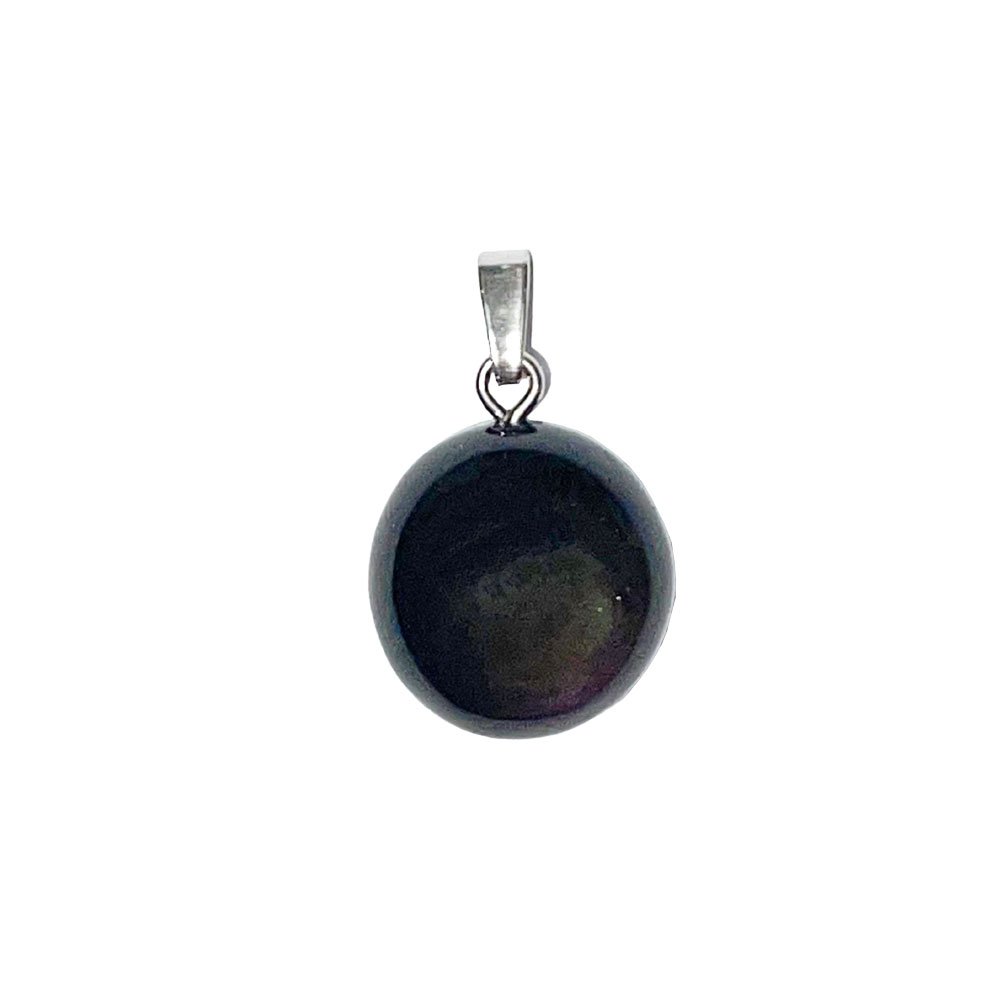
- Rainbow (sheen) obsidian. Bands of iridescent colour caused by microscopic layers of mineral nanoparticles.
- Mahogany obsidian. Black swirled with red-brown from iron — grounding with a warmer edge.
- Golden & silver sheen. A soft metallic shimmer floating across the surface, from tiny gas bubbles.
- Apache tears. Rounded, translucent nodules of obsidian; gentler in feel and a traditional comfort stone for grief.
Obsidian forms wherever there have been the right kind of volcanoes. Fine material comes from Mexico, the western United States (Oregon, California, Arizona), and from Iceland, Italy, Armenia, Indonesia and beyond.
Is obsidian rare or valuable?
Obsidian is abundant and very affordable — a tumbled stone, sphere or bracelet costs very little, which is part of why it’s such an accessible protective stone. It sits among the everyday semi-precious materials rather than the fine gems.
Where value rises a little, it’s about variety and the quality of an effect: a well-figured rainbow obsidian with a vivid, mobile sheen, a finely flecked snowflake, or a large, flawless mirror-black sphere will cost more than a plain tumbled chip. Beautiful craftsmanship — a perfectly polished sphere or a clean knapped blade — also adds value. For most buyers, though, the honest advice is the usual one: choose the piece whose depth and sheen you genuinely love.
How to tell real obsidian from fake
Here’s the irony: obsidian is natural glass, so the usual “fake” is man-made glass sold as the real thing — especially in vividly coloured “rainbow” or “blue” pieces. A few honest checks help:
- Look for bubbles. Lots of perfectly round air bubbles suggest manufactured glass; natural obsidian usually has few, and they’re often stretched or irregular.
- Question vivid colours. Electric blue, green or purple “obsidian” is almost always man-made glass. Natural sheens are subtler.
- Check the edges and feel. Natural obsidian shows a smooth conchoidal (shell-like) fracture and feels warm and light for glass; perfect, mould-made shapes are a red flag.
- Mind the softness. At around 5–5.5 it scratches more easily than quartz, so a flawless, “indestructible” stone sold cheaply is worth a second look.
Snowflake, mahogany and gentle gold or silver sheens are the most reliably natural varieties. If a deeply saturated rainbow seems too good to be true, ask the seller — a reputable one will tell you whether a stone is natural obsidian or coloured glass.
Genuine, natural obsidian
If you’d like a piece of your own, Minerals Kingdom offers authenticated natural obsidian — black, snowflake, rainbow and Apache tears, as tumbled stones, spheres and jewellery.