Green Aventurine
The shimmering green “stone of opportunity” people reach for when they want luck, optimism and an open heart.
Quartz · Heart stone
Green aventurine is a soft green variety of quartz whose gentle shimmer comes from tiny flakes of green mica (fuchsite). In the crystal tradition it’s the stone of luck and opportunity — the one people keep in a pocket or a wallet to invite good fortune, and the classic heart-chakra stone for optimism and emotional calm. Hard (7 Mohs), abundant and very affordable, it’s an easy, friendly stone to live with. Below — what it means, how to use it, how to keep it, and how to spot dyed quartz or glass.
If rose quartz is the stone people reach for to give love, green aventurine is the one they reach for to feel lucky. It has a long reputation as a stone of opportunity and good fortune — the quiet optimist of a crystal collection — and it doubles as a gentle heart stone for letting go of worry. It’s also genuinely easy to get to know, because its shimmer and its quartz hardness make it simple to recognise.
This guide covers what green aventurine actually is, where its lucky reputation comes from, the ways people use it, how to keep it, and — because you deserve the full picture — what’s tradition and what’s genuinely known. We’ll keep the lore and the facts clearly labelled.
What is green aventurine?
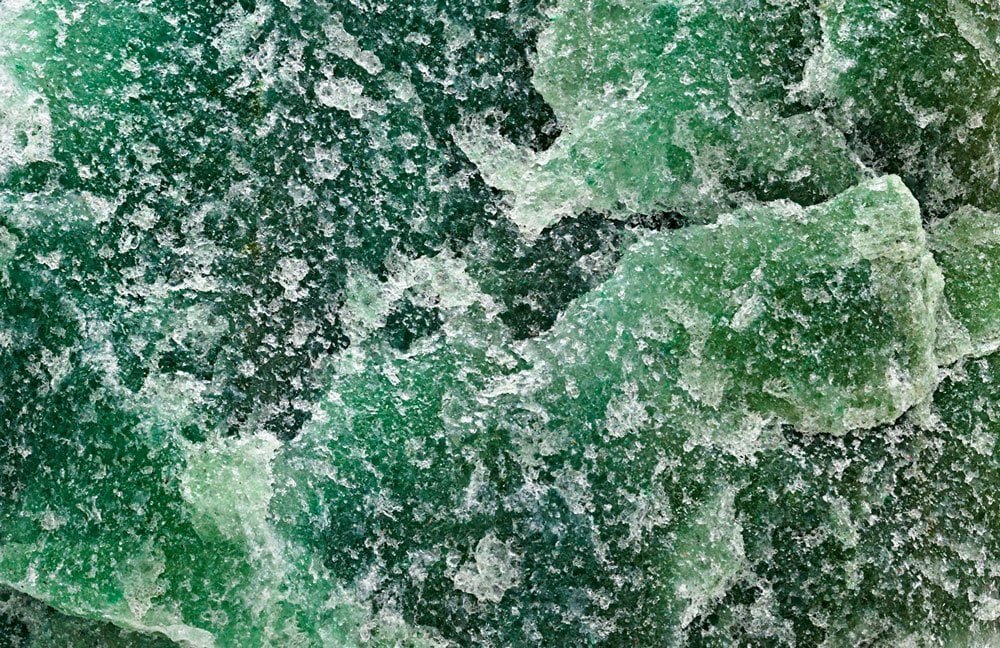
Green aventurine is a variety of quartz — specifically a fine-grained quartz rock (quartzite) — coloured and made to shimmer by countless tiny platelets of green fuchsite (a chromium-rich mica). That soft, glittery sheen has a name: aventurescence, after the stone, and it’s the feature that sets aventurine apart from plain green quartz.
The colour ranges from pale mint to a deep forest green, depending on how much fuchsite the stone contains. On the Mohs scale it rates a hard 7, the same as all quartz, so it’s durable, water-safe and easy to care for — a big part of why it’s such a beginner-friendly stone. Most of the world’s green aventurine comes from India, with more from Brazil, Russia and beyond.
One useful thing to know up front: the word “aventurine” comes from a happy accident. In 18th-century Venice, glassmakers spilled copper filings into molten glass and created a sparkling material they called a ventura — “by chance.” The natural stone that resembled it borrowed the name. That history matters to buyers, because shimmery “goldstone” glass is still sold today and sometimes confused with the real mineral.
Green aventurine meaning & history
Across the crystal tradition, green aventurine is above all the stone of luck and opportunity. It’s the piece people tuck into a wallet, a pocket or a business drawer to invite good fortune — and it’s often called the luckiest of all crystals for games of chance and new ventures. That reputation is symbolic, not magical, but it has made aventurine one of the most popular “everyday” stones.
Its green colour ties it firmly to the heart and to growth, renewal and springtime — the same associations that green carries across many cultures. Where rose quartz speaks to romantic love, aventurine speaks to a broader sense of wellbeing: optimism, emotional balance, and the confidence to take a chance. In older lore it was carried to soothe the eyes and the spirit, and worn as a token of prosperity.
Today it sits in most collections as the gentle, encouraging stone — the one you reach for at the start of something new, or when you simply want to feel a little more hopeful.
Green aventurine healing properties
In the crystal tradition, green aventurine is valued for a cluster of warm, forward-looking qualities centred on the heart and on good fortune.
People typically turn to green aventurine for:
- Luck & opportunity. The classic prosperity stone, kept close when starting something new.
- An open heart. A gentle heart-chakra stone for optimism and emotional calm.
- Letting go of worry. A soothing presence for anxious, overthinking moments.
- Confidence & decisions. Carried as a token when taking a chance or facing change.
These are traditional and symbolic uses, not medical claims. Green aventurine is sometimes marketed as a cure for physical ailments or a guaranteed way to attract money — there is no scientific evidence for either. Enjoy it as an optimistic ritual and a beautiful object; it is not a treatment, and nothing here is intended to diagnose or cure any condition.
Green aventurine, the chakras & zodiac
In chakra work, green aventurine belongs to the heart chakra (Anahata) at the centre of the chest — the energy centre linked to love, compassion and emotional balance. Its soft green is a natural fit, and many people pair it with rose quartz for a “full heart” combination.
By zodiac, aventurine is most often associated with Aries and Taurus — the signs of the spring, fittingly for a stone of growth and new beginnings. It has no official birthstone month, but its green makes it a popular informal gift for May celebrations and for anyone starting a new chapter.
How to use green aventurine
Green aventurine is one of the most practical stones to work with, because most of its traditional uses are about keeping it close.
- Carry it for luck. A small tumbled stone in a pocket, wallet or bag is the classic prosperity charm.
- Keep it at your desk. Many place a piece where they work or start projects, as a hopeful focal point.
- Wear it over the heart. A green aventurine necklace keeps its heart-centred, optimistic meaning close; at hardness 7 it handles daily wear well.
- Hold it in quiet moments. A smooth palm stone is a calming anchor when you feel anxious or stuck.
- Place it with plants. Some keep aventurine near houseplants or a “money plant” as a growth-and-abundance gesture, much like moss agate, the classic gardener’s stone.
How to cleanse & charge green aventurine
Green aventurine is hard, stable and water-safe, which gives you plenty of cleansing options.
- Cool running water. A brief rinse is perfectly safe — quartz is hard and not water-soluble.
- Smoke. Pass it through incense, palo santo or sage smoke for a quick, no-contact reset.
- Selenite or a quartz cluster. Rest it overnight on selenite or an amethyst cluster.
- Moonlight. A night on a windowsill under the full moon is a gentle favourite.
- Sound. A singing bowl or bell works well for jewellery and small pieces.
Green aventurine tolerates brief sunlight, but like many green and coloured stones its tone can soften over very long, intense exposure — so for charging, moonlight or a quartz cluster is the safer habit. Many people simply cleanse it whenever it feels right, or after a run of stressful days.
Types & relatives
“Aventurine” is really a description of an effect (that shimmer) rather than a single colour, so it helps to see the family:
- Green aventurine. The fuchsite-bearing green stone of this guide — the most common and the “luck” stone.
- Blue aventurine. Coloured by blue mica or dumortierite; a calmer, throat-and-mind stone.
- Red & peach aventurine. Coloured by hematite/goethite; warmer, more grounding tones.
- Goldstone. Not a natural stone at all — it’s the man-made copper-fleck glass that gave aventurine its name. Pretty, but it’s glass.
- Green quartz vs aventurine. Plain green quartz has no shimmer; the aventurescence is what makes aventurine.
Most green aventurine on the market comes from India, with notable material from Brazil, Russia, Tanzania and Chile. Another green stone often kept alongside it is serpentine, the earthy “kundalini stone.”
Is green aventurine rare or valuable?
As a material, green aventurine is abundant and inexpensive — which is exactly why it’s such a friendly stone to start with. Tumbled stones and small carvings cost very little, and even a generous palm stone or sphere is well within reach. It isn’t a precious gem, and it isn’t meant to be; its appeal is its colour, its shimmer and its easy, optimistic character.
What little difference in value exists comes down to quality of colour and aventurescence: an even, lively green with a clear shimmer and good polish is more desirable than a dull, patchy piece. For most buyers the honest advice is simple — choose a piece with a colour you love at a size that suits where it will live, and don’t overpay.
How to tell real green aventurine from fake
The two things sold in aventurine’s place are dyed quartz/howlite and goldstone glass. Both are easy to catch once you know the tells.
- Look at the shimmer. Real aventurine has a soft, diffuse sparkle from countless tiny mica flakes. Goldstone glass shows a dense, uniform field of bright copper specks — too regular, too glittery.
- Check for bubbles. Hold it to the light: round internal air bubbles mean glass, not stone.
- Test the hardness. Real aventurine is quartz and scratches glass (7 Mohs). Dyed howlite is much softer and won’t.
- Watch for dye. A suspiciously vivid, perfectly even green — especially in cheap beads — can be dyed quartz or magnesite. Concentrated colour in cracks is a giveaway.
- Mind the colour pooling. Natural green sits throughout the stone; dye often gathers along fractures and drill holes.
Genuine, ethically sourced green aventurine
If you’d like to start your own piece, Minerals Kingdom offers authenticated natural green aventurine — raw stones, tumbles and jewellery.