Lava Stone
A dark, featherweight volcanic rock riddled with gas bubbles — usually basalt that cooled fast at the surface of the earth — and read in the crystal world as a stone of grounding, strength, courage and fresh starts after upheaval.
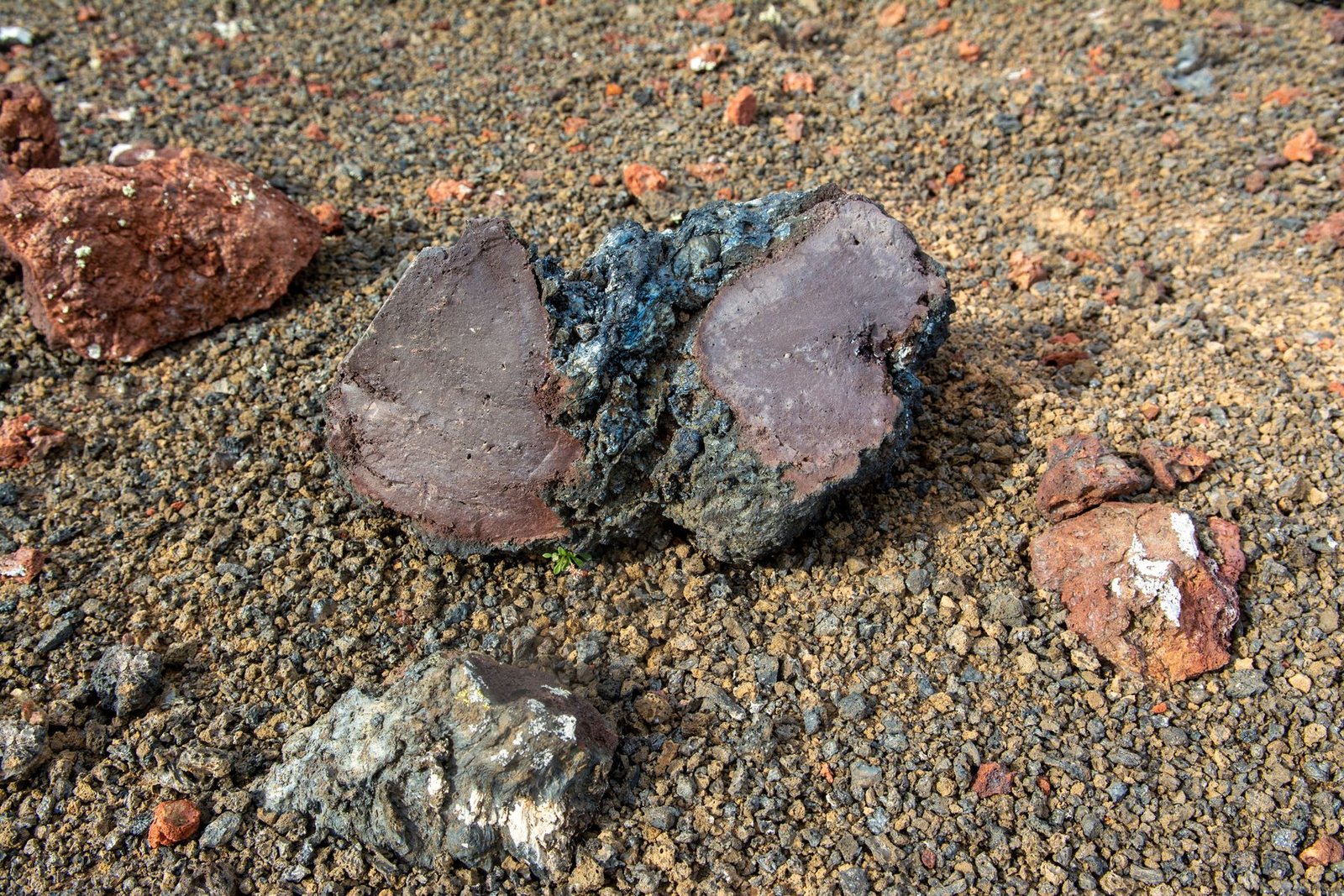
Volcanic rock · Grounding & strength
In short Lava stone is not a mineral but a volcanic rock — almost always vesicular basalt or scoria, made mainly of plagioclase feldspar, pyroxene and olivine with a good share of volcanic glass. It forms when gas-rich lava erupts and cools so quickly that escaping bubbles are frozen in place, leaving the porous, sponge-like texture that makes it light and able to soak up essential oils. That is why it is the classic bead for “diffuser” bracelets. The crystal tradition reads it as a root-chakra stone of grounding, strength, courage and rebirth — symbolic uses, this guide explains, rather than medical ones.
Lava stone is the earth’s fire made solid. Pick up a bead and it feels surprisingly light for such a dark, rugged thing — the surface pitted with tiny craters, the colour somewhere between charcoal and burnt iron. Every one of those holes is a bubble of volcanic gas caught in the act of escaping, which is exactly why this humble rock has become one of the most popular beads in the crystal world: it holds a drop of scent, and it carries the story of a volcano.
This guide covers what lava stone actually is, why geologists would call it a rock rather than a crystal, where its reputation for strength and rebirth comes from, how its pores work, and how to tell natural lava from the dyed and moulded beads that imitate it.
What is lava stone?
“Lava stone” is a trade name for solidified volcanic rock, and in jewellery it almost always means vesicular basalt or its frothier cousin, scoria. Basalt is the most common volcanic rock on earth: it makes up most of the ocean floor and the great lava plains of Iceland, Hawaii and the Deccan. It is a mafic igneous rock, rich in iron and magnesium and relatively low in silica, built mainly from calcium-rich plagioclase feldspar and pyroxene, often with small green grains of olivine — the same mineral that, in gem quality, is cut as peridot.
Because it cools quickly at or near the surface, basalt is fine-grained: its crystals are too small to see without a lens, and part of it may be volcanic glass that had no time to crystallise at all. That makes lava stone a close relative of obsidian, which is lava that cooled so fast it became almost pure glass. Unlike a single crystal such as quartz, lava stone has no one crystal system of its own; it is an aggregate of many tiny minerals. For the bigger picture of how minerals grow from melts, see our guide to how crystals form.
The individual mineral grains in basalt sit around 5–6 on the Mohs scale, but the rock as a whole is brittle and porous, so beads can chip if knocked against hard surfaces. Its density is also unusually low for a stone: heavily vesicular scoria can be so full of holes that the lightest pieces, like pumice, float on water.
Lava stone meaning & history
Few materials carry their origin story as plainly as lava. It is born from molten rock rising from deep inside the planet, and so in folk tradition it has long stood for the raw power of the earth, for fire and strength, and — because new land is built from cooled lava — for creation and rebirth. Volcanic islands such as Hawaii and Iceland are, quite literally, lava made into ground to stand on.
Basalt has been used by people for thousands of years: carved into grinding stones, statues and the famous Olmec colossal heads of Mexico, and used as building stone across Europe and the Pacific. Volcanic rock also has deep meaning in Hawaiian culture, where the volcano is associated with the deity Pele. In the modern crystal world, lava stone is most loved as a grounding, steadying stone — a dark, earthy anchor for people who feel scattered — and as an emblem of courage and renewal: the idea that something strong can come out of fire and pressure.
Why lava stone is porous
Molten rock deep underground holds dissolved gases — mainly water vapour and carbon dioxide — kept in solution by pressure, much like the fizz in a sealed bottle. When magma rises and erupts, that pressure drops and the gas comes out as bubbles. If the lava cools before the bubbles can escape, they are frozen in place as vesicles, the small round cavities that give the rock its name: vesicular basalt.
A little gas leaves a dense basalt with scattered holes; a lot of gas produces scoria, dark and cindery and full of cavities; and the most gas-rich, silica-rich froth becomes pale, glassy pumice. The cavities in jewellery-grade lava are open and connected enough to absorb a drop of liquid and release it slowly as it evaporates. That is the simple physical reason lava beads work as personal aroma diffusers — no special energy is required to explain it.
Lava stone healing properties
In the crystal tradition, lava stone is valued as a stone of grounding, strength and rebirth.
People typically turn to lava stone for:
- Grounding & stability. Its signature association — a heavy-looking, earth-born stone read as helping you feel rooted, present and steady.
- Courage & strength. Linked to the fire of the volcano, and carried for confidence in the face of challenges.
- Rebirth & new beginnings. A symbol of new land formed from destruction, chosen during big life changes and fresh starts.
- Calm through scent. Many people pair a lava bracelet with a favourite essential oil as part of a relaxing daily ritual.
These are traditional and symbolic uses, not medical claims. There is no scientific evidence that any crystal treats, cures or prevents any illness, and lava stone has no proven effect on health, mood or energy. Essential oils used on lava beads can irritate skin, so dilute them and keep them away from children and pets. Nothing here is intended to diagnose, treat or prevent any condition; health and life concerns belong with the appropriate qualified professional.
Lava stone, the chakras & zodiac
Dark, heavy-looking and born from the depths of the planet, lava stone is linked above all to the root chakra (Muladhara), the centre of safety, stability and connection to the earth. Some practitioners also associate the red, iron-oxidised forms with the sacral chakra and its themes of vitality and creativity. It shares its grounding, protective territory with black tourmaline, hematite and smoky quartz. For the wider framework, see our guide to the seven chakras and their crystals.
By zodiac, lava stone is most often linked to the fire sign Aries and to Scorpio, a sign associated in astrology with transformation and rebirth.
How to use lava stone
- Wear a diffuser bracelet. Add one or two drops of diluted essential oil to the lava beads and let the scent fade through the day.
- Carry a tumbled piece. A light, textured pocket stone for moments when you want to feel grounded.
- Hold it in meditation. Often chosen for root-focused, breath-led or grounding practice, held in the palm or placed at the base of the spine.
- Keep a raw chunk on your desk or altar. A rugged reminder of resilience and new beginnings.
- Combine it with other stones. Lava beads are often strung between gemstone beads, adding a scent-holding element to any bracelet.
If you are looking for calmer, gentler companions for stressful days, our guide to crystals for anxiety, stress and calm covers the stones most often used alongside it.
How to cleanse & charge lava stone
- Rinse briefly, then dry thoroughly. Natural lava tolerates water, but its pores hold moisture, so let it dry completely before restringing or storing — and keep bracelets with elastic cord away from soaking.
- Clear old scent before a new oil. A quick rinse with plain water, then full drying, refreshes the pores.
- Avoid salt water and harsh chemicals, which can lodge in the pores and degrade dyed beads or stringing materials.
- Smoke, sound, moonlight or selenite are ideal dry, contact-free methods.
- Rest it on the earth to “reset” this most earth-born of stones.
Our general guide to cleansing and charging crystals covers each method in more detail, including which stones tolerate water and which do not.
Types & origins
- Black lava stone. The classic dark vesicular basalt used for most beads and tumbled stones.
- Red lava (red scoria). Cindery lava whose iron has oxidised to a rusty red or brown, common around cinder cones.
- Scoria. Highly vesicular, lightweight volcanic rock — a popular raw specimen and garden stone.
- Pumice. Pale, glassy, extremely porous volcanic froth, light enough to float; more fragile and rarely used for beads.
- Dyed lava. Natural lava beads coloured blue, green, white or rainbow shades — genuine lava, but artificially coloured.
Lava stone is found wherever there are basaltic volcanoes. Much commercial bead material comes from Indonesia and other parts of Asia, with notable volcanic rock also from Iceland, Hawaii, Italy (Etna and Vesuvius), the Canary Islands and Mexico. It is abundant and inexpensive — value comes from an even texture, consistent bead size and honest labelling rather than rarity. Note that removing rock from protected volcanic parks, including Hawai‘i Volcanoes National Park, is prohibited.
Real vs fake
- Dyed beads. Bright blue, white, pink or rainbow “lava” is natural lava that has been dyed; rubbing with a damp cotton pad or acetone may lift colour. Fine if it is labelled as dyed.
- Plastic and resin imitations. Moulded beads can copy the look but are lighter still, warm quickly in the hand, and their “pores” are often shallow, identical and evenly spaced.
- Painted or coated surfaces. A uniform glossy black sheen or colour that stops at a chip suggests a coating; natural lava is matte and the same colour throughout.
- The pore tell. Natural lava pores vary in size and shape, go into the bead, and absorb a drop of water within seconds.
The workable rule: natural lava is matte, irregular and thirsty. For the wider method, see our guide to spotting dyed and imitation stones.
Genuine, natural lava stone
If you’d like a piece of your own, Minerals Kingdom offers natural volcanic lava stone — honestly described, with dyed material clearly identified.
Lava stone pairs well with
Frequently asked questions
What is lava stone good for?
Traditionally, lava stone is used for grounding, strength, courage and rebirth — a root-chakra stone of stability. Practically, its pores hold essential oils, making it a popular diffuser bead. These are symbolic and traditional uses, not proven medical effects; no crystal treats illness.
Is lava stone a crystal?
Strictly, no. Lava stone is a volcanic rock — usually vesicular basalt — made of many tiny mineral grains such as plagioclase, pyroxene and olivine, plus some volcanic glass. It is sold and used alongside crystals, but geologically it is a rock, not a single crystal.
Why do lava beads have holes?
The holes are vesicles: bubbles of volcanic gas, mostly water vapour and carbon dioxide, that were frozen in place when the lava cooled quickly. They make the stone light and let it absorb a drop of oil or water.
Can lava stone get wet?
Yes, natural lava tolerates water, but its pores hold moisture, so dry it thoroughly afterwards. Avoid soaking bracelets strung on elastic, and skip salt water and harsh chemicals, which can lodge in the pores or strip dye from coloured beads.
How do I use essential oils on a lava bracelet?
Apply one or two drops of a properly diluted essential oil to the lava beads only, let it soak in for a minute, and wipe off any excess. Avoid direct contact with skin if you are sensitive, and keep oils away from children and pets.
What crystals pair well with lava stone?
Other grounding, dark stones suit it well — obsidian, its volcanic-glass sibling, black tourmaline for protection, and hematite for focus and stability. Together they make a coherent root-centred grouping.
Image credits · Hero and buy-box: volcanic lava rock and scoria, Lanzarote — photo Jan van der Wolf / Pexels (Pexels license).
Sources · Smithsonian Global Volcanism Program; USGS Volcano Hazards Program, “Basalt” and “Scoria” glossary entries; Mindat.org, “Basalt”; Encyclopaedia Britannica, “Basalt” and “Pumice”; U.S. National Park Service, Hawai‘i Volcanoes National Park.