Smoky Quartz
The grounding, smoke-brown crystal people reach for to let go of stress and feel calmly anchored.
Quartz · Grounding stone
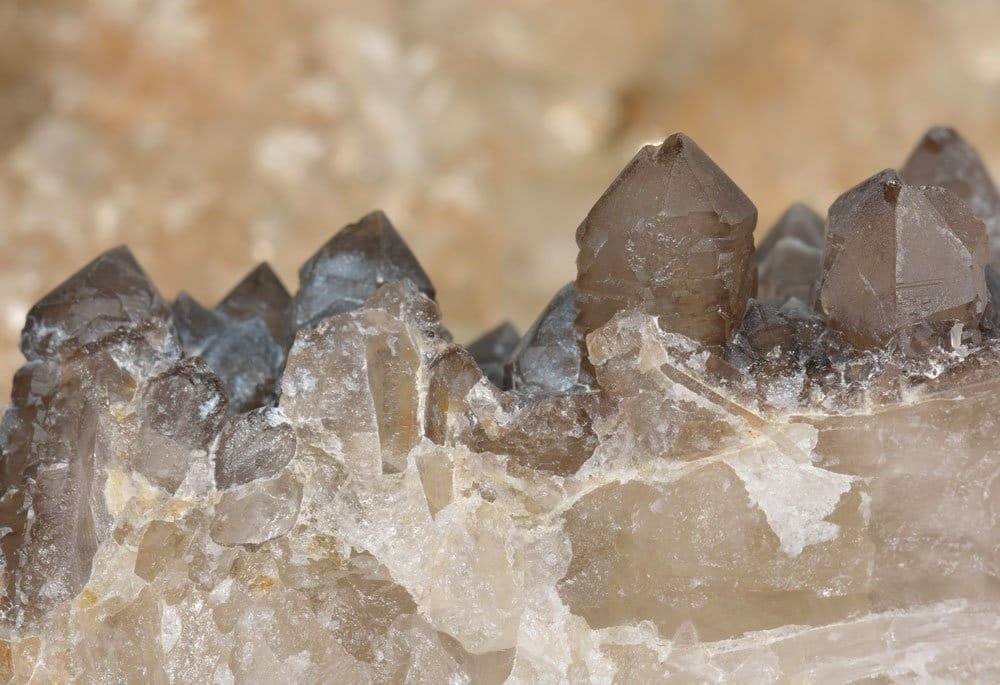
Smoky quartz is the translucent brown-to-grey variety of quartz, coloured by natural radiation deep in the earth. In the crystal tradition it’s the great stone of grounding and release — the one people reach for to let go of stress, worry and heavy moods while staying calm and clear. It combines quartz’s “amplifying” reputation with an earthy, settling quality, and at 7 Mohs it’s hard and easy to care for. Below — what it means, how to use it, how to keep it, and how to tell natural smoky quartz from artificially irradiated or dyed stones.
Smoky quartz is what you get when clear quartz spends a long time near natural radioactivity in the ground: the same crystal, tinted a translucent smoke-brown. The crystal tradition reads that transformation as its gift — a stone that takes the clarity of quartz and grounds it, helping you set down what’s heavy and come back to steady ground. If clear quartz is the amplifier and hematite the anchor, smoky quartz is the calm exhale between them.
This guide covers what smoky quartz actually is, where its grounding reputation comes from, the ways people use it, how to keep it, and — because you deserve the full picture — what’s tradition and what’s genuinely known, including the important question of natural colour versus lab treatment. We’ll keep the lore and the facts clearly labelled.
What is smoky quartz?
Smoky quartz is simply quartz — silicon dioxide — coloured a translucent brown, grey or near-black. Its smoky tint comes from a combination of traces of aluminium in the crystal and natural irradiation from radioactive elements in the surrounding rock over geological time. It’s the same mineral as clear quartz, rose quartz and amethyst, just a different colour cause.
At 7 on the Mohs scale it’s hard, durable and water-safe — one of the easiest stones to live with. The colour ranges from a pale, wispy grey to a deep cognac brown to the almost opaque black called morion. Major sources include Brazil, Madagascar, the Swiss Alps and the Scottish Highlands, where it’s the national gem.
An honest heads-up for buyers: because the colour comes from irradiation, a lot of commercial “smoky quartz” — especially the very black, evenly coloured material — is clear quartz irradiated in a lab to imitate the natural look. It’s still real quartz, and the treatment is stable and safe, but it matters if you specifically want a naturally coloured stone. More on that below.
Smoky quartz meaning & history
Smoky quartz has been valued for thousands of years. In Scotland it’s the celebrated cairngorm stone, set into Highland jewellery, kilt pins and the hilts of dirks; it remains Scotland’s national gem. Celtic Druids are said to have held it sacred, and in many cultures dark, earthy crystals were worn as grounding talismans and as protection against negativity.
Its smoky colour — light caught and softened inside the stone — gave it a natural symbolism of transmutation: taking something heavy or dark and gently transforming it. That’s the heart of its modern meaning. Where black tourmaline deflects and hematite anchors, smoky quartz is felt as absorbing and releasing — drawing off stress and letting it dissolve.
Today people reach for smoky quartz when they feel weighed down, overwhelmed or stuck in a low mood, and want to let it go without losing their footing. It’s the collection’s stone of calm release.
Smoky quartz healing properties
In the crystal tradition, smoky quartz is valued for a blend of grounding and gently releasing qualities.
People typically turn to smoky quartz for:
- Letting go. A stone for releasing stress, worry and heavy moods.
- Grounding. A calm, earthy anchor that keeps you steady.
- Gentle protection. A softer alternative to black stones for shielding a space.
- Focus through overwhelm. A settling presence when there’s simply too much going on.
These are traditional and symbolic uses, not medical claims. Smoky quartz is sometimes marketed for detox, radiation protection or physical ailments — there is no scientific evidence for any of that. (And while its colour is caused by ancient irradiation, finished smoky quartz is not radioactive and is perfectly safe to handle.) Enjoy it as a grounding ritual and a beautiful object; it is not a treatment, and nothing here is intended to diagnose or cure any condition.
Smoky quartz, the chakras & zodiac
Smoky quartz belongs to the root chakra (Muladhara) at the base of the spine — the centre of safety, stability and being grounded in the body. Some practitioners also link it to the earth-star point below the feet, deepening its anchoring role. It’s a favourite for “coming back down” after intense spiritual or mental work.
By zodiac, smoky quartz is most associated with Capricorn (steady and grounded) and Scorpio (transformation and release). It has no birthstone month, but as a calming, releasing stone it makes a thoughtful gift for anyone going through a heavy or transitional time.
How to use smoky quartz
Smoky quartz is hard, versatile and easy to use in all the usual ways.
- Hold it to let go. Cup a piece and imagine handing your stress to the stone — its classic release practice.
- Carry a pocket stone. A tumbled piece is a grounding anchor for overwhelming days.
- Keep it at your desk. A point or cluster nearby for calm focus under pressure.
- Place it in your space. Many keep a piece in a living area for gentle, grounding protection.
- Wear it. At hardness 7 it handles daily wear well as a smoky quartz necklace, ring or bracelet — a quiet, grounding piece you can keep on through busy days.
How to cleanse & charge smoky quartz
Smoky quartz is hard and water-safe, so most methods work — with one caveat about sunlight.
- Cool running water. A brief rinse is perfectly safe for this hard, stable stone.
- Smoke. Incense, palo santo or sage for a quick, no-contact reset.
- Selenite or a cluster. Rest it on selenite or an amethyst cluster overnight.
- Sound. A singing bowl or bell suits jewellery and points.
- Moonlight. A night under the full moon is a gentle, reliable charge.
Go easy on strong sunlight. Smoky quartz can fade with long, intense sun exposure — the same irradiation-based colour that formed slowly can be bleached over time. Moonlight, smoke or a quartz cluster are the safer charging habits. Cleanse it whenever it has been doing a lot of “letting go.”
Types & relatives
Smoky quartz comes in a few named forms and sits among the wider quartz family:
- Smoky quartz. The classic translucent brown-grey stone of this guide.
- Cairngorm. The yellow-brown Scottish smoky quartz, the national gem of Scotland.
- Morion. The very dark, near-opaque black smoky quartz.
- Smoky citrine. A natural blend of smoky and golden quartz.
- Amethyst & clear quartz. Close cousins — same mineral, different colour cause; smoky quartz pairs naturally with both.
Most smoky quartz comes from Brazil, Madagascar and Switzerland, with prized natural material from Scotland, Colorado and the Alps.
Is smoky quartz rare or valuable?
Smoky quartz is abundant and affordable. Tumbled stones, points and clusters cost very little, and even large display pieces are reasonable. As one of the most common coloured quartzes, it’s a friendly, budget-conscious stone to collect and use.
Value, where it exists, comes from natural colour, clarity and crystal form: well-formed, gem-clear natural smoky points — especially Alpine or Scottish material — are collector pieces worth more than mass-market irradiated stones. As a gemstone it’s modestly priced, so the honest advice is to choose a piece whose colour and shape you love, and — if natural origin matters to you — to buy from a seller who is clear about treatment.
Real vs treated smoky quartz
With smoky quartz the question is less “fake” than “natural or lab-irradiated.” Both are real quartz; the difference matters for purists and for price.
- Watch very even, jet-black colour. Naturally smoky stones usually show some variation and translucency. A uniform, opaque black (especially cheap, in quantity) is often irradiated clear quartz.
- Look at the zoning. Natural smoky quartz often has uneven colour, with smokier zones near the tips or along growth bands. Dead-even colour throughout can signal treatment.
- Beware “smoky” that’s actually dyed or coated. A brown surface film that doesn’t go through the stone, or colour pooling in cracks, points to dye or coating rather than true smoky quartz.
- Test the hardness. Real quartz scratches glass (7 Mohs); a soft “smoky” bead may be glass or plastic.
- Ask the seller. Reputable sellers will tell you whether colour is natural or irradiated. Treatment isn’t a scam if it’s disclosed — and it’s safe to handle either way.
Genuine, ethically sourced smoky quartz
If you’d like to start your own piece, Minerals Kingdom offers authenticated smoky quartz — raw points, clusters, tumbles and jewellery, with treatment disclosed.