
Morganite
The soft-pink variety of beryl — sister stone to emerald and aquamarine — carried in the crystal tradition as a gentle heart stone of love, compassion and calm.
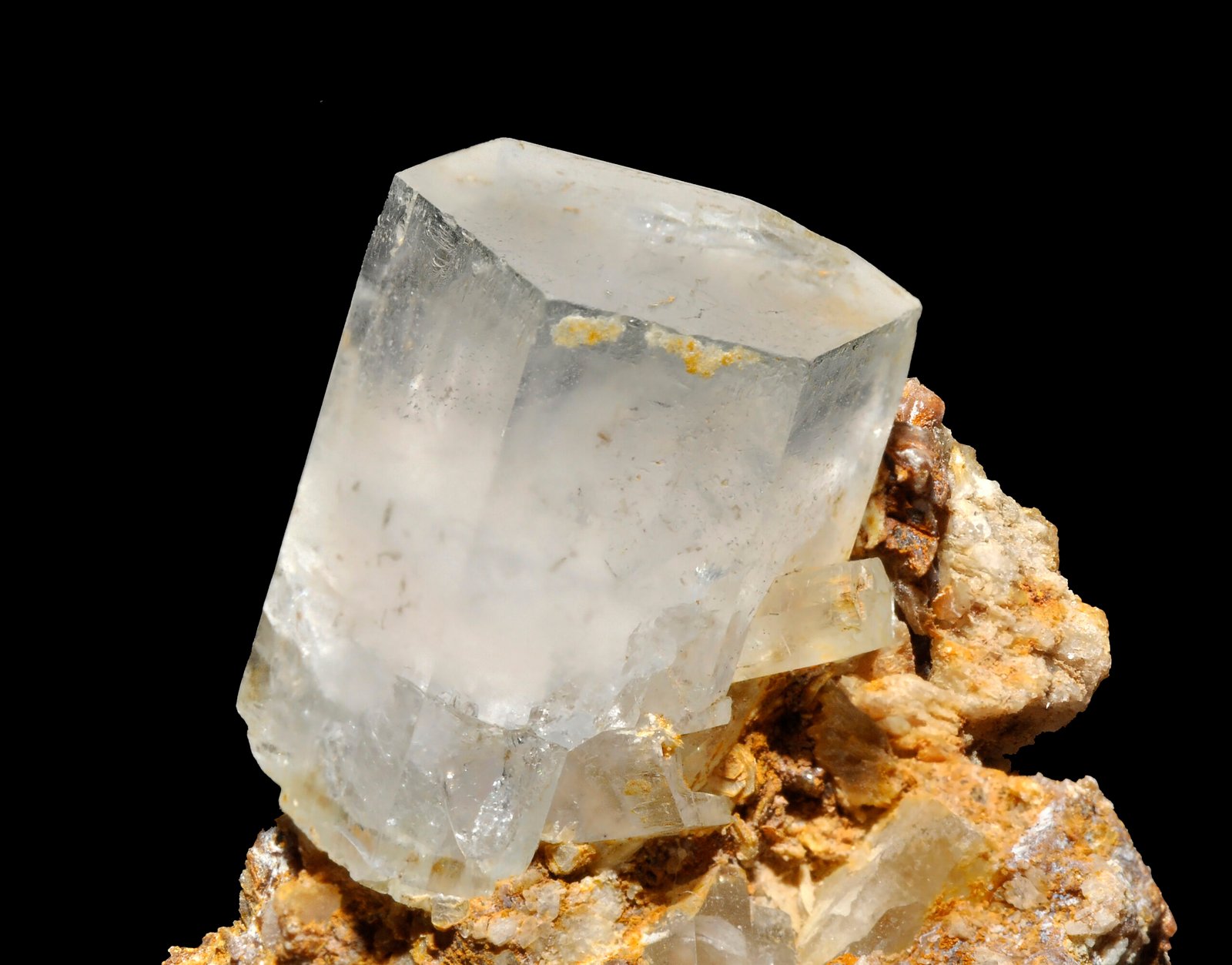
Beryl · Love & compassion
In short Morganite is the soft-pink variety of beryl, the same mineral family as emerald and aquamarine, coloured a delicate pink or peach by traces of manganese. At 7.5–8 on the Mohs scale it is hard, durable and a pleasure to wear. It was named in 1911 in honour of the American financier and gem collector J.P. Morgan. In the crystal tradition it is above all a heart stone of love, compassion and emotional calm — a gentler, more recently popularised cousin of rose quartz. One honest note: most morganite on the market is heat-treated to purify its pink, which is stable and normal but worth knowing.
Morganite is the quiet romantic of the beryl family. Where emerald blazes green and aquamarine cools to sea-blue, morganite settles into a soft, blush pink that looks like the inside of a shell. It is a modern favourite — an engagement-ring stone and a crystal-shelf staple — yet it carries an old mineral pedigree and a gentle reputation that suits its colour exactly.
This guide covers what morganite actually is, where its curious name comes from, how the crystal world reads it, and the honest detail about treatment and imitation that a good pink-beryl guide owes you.
What is morganite?
Morganite is the pink to peach variety of beryl — beryllium aluminium silicate, Be3Al2Si6O18. Pure beryl is colourless; small amounts of manganese tint the crystal the soft rose, salmon or apricot shades that define morganite. It is the same species that gives us green emerald, blue-green aquamarine and golden heliodor, which is why all of them share the same glassy lustre and clean, hexagonal crystal habit.
Beryl crystallises in the hexagonal system, typically as tabular or stubby six-sided prisms, and morganite often forms unusually broad, flat crystals. At 7.5 to 8 on the Mohs scale it is hard and hard-wearing — noticeably tougher than rose quartz — with no easy cleavage, so it takes a bright polish and stands up well to daily jewellery. Its pink is often pale, and cutters usually choose deep cuts to concentrate the colour.
Morganite meaning & history
Morganite is a young stone with a famous namesake. Pink beryl had been known for years — fine crystals were coming out of Madagascar and California around the turn of the twentieth century — but it had no name of its own. In 1911, the celebrated Tiffany & Co. gemmologist George Frederick Kunz proposed calling it morganite, after J.P. Morgan, the American banker whose vast gem collection Kunz had helped assemble. The name stuck, and pink beryl has been morganite ever since.
Because it is a modern gem, morganite carries little ancient folklore of its own. Instead it inherited the gentle symbolism of pink stones in general: tenderness, affection and the open heart. In the contemporary crystal tradition it has become known as a stone of divine or unconditional love — compassion turned both outward, toward others, and inward, toward oneself. That soft, forgiving register is exactly why it has become such a popular romantic gift and engagement stone.
Morganite healing properties
In the crystal tradition, morganite is valued above all as a heart stone of love and emotional calm.
People typically turn to morganite for:
- Compassion and tenderness. Read as softening the heart and encouraging kindness toward oneself and others.
- Emotional healing. Traditionally reached for after grief or heartbreak, as a gentle, comforting presence.
- Calm and reassurance. Associated with easing anxiety and inviting a soft, settled feeling.
- Loving relationships. A popular stone for romance, trust and open-hearted connection.
These are traditional and symbolic uses, not medical claims. There is no scientific evidence that any crystal treats, cures or prevents any illness, and morganite has no proven effect on the heart, emotions or health. Nothing here is intended to diagnose, treat or prevent any condition. If you are struggling with grief, anxiety or low mood, please also speak with a qualified healthcare professional.
Morganite, the chakras & zodiac
Morganite’s soft pink places it firmly at the heart chakra (Anahata), the centre of love, compassion and emotional balance, and some practitioners also link it to the “higher heart” just above. It shares that gentle heart territory with rose quartz, kunzite and rhodochrosite, and the four are often grouped together as the classic pink heart stones. For the wider framework, see our guide to the seven chakras and their crystals.
By zodiac, morganite is most often associated with Cancer, Libra and Taurus — signs read as warm, affectionate and relationship-minded.
How to use morganite
- Wear it close to the heart. A morganite pendant is the traditional choice for keeping its loving association near.
- Choose it for a ring. At Mohs 7.5–8 it is durable enough for everyday rings, which is why it is so popular for engagements.
- Hold it in meditation. Rest a tumbled stone over the heart for a few slow, settling minutes.
- Keep one by the bed. A soft, comforting stone for a restful, reassured space.
- Give it as a gift. A gentle token of affection, self-care or new beginnings.
How to cleanse & charge morganite
- Water is fine. Morganite is hard and non-porous, so a brief rinse under cool running water does no harm. Skip harsh chemicals.
- Moonlight over strong sun. A moon charge is a safe default; prolonged, intense sunlight is best avoided, as some pink beryl can pale over time.
- Smoke. Pass it through incense, palo santo or sage smoke.
- Selenite or sound. Rest it on a selenite plate overnight, or use a singing bowl for a no-contact cleanse.
Our general guide to cleansing and charging crystals covers each method in more detail, including which stones tolerate water and which do not.
Types & origins
- Pink morganite. The classic soft rose-pink, the most sought-after colour.
- Peach & salmon morganite. Warmer apricot tones, often the natural colour before any heat treatment.
- Rose beryl. An older name for the same pink material, occasionally still used.
- Morganite on matrix. Sculptural specimens where flat pink crystals sit on black tourmaline or feldspar, prized by collectors.
Fine morganite comes chiefly from Brazil (notably Minas Gerais), Madagascar, Afghanistan, Mozambique and the United States, where the historic Pala district of California produced some of the first named crystals. Value is driven by colour and clarity: a clean stone with a strong, even pink is worth the most, while pale or inconstant material is affordable and widely available.
Real vs fake
- Heat treatment is common. Much morganite is gently heated to remove yellow or orange tints and leave a purer pink. This is stable, permanent and widely accepted — but a good seller will disclose it.
- Glass and synthetic spinel imitations. Pink glass and lab-made pink spinel are sometimes sold as morganite; trapped bubbles and a suspiciously low price are giveaways.
- Confusion with other pink stones. Pale morganite can be mistaken for kunzite, pink topaz or pink sapphire; a jeweller’s test distinguishes them.
- The clarity tell. Natural morganite is often remarkably clean; flawless “morganite” at a rock-bottom price is more likely glass.
The workable rule: ask whether the stone has been heated, and buy from sellers who describe their material honestly. For the wider method, see our guide to spotting dyed and imitation stones.
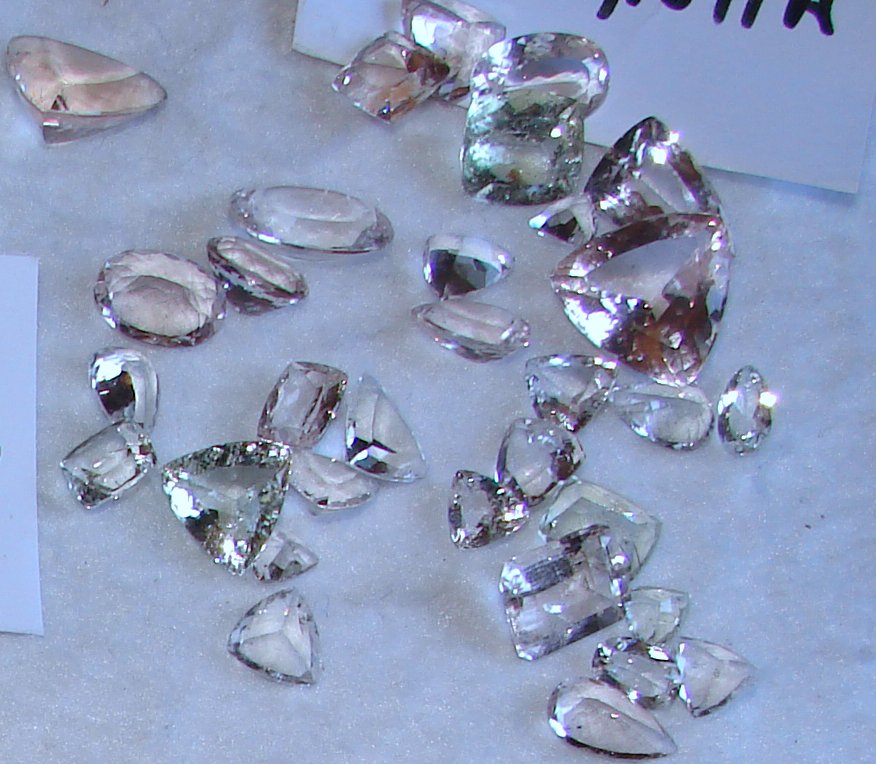
Genuine, correctly identified morganite
If you would like a piece of your own, Minerals Kingdom offers authenticated natural morganite — raw beryl crystals, tumbled stones and cut gems, honestly described.
Morganite pairs well with
Frequently asked questions
What is morganite good for?
Traditionally, morganite is used as a heart stone for love, compassion and emotional calm. These are symbolic, traditional uses, not proven medical effects. No crystal treats illness, and morganite has no demonstrated effect on the body.
Is morganite a type of beryl?
Yes. Morganite is the pink-to-peach variety of beryl, the same mineral species as emerald, aquamarine and heliodor. Its colour comes from traces of manganese.
Is morganite the same as rose quartz?
No. Both are pink and both are read as heart stones, but they are different minerals: morganite is beryl (Mohs 7.5–8), while rose quartz is a quartz (Mohs 7). Morganite is harder, clearer and more valuable.
Can morganite go in water?
Yes. Morganite is hard and non-porous, so a brief rinse in cool water is fine. Avoid harsh chemicals and prolonged, intense sunlight, and dry it gently afterwards.
Is most morganite treated?
Often, yes. A great deal of morganite is gently heated to remove orange or yellow tints and leave a purer pink. This is stable and widely accepted, but reputable sellers disclose it.
What crystals pair well with morganite?
Other gentle heart stones suit it well — rose quartz for loving warmth, kunzite for emotional calm, and aquamarine, its beryl sister, for soothing clarity.
Image credits · Hero: natural pink morganite crystal — photo Parent Géry, Wikimedia Commons (CC BY-SA 3.0). Below: faceted morganite — photo Eurico Zimbres, Wikimedia Commons (CC BY-SA 3.0).