
Emerald
The most famous green gem on Earth — a brittle, garden-included beryl that is almost always oiled, and one of the few stones whose reputation for love and abundance comes with a genuinely dramatic gem story.
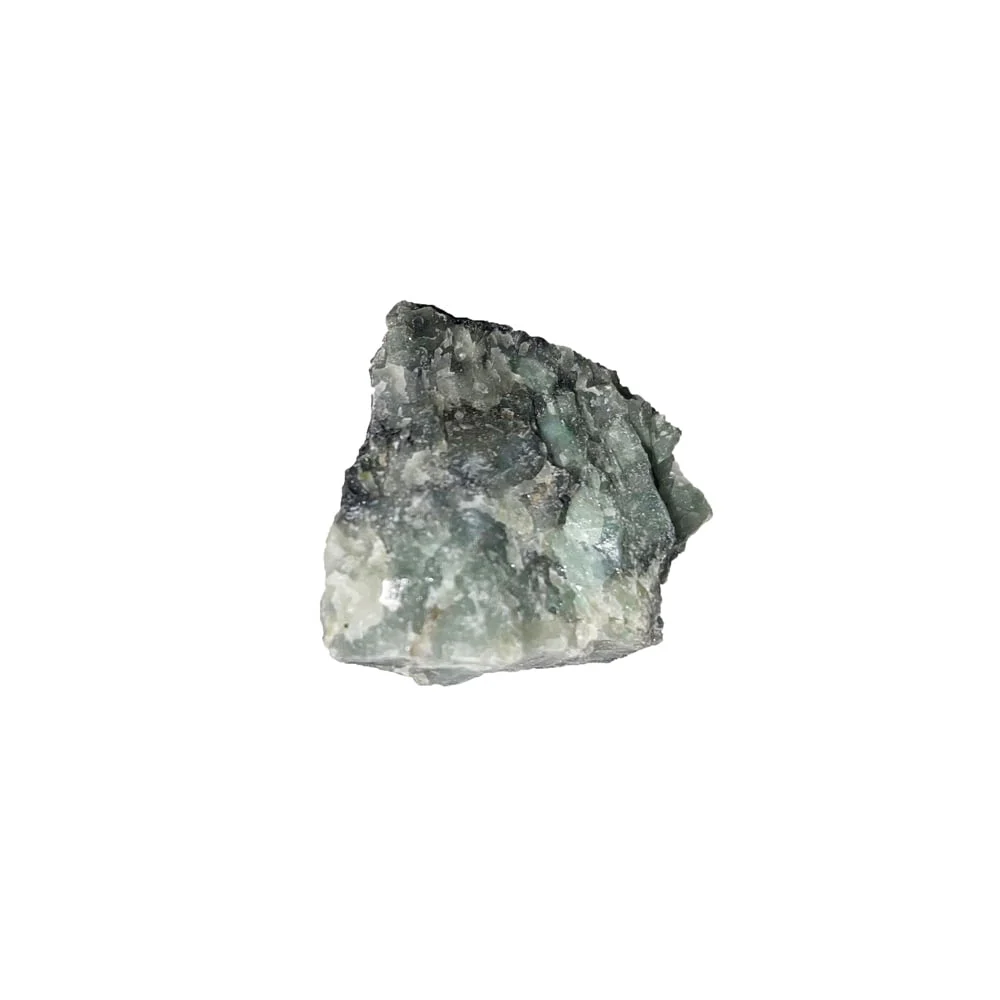
Beryl · Love & abundance
In short Emerald is the green variety of beryl, coloured by traces of chromium and/or vanadium, and ranked with ruby and sapphire among the “big three” precious coloured gems. It is hard at 7.5–8 Mohs but genuinely brittle, prized for its garden of internal inclusions (the jardin) rather than despite them — and here is the fact every buyer needs: almost every emerald on the market is treated with oil or resin to fill surface-reaching fractures and improve clarity. In the crystal tradition it is the great heart-chakra stone of love, loyalty and abundance. Fine untreated Colombian material can outprice diamond per carat; understanding the oiling is the key to buying honestly.
Emerald is the stone that made “green” a synonym for precious. It is a variety of beryl — the same mineral family as aquamarine — turned a saturated grass-to-forest green by trace amounts of chromium and, in some deposits, vanadium. Unlike almost every other gem, where inclusions are a flaw to be minimised, emerald is bought and prized with its inclusions in plain view: gemmologists call the internal tangle of fractures and crystals a stone’s jardin, French for garden, and an emerald with none at all is rare enough to be suspicious.
This guide covers what emerald actually is, why almost every stone you will ever be offered has been oiled, the honest picture on value and rarity, and how to buy with your eyes open.
What is emerald?
Emerald is the green gem variety of beryl, a beryllium aluminium silicate (Be₃Al₂(SiO₃)₆) that also produces aquamarine (blue), morganite (pink) and golden beryl. What separates emerald from plain green beryl is intensity: gemmologists generally reserve the name “emerald” for beryl with a strong enough green, tinted by chromium and/or vanadium, to be classed as a fine coloured stone rather than a paler “green beryl”.
Its Mohs hardness is a respectable 7.5 to 8 — harder than quartz — but hardness is not the same as toughness. Emerald forms with abundant internal fractures and inclusions as it grows, which makes it genuinely brittle and prone to chipping or cracking under a sharp knock, quite unlike a diamond or sapphire of similar hardness. That combination — hard surface, fragile interior — is central to how emerald should be worn and cared for, and to why the trade treats it so differently from other gems.
Emerald meaning & history
Emerald has been mined and worshipped for at least four thousand years. Egypt’s earliest known emerald mines, near the Red Sea, were worked from around 1500 BCE and later became so associated with Cleopatra that they are still called “Cleopatra’s Mines” today. The Incas and Muzo people of what is now Colombia had independently mined and revered emerald for centuries before Spanish conquistadors encountered — and later seized control of — the legendary Muzo and Chivor deposits in the sixteenth century, sending Colombian emeralds flooding into European and Mughal courts.
Across cultures, emerald’s unyielding green was read as the colour of spring, fertility and renewal, and it became one of the most consistently prized gems in history: a stone of royalty, said in various traditions to grant foresight, protect the wearer while travelling, and even — in medieval lapidary lore — to preserve eyesight, which is said to be the reason jewellers historically rested their eyes on emerald-green baize. In the modern crystal tradition, that long association with love, growth and prosperity has settled into emerald’s signature reading as the stone of the heart.
Emerald healing properties
In the crystal tradition, emerald is valued above all as a stone of love, loyalty and abundance.
People typically turn to emerald for:
- Love and loyalty. The signature association — read as deepening devotion and partnership.
- Abundance. A long folk connection between emerald’s green and prosperity, growth and good fortune.
- Compassion and emotional balance. A heart-chakra stone, read as softening and opening.
- Clarity and truth. Traditionally linked to insight and honest speech.
These are traditional and symbolic uses, not medical claims. There is no scientific evidence that any crystal treats, cures or prevents any illness, and nothing here is intended to diagnose, treat or prevent any condition. Enjoy emerald for its extraordinary history and colour; health and emotional concerns belong with a qualified doctor or therapist.
Emerald, the chakras & zodiac
Emerald’s saturated green places it firmly at the heart chakra (Anahata), the centre associated with love, compassion and connection — the natural home for the gem most tied to devotion in Western tradition. It sits alongside other green heart stones in the encyclopedia, including jade and green aventurine, though its history and rarity set it apart. For the wider framework, see our guide to the seven chakras and their crystals.
By zodiac, emerald is most often linked to Taurus, and secondarily to Gemini; it is also the traditional birthstone for May and a 20th and 35th wedding anniversary gem.
How to use emerald
- Wear it as jewellery. Protective settings (bezels, guarded prongs) suit its brittleness better than exposed claws.
- Hold it in meditation. At the heart, for its traditional associations with love and openness.
- Keep a specimen on display. A raw or polished piece is a striking, colour-saturated object in its own right.
- Choose your cut. The classic rectangular “emerald cut” with trimmed corners exists specifically to protect this stone’s fragile edges.
- Handle it gently. Remove rings before manual work, gym sessions or housework — a sharp knock can chip or crack an included stone.
How to cleanse & charge emerald
- Avoid soaking and hot water. Most emeralds are oil- or resin-filled; soaking, hot water and detergents can strip or cloud that treatment and make inclusions more visible.
- Never use ultrasonic or steam cleaners. Both are a genuine hazard to an included, treated stone — they can drive out the fracture-filler or crack the emerald outright.
- Wipe, don’t scrub. A soft, barely damp cloth is the safest way to clean emerald jewellery.
- Moonlight, not strong sun. A gentle overnight charge is fine; prolonged heat is best avoided.
- Smoke, selenite or sound. Contact-free methods are the lowest-risk choice for a brittle stone.
Types & origins
- Colombian emerald. The historic benchmark — Muzo material for its deep grassy green, Chivor for a slightly bluer tone. Still the most sought after by collectors.
- Zambian emerald. A major modern source (notably the Kagem mine), typically bluer-green, often less included and increasingly traded with transparent, traceable supply chains.
- Brazilian emerald. Abundant and commercially important, from deposits including Nova Era and Itabira.
- Afghan (Panjshir) emerald. Fine, saturated stones from a remote, historically conflict-affected region — worth asking about provenance.
- Trapiche emerald. A rare Colombian curiosity showing a six-spoke, wheel-like pattern from black shale inclusions — a genuine collector specialty, not a defect.
- Synthetic (lab-grown) emerald. Chemically real emerald grown in a lab (Chatham and Gilson are well-known names), not mined — a legitimate product that must, by law and by ethics, be sold as synthetic.
Is emerald valuable?
Yes — emerald sits with ruby and sapphire among the “big three” coloured gemstones, and exceptional untreated material, especially fine Colombian emerald, can command prices per carat that rival or exceed top diamonds. Uniquely among major gems, emerald’s grading tolerates visible inclusions: colour (a pure, medium-to-dark green) is the dominant value driver, with clarity judged more leniently than in diamond or sapphire. Treatment status changes price dramatically — a certified untreated stone is worth far more than an equivalent oiled one, so for any serious purchase, an independent gemological report (GIA, GRS or similar) stating origin and treatment is the only reliable way to know what you are buying.
Real vs fake
- Green glass. The oldest and simplest imitation — look for gas bubbles and swirl marks under magnification, and a lighter, glassy feel; genuine emerald almost always shows some natural internal “garden”.
- Doublets and triplets. A thin slice of real emerald glued over glass or synthetic material to save cost — a loupe often reveals a visible join line or trapped bubbles at the seam.
- Green-dyed quartz or beryl. Pale material artificially coloured; dye can concentrate unnaturally along fractures.
- Undisclosed synthetics. Lab-grown emerald is real emerald chemically and can be hard to distinguish without a lab; the issue is disclosure, not the material itself.
- The “too clean” red flag. Counter-intuitively, a large emerald with zero visible inclusions to the naked eye is unusual enough to warrant extra scrutiny — it may be glass, a doublet, or a synthetic.
The workable rule: expect some visible “garden”, ask directly whether the stone is oiled, and get anything of real value checked by an independent gemologist. Oiling itself is standard and accepted in the trade — the only problem is a seller who will not admit it.
Genuine, correctly described emerald
If you’d like a piece of your own, Minerals Kingdom offers authenticated natural emerald — with treatment status described honestly rather than left unsaid.
Emerald pairs well with
Frequently asked questions
What is emerald good for?
Traditionally, emerald is used for love, loyalty and abundance — the great heart-chakra stone in Western gem lore. These are symbolic, traditional uses, not proven medical effects. No crystal treats illness.
Why are almost all emeralds oiled?
Emerald forms with abundant natural fractures. Filling those fractures with oil or resin makes them less visible and improves apparent clarity — a practice so widespread it is considered standard in the trade, provided it is disclosed. An untreated, eye-clean emerald of any size is rare and priced accordingly.
Is emerald a durable everyday stone?
It is hard (7.5–8 Mohs) but genuinely brittle because of its internal inclusions, so it chips and cracks more easily than its hardness alone would suggest. Protective settings and gentle handling matter more for emerald than for most gems of similar hardness.
How can I tell if an emerald is real?
Look for natural internal inclusions (the “jardin”) rather than glassy perfection, check for bubbles or a visible join under magnification that would suggest glass or a doublet, and ask directly whether the stone is oiled. For anything of real value, an independent gemological report is the only reliable confirmation of origin and treatment.
Can I clean my emerald jewellery in water?
A soft, barely damp cloth is safe, but avoid soaking, hot water, detergents and especially ultrasonic or steam cleaners. Most emeralds are oil-filled, and these can strip the treatment or, worse, crack an already-included stone.
What is the difference between natural and synthetic emerald?
Synthetic emerald is chemically real emerald, grown in a laboratory rather than mined from the earth. It is a legitimate product, but must be sold as synthetic. The distinction is about origin and disclosure, not authenticity of the mineral itself.