
Sapphire
The blue gem variety of corundum and one of the four great precious stones — the same mineral as ruby, coloured not by chromium but by a trace of iron and titanium, and read in the crystal world as the stone of wisdom, truth and serene mental clarity.
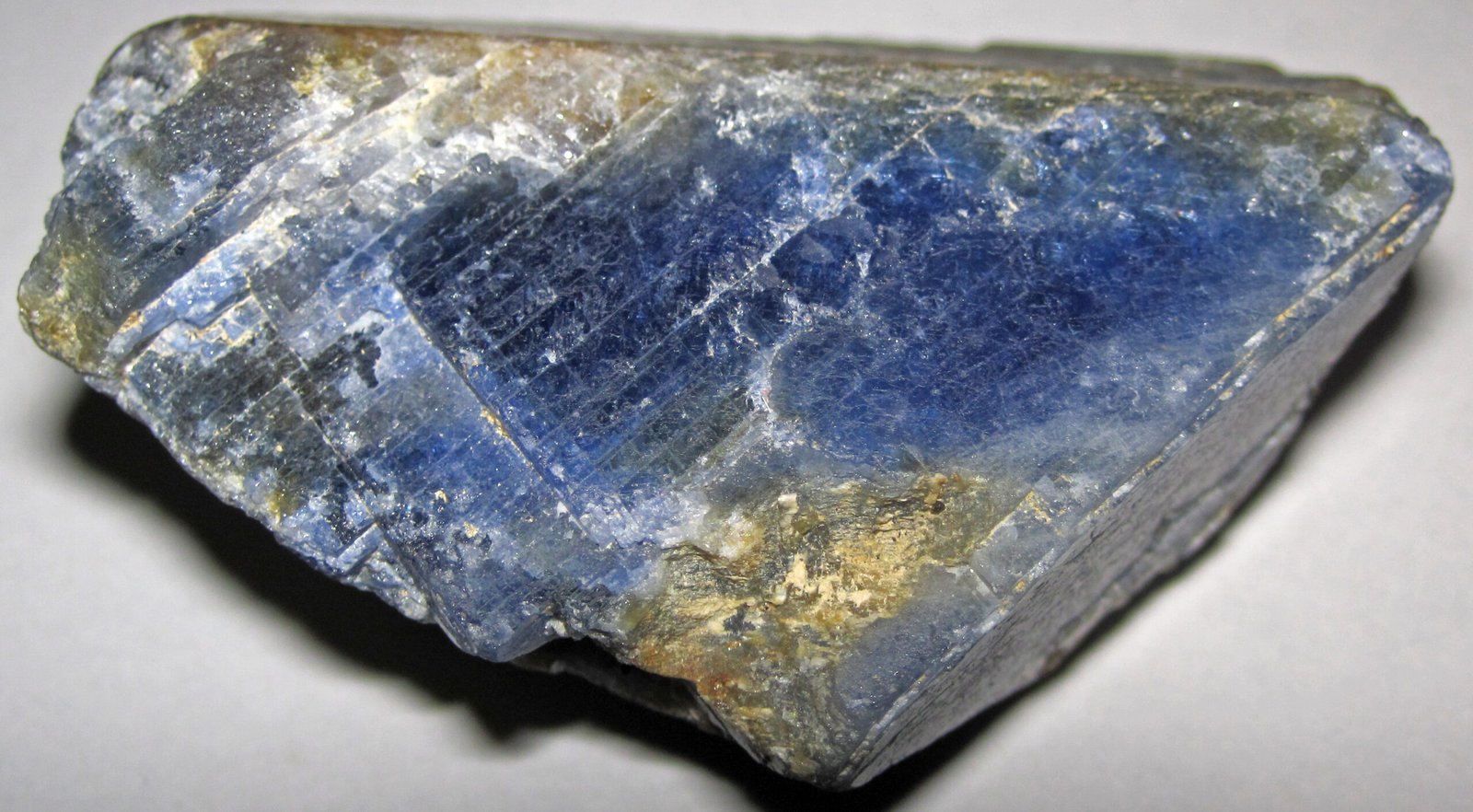
Corundum · Wisdom & truth
In short Sapphire is the blue — and, in truth, every non-red — gem variety of corundum, crystalline aluminium oxide (Al2O3). Pure corundum is colourless; a trace of iron and titanium tints it the classic royal blue, while other elements make the “fancy” sapphires — pink, yellow, green, even the rare pink-orange padparadscha. Only red corundum gets its own name, ruby. At 9 on the Mohs scale it is the hardest natural gem after diamond. The crystal tradition reads it as a throat-and-third-eye stone of wisdom, truth, mental clarity and calm — symbolic uses, this guide explains, rather than medical ones. Because almost all sapphire is heat-treated, buying honestly described stone matters more than usual.
Sapphire is the colour of the sky given weight. For thousands of years its deep, velvety blue has stood for the heavens, for wisdom and for truth — the stone of kings, cardinals and philosophers, set in crowns and worn against the heart as a talisman of clear thinking and faithful love. It is also, mineralogically, one of the great surprises of the gem world: the very same substance as fiery red ruby, parted from it by nothing more than a few stray atoms.
This guide covers what sapphire actually is, why it comes in almost every colour except red, where its reputation for wisdom and truth was born, and how to tell a natural stone from the heated, diffused and synthetic material that fills so much of the market.
What is sapphire?
Sapphire is corundum — crystalline aluminium oxide, Al2O3 — in blue and other non-red colours. Pure corundum is completely colourless. The famous blue appears when a few aluminium atoms are replaced by iron and titanium, whose paired presence lets light shift into that saturated cornflower-to-royal blue. It is worth dwelling on how little separates sapphire from its sibling: swap that iron-and-titanium for a whisper of chromium and the same crystal glows red and takes the name ruby instead. One mineral, two of the four classic precious stones.
Corundum crystallises in the trigonal system, typically as tapering barrel- or spindle-shaped hexagonal crystals — a habit it shares, at the level of underlying symmetry, with quartz and other members explored in our guide to the seven crystal systems. At 9 on the Mohs scale it is scratched only by diamond and moissanite, and it has no cleavage, so it wears superbly — which is exactly why it has been treasured, and worn daily, for millennia.
Sapphire meaning & history
Where ruby stands for blood and fire, sapphire has always stood for the sky and the mind. Ancient Persians believed the earth rested on a giant sapphire whose reflection coloured the heavens blue. In the medieval church it was the stone of the clergy — a symbol of heaven, chastity and divine favour, worn in ecclesiastical rings precisely because its serene blue was thought to lift the wearer’s thoughts upward. Across cultures it gathered a consistent cluster of meanings: wisdom, truth, sincerity and faithfulness, which is why it became, and remains, a favourite stone for engagement rings and vows.
That inheritance is what the modern crystal world reads into sapphire today. Rather than the passion and drive associated with warm red stones, sapphire is treated as a cool, clarifying, truth-telling stone — the emblem of a calm and disciplined mind. It is the birthstone for September and the traditional gift for the fifth and forty-fifth wedding anniversaries.
Every colour but red
The single most useful thing to understand about sapphire is that “sapphire” is a colour rule, not a separate mineral. Corundum comes in a whole spectrum, and by long-standing convention only the red variety is called ruby; every other colour is a sapphire, usually named by its hue.
- Blue sapphire. The classic and most valued — iron and titanium give everything from pale sky-blue to deep “royal” and velvety “Kashmir” blue.
- Pink, purple and violet sapphire. Coloured by chromium (like ruby, but too light to qualify as red); the boundary between “pink sapphire” and ruby is a famously blurred one.
- Yellow and green sapphire. Iron-coloured stones, from soft lemon to golden and olive.
- White (colourless) sapphire. Pure corundum with no colouring element — a durable, affordable diamond alternative.
- Padparadscha. The rare and coveted pink-orange sapphire, named for the colour of a lotus flower and among the most valuable of all.
- Colour-change sapphire. Stones that read blue in daylight and violet under warm indoor light, an effect they share with tanzanite.
Star sapphire & the treatment question
Two things every sapphire owner should know. The first is a wonder of physics; the second is a matter of honesty.
Many sapphires contain fine needles of the mineral rutile — jewellers call it “silk.” When those needles are dense and correctly aligned and the stone is cut as a smooth cabochon, they scatter light into a floating six-rayed star. This is the star sapphire, and the same optical trick (asterism) produces the six-rayed star ruby. It is one of the loveliest effects in the mineral world, and entirely natural.
The honest part concerns treatment. The great majority of sapphire on the market has been altered, and a good guide should say so plainly.
- Heat treatment is near-universal. Most sapphires are heated to deepen and clarify the blue and dissolve the silk. This is stable, permanent and widely accepted — but it should always be disclosed.
- Diffusion adds colour from outside. Elements such as titanium or beryllium can be diffused into the surface at high heat to create or intensify colour that isn’t naturally there; this is a more significant treatment and is worth much less.
- Fracture filling and dyeing are used on low-grade material to hide cracks or fake colour.
- Untreated sapphires command a premium. A natural, unheated stone with a reputable laboratory report — a fine Kashmir or Ceylon blue — is among the most valuable gems by weight on earth.
None of this makes a heat-treated sapphire “fake” — it is still real corundum. It simply means you should buy from sellers who disclose treatments and be wary of a suspiciously cheap “natural” stone.
Sapphire healing properties
In the crystal tradition, sapphire is valued as a stone of wisdom, truth and mental clarity.
People typically turn to sapphire for:
- Clear thinking & focus. A throat-and-mind stone, read as steadying scattered thoughts and sharpening concentration.
- Truth & honest expression. Traditionally linked to speaking sincerely and keeping faith with one’s word.
- Calm & discipline. Associated with a cool, unhurried temperament and self-mastery rather than fiery drive.
- Wisdom & intuition. Connected to the third eye, insight and level-headed judgement.
These are traditional and symbolic uses, not medical claims. There is no scientific evidence that any crystal treats, cures or prevents any illness, and sapphire has no proven effect on the mind, mood or health. Nothing here is intended to diagnose, treat or prevent any condition; concerns about focus, anxiety or wellbeing belong with a suitably qualified professional.
Sapphire, the chakras & zodiac
Blue sapphire’s colour places it at the throat chakra (Vishuddha), the centre of communication and truth, while its deeper indigo tones and its links to wisdom carry it up to the third-eye chakra (Ajna) of insight and intuition. It shares that cool blue territory with lapis lazuli, sodalite and the affordable violet-blue iolite — long nicknamed “water sapphire.” For the wider framework, see our guide to the seven chakras and their crystals. Fancy sapphires are often assigned to other centres by colour — pink to the heart, yellow to the solar plexus.
By zodiac, sapphire is most often linked to Virgo and Libra, the September signs, and sometimes to Taurus.
How to use sapphire
- Wear it as jewellery. At Mohs 9 with no cleavage, sapphire is one of the toughest of all gems — ideal for rings and everyday pieces.
- Keep a tumbled stone or crystal on you. A popular pocket piece for its traditional links to calm and clear thinking.
- Hold it in meditation. At the throat or brow, for its throat and third-eye associations.
- Place one on a desk or by your notes. A common choice for study, writing or any work that needs a cool head.
- Choose an opaque sapphire specimen or star sapphire if you want an affordable, sculptural stone rather than a faceted gem.
How to cleanse & charge sapphire
- Water is fine for solid, untreated or heat-only stones. Sapphire is hard and non-porous, so a brief rinse does no harm.
- Avoid water and chemicals on fracture-filled or heavily treated stones, where the filler can be attacked; when in doubt, keep it dry.
- Smoke, sound, moonlight or selenite all suit sapphire and carry no risk to any type of stone.
- Moonlight over strong sun. A moon charge is a safe default; sapphire’s colour is generally stable, but there is no need to bake it in intense sun.
- Never use ultrasonic or steam cleaners on filled or heavily included stones, which the vibration can damage.
Our general guide to cleansing and charging crystals covers each method in more detail, including which stones tolerate water and which do not.
Types & origins
- Kashmir sapphire. The historic benchmark — a soft, velvety, slightly milky “cornflower” blue from the Himalayas, mined only briefly and now legendary.
- Ceylon (Sri Lankan) sapphire. Bright, lively blues and a rainbow of fancy colours from the world’s oldest sapphire source.
- Burmese sapphire. Rich, deep “royal” blue from Myanmar, historically prized alongside its rubies.
- Star sapphire. Cabochon stones whose rutile silk produces a floating six-rayed star.
- Fancy & padparadscha. Pink, yellow, green, white and the rare pink-orange padparadscha, each named by hue.
Fine sapphire comes chiefly from Sri Lanka, Myanmar, Madagascar and Australia, with celebrated historic material from Kashmir and interesting stones from Montana in the United States. Value is driven above all by colour — a vivid, pure, medium-deep blue is worth the most — along with clarity, cut, size, origin and, decisively, whether the stone is treated. Untreated Kashmir and Burmese blues rank among the most expensive gems on earth per carat, while heat-treated commercial stones and opaque sapphire are affordable and widely available.
Real vs fake
- Synthetic sapphire. Lab-grown corundum is chemically identical to natural sapphire but far cheaper; it is often flawlessly clean and may show curved growth lines rather than natural inclusions. It is real corundum, but should be sold and priced as synthetic.
- Glass and doublets. Blue glass, and “doublets” that cap a cheap base with a thin slice of genuine stone, mimic the look; trapped bubbles and a warm, light feel are giveaways.
- Diffusion-treated stones. Pale corundum given a skin of colour by lattice diffusion looks convincing until the colour is seen to sit only on the surface.
- Other blue stones. Iolite, tanzanite, spinel and blue topaz are all sold — sometimes honestly, sometimes not — in sapphire’s place; each is softer than corundum.
- The hardness tell. Genuine sapphire scratches glass and almost everything else with ease; a “sapphire” that scratches readily is something softer.
The workable rule: ask about treatment and, for anything expensive, insist on a laboratory report. For the wider method, see our guide to spotting dyed and imitation stones.
Genuine, correctly identified sapphire
If you’d like a piece of your own, Minerals Kingdom offers authenticated natural sapphire and sapphire crystals — genuine corundum, correctly labelled and honestly described, with treatments disclosed.
Sapphire pairs well with
Frequently asked questions
What is sapphire good for?
Traditionally, sapphire is used for wisdom, truth, mental clarity and calm — a throat-and-third-eye stone. These are symbolic, traditional uses, not proven medical effects. No crystal treats illness, and sapphire has no demonstrated effect on the mind or body.
Is sapphire the same as ruby?
Chemically, yes. Both are the mineral corundum (aluminium oxide). Red corundum is called ruby; corundum of every other colour — blue, pink, yellow, green, colourless — is called sapphire. The difference is simply the trace element colouring the crystal.
Does sapphire only come in blue?
No. Blue is the classic and most valued colour, but sapphire occurs in pink, purple, yellow, green and colourless, plus the rare pink-orange padparadscha. Only red corundum is excluded, because that is called ruby instead.
Are most sapphires treated?
Yes. The great majority are heat-treated to improve colour and clarity, which is stable and widely accepted. Some stones are diffusion-treated, fracture-filled or dyed, which matters much more to value. Reputable sellers disclose all treatments, and untreated stones command a premium.
Can sapphire go in water?
A solid, untreated or heat-only sapphire is hard and non-porous, so a brief rinse is fine. Avoid water and chemicals on fracture-filled or heavily treated stones. When in doubt, cleanse with smoke, sound, moonlight or selenite instead.
What crystals pair well with sapphire?
Other stones of truth and clear sight suit it well — lapis lazuli for wisdom, iolite for affordable clarity, and its red corundum twin ruby to balance sapphire’s cool focus with warmth and drive.
Image credits · Hero and buy-box: blue sapphire (corundum) crystal — photo James St. John, via Wikimedia Commons (CC BY 2.0).