Topaz
One of the hardest gem minerals on Earth — an aluminium silicate that runs from icy colourless to golden “imperial” orange and sky blue — long tied in tradition to strength, clarity and honest self-expression.
Silicate · Strength & clarity
In short Topaz is an aluminium fluorosilicate, Al2SiO4(F,OH)2, and at 8 on the Mohs scale it is one of the hardest gem minerals — the very stone chosen to define hardness 8. Pure topaz is colourless; trace impurities and treatment give it pale blue, golden “imperial” orange, pink and sherry-brown. It is the November birthstone (golden topaz) and the gem of the fourth wedding anniversary (blue topaz). In the crystal tradition it is read as a stone of strength, clarity, confidence and honest expression — associations that, as this guide explains plainly, are cultural rather than clinical.
Topaz is one of the classic gemstones, a stone the ancients ranked among the great jewels and modern collectors prize for the sheer size and clarity its crystals can reach. It is also quietly misunderstood: much of the “topaz” people picture — that vivid swimming-pool blue — barely exists in nature, and the warm golden imperial topaz that gives the gem its reputation is genuinely rare.
This guide covers what topaz actually is, where its meaning comes from, how the crystal world reads it, and how to tell natural colour from the heat, irradiation and coatings that shape most topaz on the market today.
What is topaz?
Topaz is a silicate mineral of aluminium and fluorine, with the formula Al2SiO4(F,OH)2. It belongs to the nesosilicates and crystallises in the orthorhombic system, typically as well-formed prismatic crystals that can grow to remarkable size — some clear Brazilian crystals weigh hundreds of pounds. Its defining feature is hardness: topaz sits at 8 on the Mohs scale, harder than quartz and beaten among common gems only by corundum and diamond. It is, in fact, the mineral chosen to represent 8 on that scale.
In its pure state topaz is colourless. The colours collectors love come from trace impurities and from natural or laboratory treatment: iron and chromium can tint it blue, golden-orange or pink, while much commercial blue topaz begins as pale or colourless material that is heat-treated and irradiated to deepen its colour. One important quirk sets it apart from quartz: topaz has a perfect cleavage in one direction, a plane of weakness that means a hard knock can split an otherwise very hard stone. That is why topaz, for all its hardness, needs a little more care than its Mohs number suggests.
Topaz meaning & history
The name reaches back to antiquity. It is usually traced to Topazos, an old name for an island in the Red Sea — though the yellow stone mined there in ancient times was probably peridot rather than true topaz. Others link the word to the Sanskrit tapas, meaning “heat” or “fire,” a fitting root for a warm golden gem. For much of the Middle Ages, “topaz” was used loosely for almost any yellow gemstone, and only in modern mineralogy was it fixed to the silicate described here.
Its symbolism grew from that warmth. The ancient Romans believed topaz offered protection to travellers; medieval folklore held that it could calm anger, ward off the evil eye and even “increase body heat” to relieve a chill. Across these traditions topaz has stood for strength, vitality and a clear, honest mind — the reason it still appears in the crystal world as a stone of confidence and truthful self-expression.
Topaz healing properties
In the crystal tradition, topaz is valued as a stone of strength, clarity and confident expression.
People typically turn to topaz for:
- Confidence. Golden topaz especially is read as a solar-plexus stone of personal power and self-belief.
- Clarity and focus. Associated with clear thinking, good judgement and setting intentions.
- Honest expression. Blue topaz is linked to the throat, and to speaking calmly and truthfully.
- Warmth and vitality. Traditionally carried as an uplifting, energising stone.
These are traditional and symbolic uses, not medical claims. There is no scientific evidence that any crystal treats, cures or prevents any illness, and topaz is no exception. Nothing here is intended to diagnose, treat or prevent any condition; concerns about mood, confidence or health belong with a doctor or qualified professional.
Topaz, the chakras & zodiac
Topaz is read differently by colour. Golden and imperial topaz are tied to the solar plexus (Manipura), the centre of will and confidence, sharing that sunny territory with citrine. Blue topaz is a throat-chakra stone of communication, a role it shares with its blue beryl cousin aquamarine, while colourless topaz is linked to the crown and to clarity. For the wider framework, see our guide to the seven chakras and their crystals.
By zodiac, topaz is most often linked to Sagittarius, and golden topaz is the traditional November birthstone, read as a sign of optimism, honesty and warmth.
How to use topaz
- Wear it as jewellery. At hardness 8 topaz takes a fine polish and suits everyday rings and pendants — though its cleavage means it dislikes sharp knocks.
- Hold it in meditation. Golden topaz at the solar plexus for confidence, blue topaz at the throat for calm, clear speech.
- Keep one on your desk. A popular choice as a bright, focusing presence for study or decision-making.
- Carry a small stone. A tumbled or faceted piece as a tactile reminder of steadiness during a demanding day.
- Choose protective settings. Bezels and guarded mounts help shield the cleavage plane of a stone worn often.
How to cleanse & charge topaz
- Water, briefly. Topaz is hard and tolerates a quick rinse in cool water with mild soap; dry it gently afterwards.
- Never use ultrasonic or steam cleaners. Both can exploit topaz’s perfect cleavage and start a fracture — the one care rule every jeweller repeats.
- Moonlight over strong sun. A gentle overnight moon charge is safe; prolonged direct sunlight can fade the colour of some imperial and treated topaz.
- Smoke or sound. Sage, palo santo, incense or a singing bowl are safe, contact-free options.
- Selenite. Rest it on a selenite plate overnight for a dry, no-risk reset.
Our general guide to cleansing and charging crystals covers each method in more detail, including which stones tolerate water and which do not.
Types & colours of topaz
- Colourless / white topaz. Pure, untreated topaz — bright and clear, and the raw material for much treated blue.
- Blue topaz. Sky, Swiss and London blue — almost always colourless stone that has been irradiated and heated; natural blue is rare and pale.
- Imperial (precious) topaz. The prized golden-orange to pink-orange variety, coloured by chromium — the true rarity of the family.
- Pink topaz. Rare in nature, sometimes produced by heating certain brownish stones; delicate and collectable.
- Mystic topaz. Colourless topaz given a thin vapour coating for a rainbow sheen — a surface treatment, not a natural colour.
Fine topaz comes chiefly from Brazil (especially imperial topaz from Minas Gerais), with superb crystals from Pakistan, Russia, Nigeria, Mexico, Sri Lanka and the United States. Understanding why one crystal grows clear and another blue is really a story of structure and trace chemistry, a theme explored in our guide to the seven crystal systems.
Value & imperial topaz
Topaz value turns almost entirely on colour and origin. Blue topaz, once the treatment process became routine, went from scarce to abundant, and today it is one of the most affordable faceted gemstones you can buy — a genuine bargain, provided you know its colour is laboratory-assisted rather than natural. At the other end sits imperial topaz: natural golden-orange to pink material, largely from Brazil, that remains rare and commands the highest prices in the family. Between them lie colourless, sherry and pink stones, valued for clarity and size. For most buyers the honest advice is simple — enjoy affordable treated topaz for what it is, and pay a premium only when natural imperial colour genuinely matters to you.
Real vs fake
- Glass imitations. Cheap faceted glass is sometimes sold as topaz; it is lighter, warms quickly in the hand and may show moulding bubbles.
- Undisclosed treatment. The bigger issue is honesty, not fakery: most blue topaz is irradiated and heated, and “mystic” topaz is coated. These are real topaz, but a fair seller will say so.
- Citrine and smoky quartz swaps. Golden quartz is often confused with topaz; topaz is noticeably denser, so an equal-size topaz feels heavier in the hand.
- The hardness tell. At Mohs 8, genuine topaz scratches quartz and glass; a stone your quartz can scratch is not topaz.
The workable rule: trust weight, hardness and an honest seller. Ask whether colour is natural or treated — for the wider method, see our guide to spotting dyed and imitation stones.
Genuine, honestly described topaz
If you’d like a piece of your own, Minerals Kingdom offers authenticated natural topaz — crystals and cut stones, with colour treatments clearly disclosed rather than hidden.
Topaz pairs well with
Frequently asked questions
What is topaz good for?
Traditionally, topaz is used for confidence, clarity and honest expression — golden topaz at the solar plexus, blue topaz at the throat. These are symbolic, traditional uses, not proven medical effects. No crystal treats illness, and topaz has no demonstrated effect on health.
Is blue topaz natural?
Rarely. Almost all vivid blue topaz on the market starts as colourless or pale stone that is irradiated and heat-treated to deepen its colour. It is still genuine topaz, but the strong blue is laboratory-assisted rather than natural — a fair seller will tell you so.
What is imperial topaz?
Imperial or “precious” topaz is the rare natural golden-orange to pink-orange variety, coloured by chromium and found chiefly in Minas Gerais, Brazil. It is the most prized and expensive form of topaz.
Can topaz go in water?
A brief rinse in cool water is fine — topaz is hard at Mohs 8. Avoid ultrasonic and steam cleaners, though: topaz has a perfect cleavage plane, and those methods can start a fracture. Dry methods such as moonlight, smoke or selenite are the safest.
What is the difference between topaz and citrine?
They look similar in golden shades but are different minerals: citrine is a quartz, topaz an aluminium silicate. Topaz is harder (8 versus 7) and noticeably denser, so an equal-size topaz feels heavier — the classic way to tell them apart.
What crystals pair well with topaz?
Citrine suits golden topaz for solar-plexus confidence, aquamarine complements blue topaz at the throat, and clear quartz is used to amplify intention. Together they make a bright, expressive grouping.
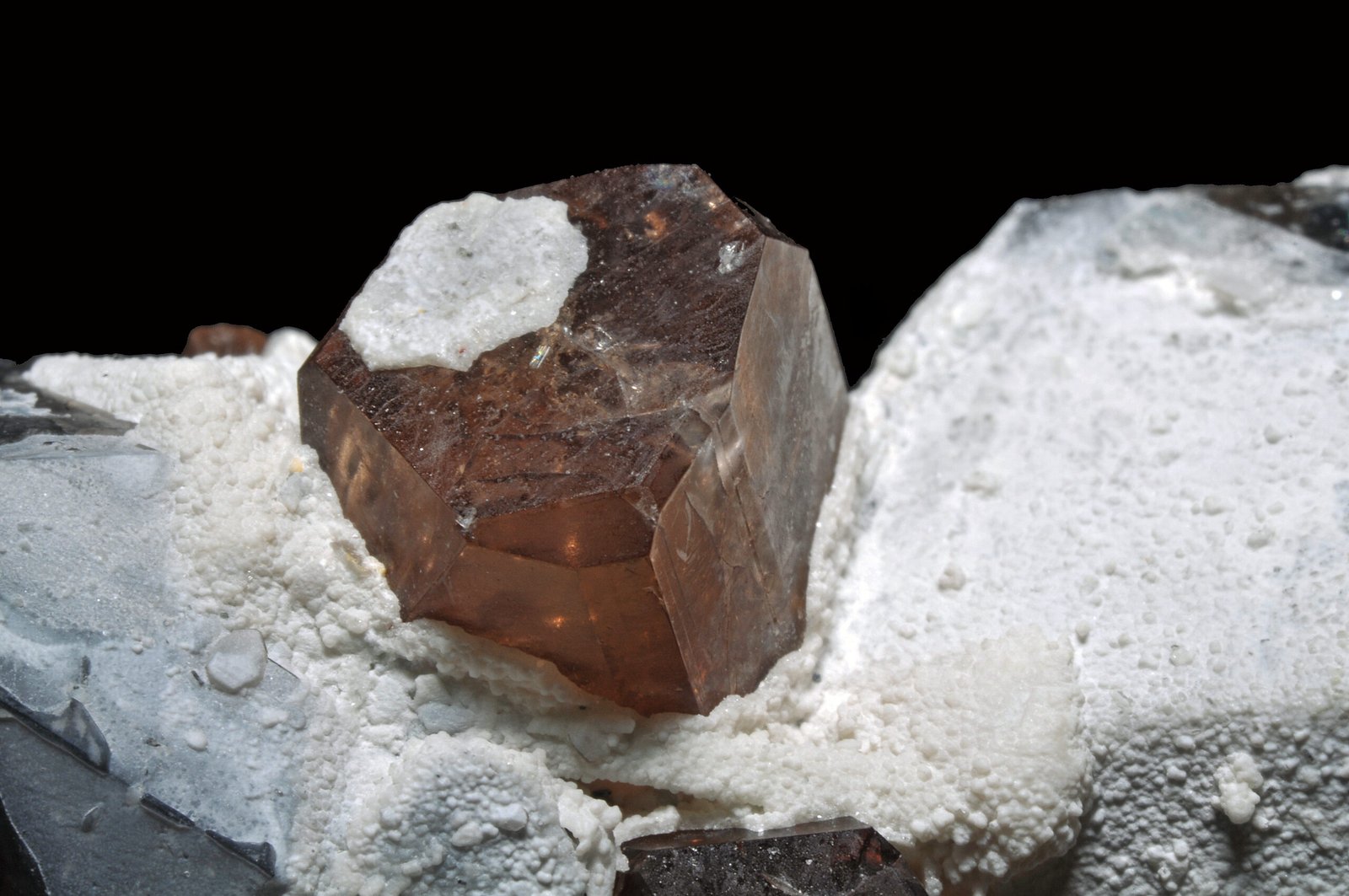
Image credits · Hero and buy-box: topaz crystal on smoky quartz, Skardu, Pakistan — photo Parent Géry, Wikimedia Commons (CC BY-SA 3.0).