Garnet
The deep red stone of vitality and devotion — the traveller’s talisman, the January birthstone, and a whole family of minerals in one name.
Silicate group · The traveller’s stone
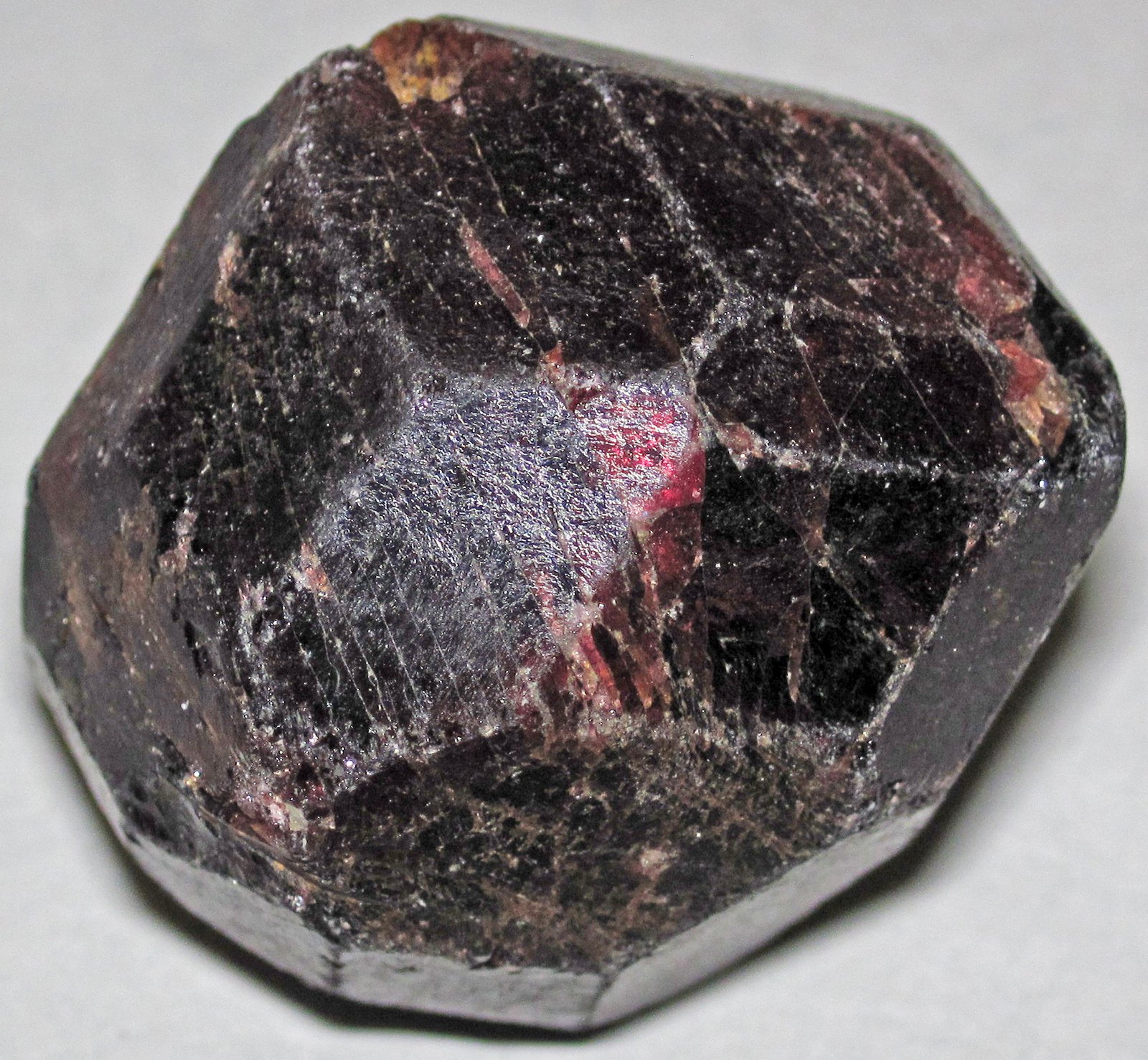
Garnet is not one mineral but a family of closely related silicates — almandine, pyrope, spessartine, grossular, andradite and more — sharing a crystal structure but not a colour. Most are the familiar deep red; some are green, orange or even colour-changing. In the crystal tradition garnet is the stone of vitality, passion, devotion and safe travel, a root-chakra crystal for energy and commitment. It’s hard (6.5–7.5 Mohs), water-safe and the January birthstone. Below — meaning, how to use it, how to keep it, and how the family splits.
The word comes from the Latin granatum, pomegranate — and once you have seen a matrix studded with small, glassy, blood-red crystals, the comparison is unarguable. Garnet has been worn for at least five thousand years, and it is one of the very few crystals whose ancient reputation and modern reputation actually agree: it has always been the stone of blood, fire, life and safe return.
This guide covers what garnet actually is — which is more complicated than most people expect — where its lore comes from, how people use it, how to care for it, and how the family divides.
What is garnet?
Garnet is a group of silicate minerals that share the same cubic crystal structure but differ in chemistry. The main species: almandine (iron-aluminium, deep red), pyrope (magnesium-aluminium, blood red), spessartine (manganese, orange), grossular (calcium-aluminium, green to honey), andradite (calcium-iron, including brilliant green demantoid), and uvarovite (chromium, emerald green).
They mix freely, so most natural garnets are blends. This is why “garnet” as a single meaning is a simplification: the crystal tradition talks about red almandine, but tsavorite and demantoid are garnets too, and nobody calls them stones of blood.
All garnets are hard, 6.5 to 7.5 Mohs, and have no cleavage — they are durable, which is why they were used as abrasive long before they were used as ornament. Sources: India, Brazil, Tanzania, Madagascar, and Bohemia for the historic pyrope.
Garnet meaning & history
Garnet is genuinely ancient. Egyptian pharaohs were buried with garnet necklaces. Roman signet rings were carved in it. Bohemian pyrope garnet jewellery became a European craze in the eighteenth and nineteenth centuries. Anglo-Saxon and Merovingian goldsmiths set thin slices of garnet over gold foil in cloisonné work — the Sutton Hoo shoulder clasps are the famous example.
Its lore is consistent. Because it is the colour of blood, garnet was a stone of life, vitality and courage. Because a garnet lamp was said to have lit Noah’s ark, it became a stone of guidance in darkness. And crusaders and travellers carried it as a talisman for safe return — the most durable of its associations, and the one it retains today.
The modern tradition added passion, commitment and devotion. It is a gift for a second wedding anniversary.
Garnet healing properties
In the crystal tradition, garnet is valued as a stone of vitality, passion and safe travel.
People typically turn to garnet for:
- Energy. The classic stone for low motivation and fatigue.
- Passion & devotion. Associated with commitment and desire.
- Safe travel. The oldest of its uses, carried on journeys.
- Courage. A root-chakra stone for facing hard things.
These are traditional and symbolic uses, not medical claims. Garnet has long been sold as a stone for the blood, the heart and circulation, on the simple basis that it is red. There is no scientific evidence that any crystal affects the body. Fatigue can have serious, treatable causes; if you are persistently exhausted, see a doctor rather than buying a stone. Enjoy garnet as a beautiful gem with a long human history; nothing here is intended to diagnose or cure any condition.
Garnet, the chakras & zodiac
Red garnet is a root chakra (Muladhara) stone — grounding, energising, physical — with a secondary link to the heart through passion and devotion. Green garnets are read at the heart, orange spessartine at the sacral.
By zodiac it’s associated with Capricorn and Aquarius. It is the traditional January birthstone, which makes it the standard mid-winter birthday gift.
How to use garnet
Most uses revolve around energy, commitment and travel.
- Carry it when travelling. The oldest use of all.
- Wear it daily. A garnet ring or pendant — hard enough to take it.
- Keep it at the desk. For drive on flat days.
- Give it at an anniversary. The traditional second-anniversary stone.
- Use it in meditation. Held low, at the root.
- Give it as a January birthstone. A classic, durable gift.
How to cleanse & charge garnet
Garnet is one of the easiest crystals to care for.
- Water. Warm water and mild soap are perfectly safe.
- Sunlight. Garnet does not fade; a brief sun charge is fine.
- Moonlight. Equally fine, if you prefer.
- Smoke. Sage, palo santo or incense.
- Selenite. Rest it on a plate overnight.
Avoid ultrasonic and steam cleaners on fractured or included stones, and on demantoid, which can be brittle. Sudden temperature changes are the main risk. Otherwise garnet is robust and forgiving.
Types & colours
- Almandine. The common deep red-purple; the everyday garnet.
- Pyrope. Blood red, historically Bohemian.
- Rhodolite. A pink-purple almandine-pyrope blend, much loved.
- Spessartine. Vivid orange, sometimes called mandarin garnet.
- Tsavorite. Green grossular, a genuinely precious gem.
- Demantoid. Green andradite with fire exceeding a diamond’s — the family’s aristocrat.
Is garnet rare or valuable?
It depends entirely on which garnet. Common almandine is inexpensive — tumbles and small faceted stones cost little, and industrial garnet is sold by the tonne as sandblasting grit.
At the other end, demantoid and fine tsavorite are among the more expensive coloured gemstones in the world, exceeding many sapphires per carat. Russian demantoid with its distinctive “horsetail” inclusions is a collector’s obsession. Nobody who says “garnet is a cheap stone” has priced a demantoid.
How to tell real garnet from fake
Garnet is not usually faked outright — but it is confused, and it has been used to fake other things.
- Vs red glass. Look for round bubbles and a warm feel. Garnet is cool, dense and hard (6.5–7.5), and scratches glass.
- Vs ruby. Garnet is singly refractive and shows no doubling; ruby is harder still (9) and typically fluoresces red under UV, which most garnets do not.
- Garnet-topped doublets. A nineteenth-century trick: a thin garnet slice fused to glass. Look at the stone from the side for a join line and a colour change.
- Check the density. Garnet is noticeably heavy for its size.
- “Rainbow garnet.” Real, and iridescent andradite — but the name is also used loosely on treated material.
Genuine, ethically sourced garnet
If you’d like a piece of your own, Minerals Kingdom offers authenticated natural garnet — rough crystals, tumbles and jewellery.