Rose Quartz
The gentle pink quartz the heart turns to — the stone of love.
Quartz roseus · Quartz family
Rose quartz is the pink variety of quartz and the best-loved stone of love — traditionally tied to compassion, emotional healing and, above all, love of oneself. It speaks to the heart chakra, makes a tender gift, and is one of the easiest crystals to live with: soft pink, durable and affordable. Here’s what it means, how to use it, how to keep its colour, and how to tell a real stone from a fake.
If amethyst is the stone people reach for to calm the mind, rose quartz is the one they reach for to soften the heart. Its quiet, milky pink has made it the universal symbol of love in the crystal world — and, because it is gentle, affordable and easy to find, it’s often the very first stone people give to someone they care about. Including, importantly, themselves.
In this guide we’ll cover what rose quartz actually is, where its reputation as the love stone comes from, the everyday ways people work with it, how to keep its pink from fading, and — as always — what is tradition and what is genuinely known.
What is rose quartz?
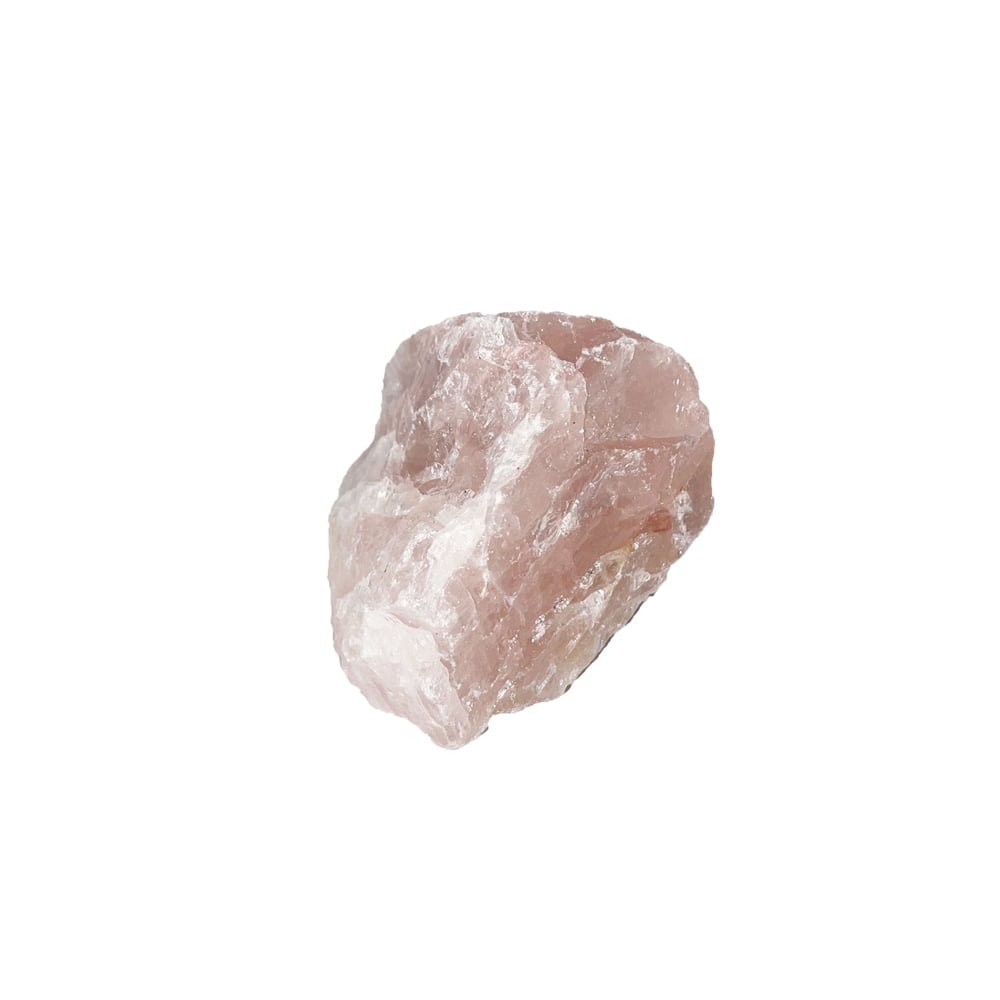
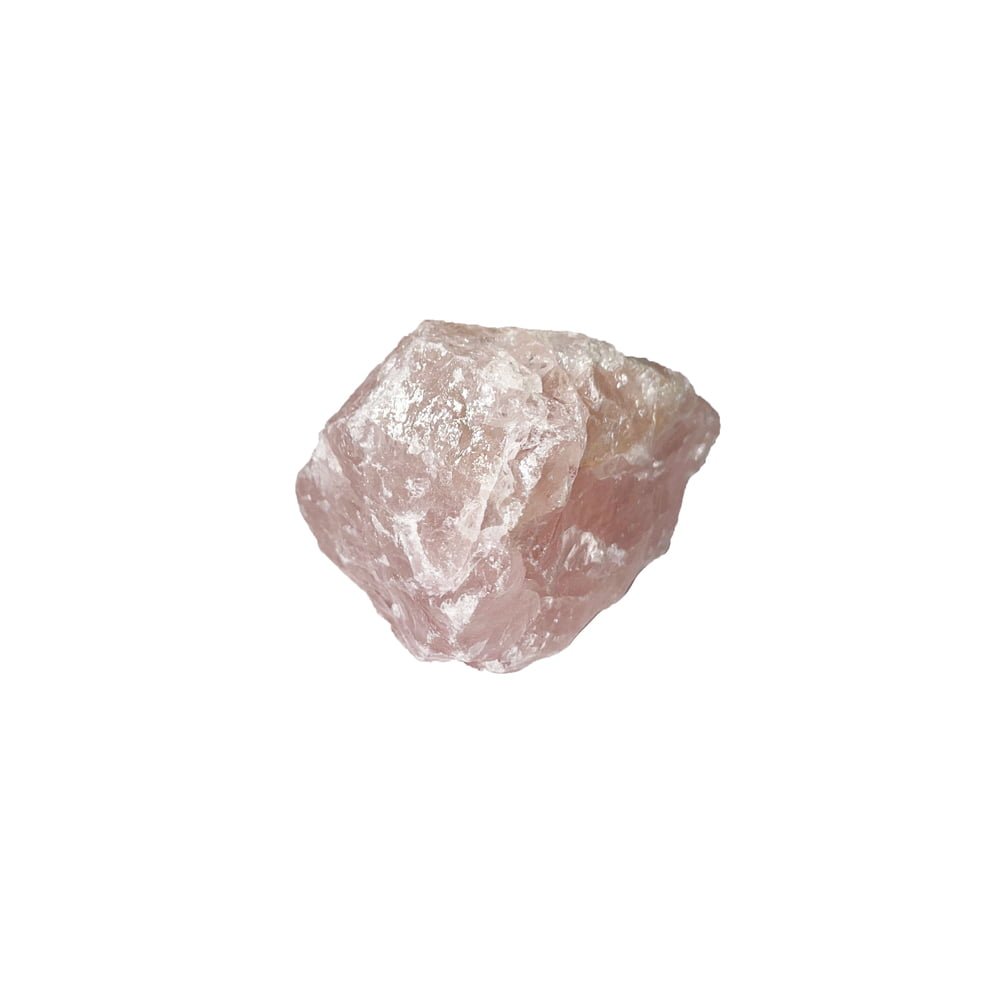
Rose quartz is the pink variety of quartz, the silicon-dioxide mineral (SiO₂) that also gives us clear rock crystal, amethyst and citrine. Its soft, rosy colour is usually caused by microscopic fibrous inclusions of a pink borosilicate mineral woven through the stone — which is why most rose quartz looks cloudy and translucent rather than glass-clear, and rarely forms sharp, well-shaped crystals. Instead it grows in massive, chunky veins inside coarse-grained rock called pegmatite.
On the Mohs scale of hardness it rates a 7, the same as the rest of the quartz family, so it’s durable enough for daily jewellery and easy to care for. It has one sensitivity worth remembering, though, which we’ll come back to: its pink colour can fade in strong sunlight over time, so it isn’t a stone to leave on a sunny windowsill for months.
That cloudiness is part of rose quartz’s charm rather than a flaw. The very inclusions that scatter the light and give the stone its dreamy, milky glow can, when a piece is cut into a smooth dome, occasionally produce a soft six-rayed “star” that appears to float across the surface as it turns — an effect known as asterism, and one collectors prize.
Rose quartz meaning & history
Rose quartz has been treasured for an astonishingly long time. Beads carved from it have been dated to around 7,000 BCE, and it appears throughout the ancient Mediterranean world. The Greeks and Romans tied it to their deities of love — Aphrodite and Eros (Venus and Cupid) — and told stories of love being brought to earth through the rosy stone. There’s even a long-standing tradition that the Egyptians and Romans used rose quartz in facial treatments, believing it preserved a youthful complexion.
That thread has never really broken. Across centuries and cultures, rose quartz has stood for one thing above all: love — not only romance, but tenderness, friendship, reconciliation and self-acceptance. It’s the crystal most often given to mark affection, and the one most people associate with an open, generous heart.
One old story, retold by poets, ties the stone directly to Aphrodite. Rushing to her wounded love Adonis, the goddess is said to have caught herself on a thorn, and where their blood mingled it stained pale quartz a tender pink — love marked forever in stone. It’s myth rather than mineralogy, of course, but it captures exactly why rose quartz has always been kept as a token of the heart.
Rose quartz healing properties
In the crystal tradition, rose quartz is the great heart-opener. It’s the stone suggested for cultivating compassion, easing grief or heartache, and — the use it’s most loved for today — practising self-love. Where amethyst calms the head, rose quartz is said to soften the heart.
People most often turn to rose quartz for:
- Self-love & self-worth. A gentle reminder to treat yourself with the kindness you give others.
- Love & relationships. Traditionally used to invite tenderness and openness into connections.
- Emotional healing. A comforting companion through heartache, loss or change.
- Compassion. Long associated with patience, forgiveness and an open heart.
These are traditional and symbolic uses, not medical claims. Rose quartz is a beautiful support for reflection and self-care — it is not a treatment, and nothing here is intended to diagnose or cure any condition. If you’re moving through grief, heartbreak or low mood, please also reach out to a trusted person or a qualified professional.
What’s striking is how the stone’s meaning has shifted toward the self. Where older traditions framed rose quartz mainly as a charm to attract romance, today it’s most often picked up as a daily nudge toward self-compassion — a reminder that the kindness we extend to others is owed to ourselves too. That quiet reframing is a large part of why it has stayed the most popular crystal in the world.
The heart chakra, zodiac & love
It will surprise no one that rose quartz is the stone of the heart chakra (Anahata) — the energy centre, in this tradition, of love, compassion and connection. It’s often paired with green stones like aventurine, which share that heart association, to balance giving and receiving.
Rose quartz isn’t a classic birthstone, but it’s closely linked to the Venus-ruled signs Taurus and Libra, both associated with love and beauty. That, plus its meaning, makes it a favourite gift for weddings, anniversaries and Valentine’s Day — a quietly romantic stone that suits almost anyone.
How to use rose quartz
Rose quartz is endlessly easy to live with. Beyond simply enjoying its colour, here are the ways people most often work with it.
- Keep it close to the heart. Worn as a pendant, or carried in a pocket, as a tactile reminder of self-kindness.
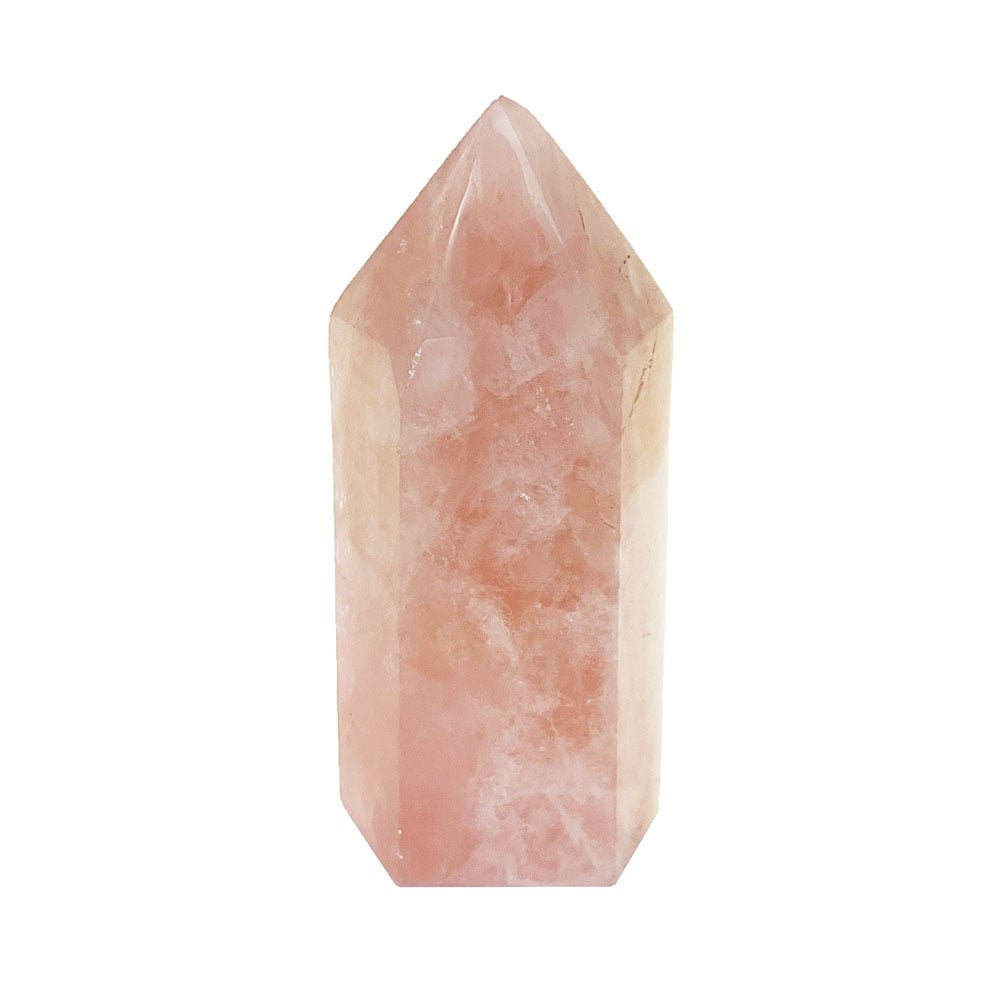
- Place it by your bed. A point or raw piece on the nightstand, or under the pillow, is a long-standing tradition for tender rest.
- Hold it in reflection. Many people use a smooth stone as a focus for a few minutes of gratitude or self-compassion.
- Bring it into a shared space. A larger piece makes a soft focal point in a bedroom or living room.
- Use it in your skincare ritual. Rose quartz facial rollers and gua sha tools are a popular self-care practice — cooling, soothing and a moment of calm (a cosmetic ritual, not a medical one).
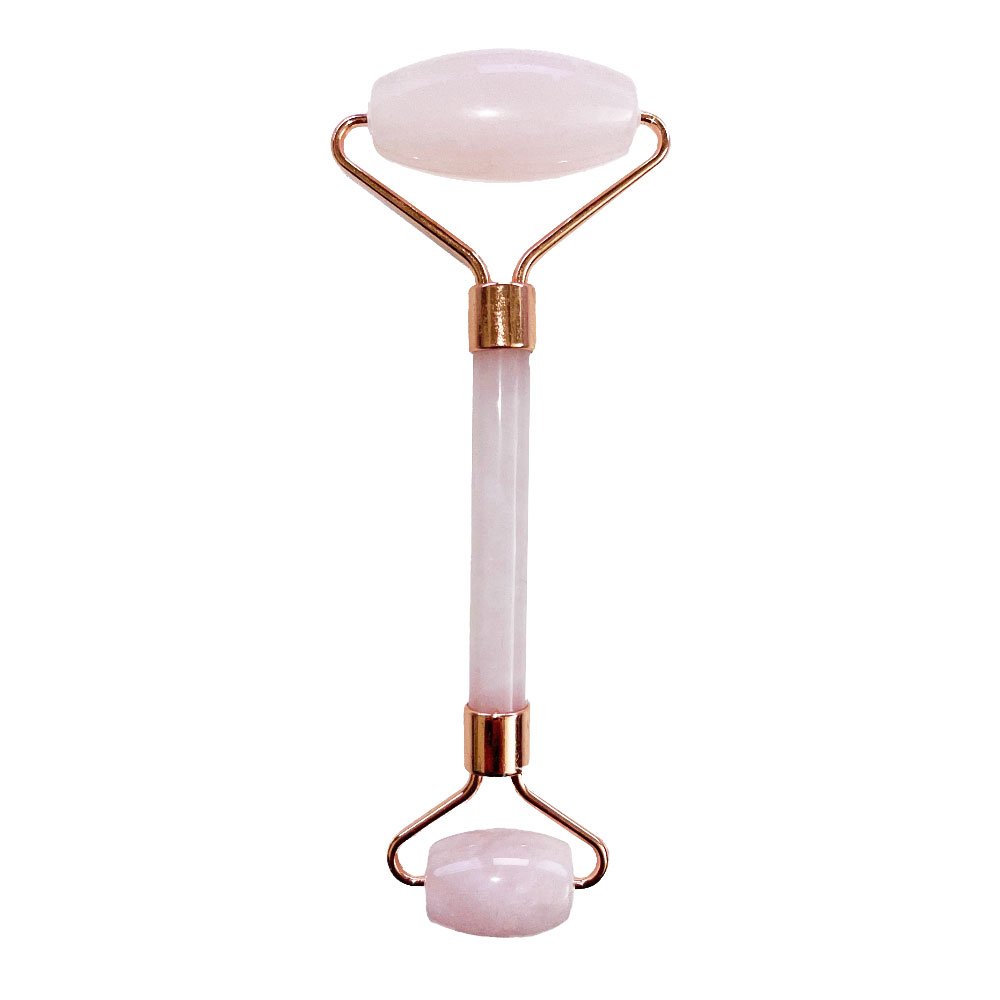
If you’d like a simple way to begin, try this. Each morning, hold your rose quartz for a moment and name one kind thing about yourself — one small kindness you’d offer a friend. It can feel almost too modest to matter, but pairing a tactile object with a daily intention is exactly how gentle habits take root. The stone isn’t doing the work; it’s there to remind you to.
How to cleanse & charge rose quartz
Like any well-used stone, rose quartz benefits from an occasional reset — whether you think of it energetically or simply as keeping it clean. The one rule to remember is its sensitivity to light: keep it out of long, strong sunlight, which can quietly drain the pink.
Good ways to cleanse rose quartz:
- Cool running water. A brief rinse is perfectly safe — it’s a hard quartz. Avoid salt water and harsh chemicals.
- Moonlight. A night under the full moon is the classic, colour-safe method (and the safest way to charge it).
- Smoke. Pass it through incense, palo santo or sage.
- Selenite. Rest it on a selenite plate overnight.
- Sound. A singing bowl or bell is a gentle, no-contact option.
For charging, moonlight is ideal — skip the sunbathing that other guides sometimes suggest, since it’s exactly what fades rose quartz. Cleanse whenever it feels right; once a month, or after an emotionally heavy stretch, is plenty.
Types of rose quartz
Most rose quartz is the familiar massive, cloudy pink — but there are a few variations worth knowing:
- Massive rose quartz. The everyday kind: translucent, milky, pale to medium pink. What most tumbled stones and carvings are made from.
- Star rose quartz. When cut as a smooth dome, fine inclusions can create a floating six-rayed star (asterism). Prized and more valuable.
- Pink quartz. A rarer, more transparent, crystallised form that grows in actual points — chemically distinct in how it gets its colour, and light-sensitive.
- Lavender rose quartz. A softer, lilac-leaning grade loved for its delicacy.
Most of the world’s rose quartz comes from Brazil and Madagascar, with notable material from India, South Africa and South Dakota in the United States — where it is the official state mineral.
Is rose quartz rare or valuable?
Rose quartz is abundant, and that’s good news for anyone starting out: it’s one of the most affordable crystals you can buy. A tumbled stone costs very little, and even a substantial raw piece or carving is inexpensive compared with rarer gems.
Value is driven mainly by colour and clarity. A clean, even, medium-to-deep pink is worth more than a pale, chalky or heavily fractured stone. The clear exception is star rose quartz, where a well-centred star can command a real premium, and finely crystallised pink quartz, which is genuinely scarce. For everyday buying, the honest advice is the same as ever: pick the piece whose colour and feel you love, at a size that suits where it will live.
How to tell real rose quartz from fake
Because rose quartz is cheap, fakes are less common than with precious gems — but dyed quartz and glass do turn up, often sold as suspiciously vivid “candy pink” stones. A few honest checks help:
- Look at the colour. Real rose quartz is usually soft, cloudy and a little uneven. A perfectly clear, intense, uniform pink is a warning sign of dye or glass.
- Check for bubbles. Tiny round air bubbles inside point to glass rather than crystal.
- Look in the cracks. Dyed stones often show colour pooling or concentrating along fractures.
- Feel the temperature. Natural quartz feels cool and warms slowly; glass warms quickly in the hand.
As with all quartz, lab-grown rose quartz exists and is chemically real but man-made; only a gem laboratory can confirm origin with certainty. If it matters to you, buy from a seller who is clear about where their stones come from.
Genuine, ethically sourced rose quartz
If you’d like a piece of your own, Minerals Kingdom offers authenticated natural rose quartz — raw stones, tumbled stones, points, rollers and jewellery.