Peridot
The olive-green gem of renewal — the August birthstone, born in the earth’s mantle, and sometimes falling from space.
Olivine · The gem of the sun
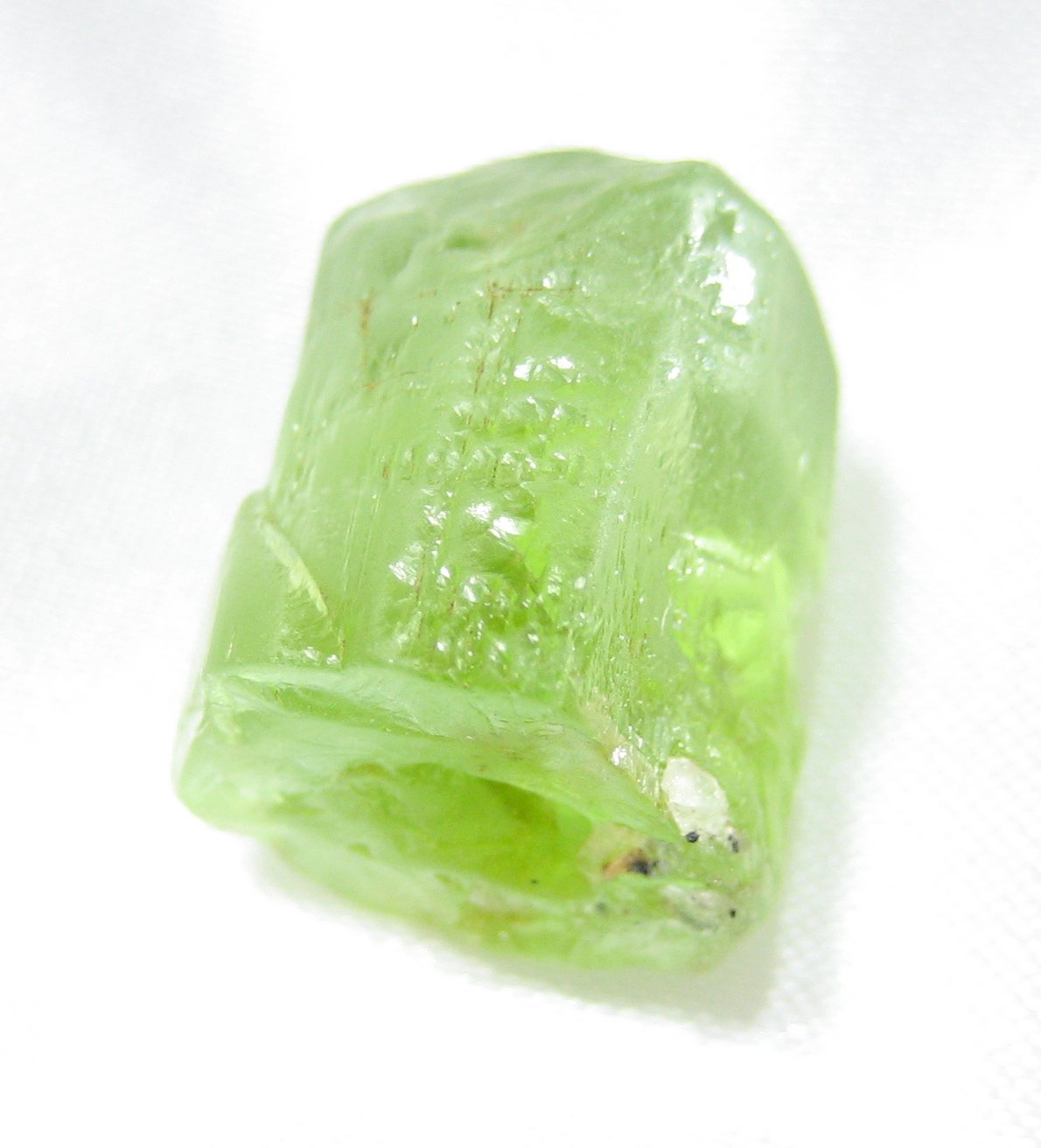
Peridot is gem-quality olivine, and it is one of only two gemstones that form not in the crust but in the earth’s mantle, carried up by volcanoes. Some peridot arrives from further still — inside pallasite meteorites. In the crystal tradition it’s the stone of renewal, abundance and release from old patterns, a heart and solar-plexus crystal. It’s durable (6.5–7 Mohs) but sensitive to heat and acid, and it is the August birthstone. Below — meaning, how to use it, how to keep it, and how to tell it from green glass.
Peridot has a colour no other gem quite manages: a warm, oily, yellowish green that seems to hold light rather than reflect it. Under candlelight it glows, which is why the Georgians called it the evening emerald. And it has an origin story that ought to be better known — most gems form in the earth’s crust, in the top few kilometres. Peridot forms tens of kilometres down, in the mantle, and is delivered to us by volcanoes.
This guide covers what peridot actually is, where its long, tangled history comes from, how people use it, how to keep a heat-sensitive gem, and how to tell it from glass.
What is peridot?
Peridot is the gem variety of olivine, a magnesium iron silicate. Its green comes from iron in the crystal structure — which means, unusually, that peridot is an idiochromatic gem: the colouring element is part of the mineral itself, not a trace impurity. There is no such thing as a colourless peridot.
Olivine is one of the most abundant minerals in the earth’s upper mantle. Gem peridot reaches the surface in basalt lava and in mantle fragments carried up by eruptions. It also arrives on meteorites: pallasites, the loveliest class of meteorite, are iron-nickel matrices studded with olivine crystals. Some of those crystals are cut and sold. You can, quite literally, wear a piece of another world’s mantle.
Historically, the finest peridot came from Zabargad (St John’s Island) in the Red Sea, mined for three and a half thousand years. Today’s material comes chiefly from Pakistan, Myanmar, China and the San Carlos Apache reservation in Arizona.
Peridot meaning & history
Peridot has been mined since at least 1500 BC. The Egyptians called it the “gem of the sun” and mined it on Zabargad — reputedly at night, because the stones were said to be invisible by day and to glow in the dark.
Here is the historical detail that changes everything, and it is not folklore. Much of the “emerald” of the ancient and medieval world was peridot. The Three Holy Kings shrine in Cologne Cathedral is set with two hundred carats of gems long believed to be emeralds; they are peridot. Cleopatra’s celebrated emeralds were, in all likelihood, peridot from Zabargad. The two stones were not reliably distinguished until the modern era.
In the crystal tradition peridot became a stone of renewal, abundance and release — of shedding old patterns, guilt and resentment. Its association with the sun and with light gave it a reputation for dispelling darkness, which is about as literal as gem symbolism gets.
Peridot healing properties
In the crystal tradition, peridot is valued as a stone of renewal, abundance and release.
People typically turn to peridot for:
- Fresh starts. The classic use — new chapters, new work, new health.
- Release. Said to help let go of guilt, envy and old resentment.
- Abundance. A solar-plexus stone of confidence and prosperity.
- Warmth. Associated with lightness after a heavy stretch.
These are traditional and symbolic uses, not medical claims. Peridot is sometimes sold as a stone for digestion, the liver or detoxification. There is no scientific evidence that any crystal treats illness or “detoxifies” anything. Nor will any stone improve your finances. Enjoy peridot as an ancient and remarkable gem with a genuinely extraordinary origin; nothing here is intended to diagnose or cure any condition.
Peridot, the chakras & zodiac
Peridot sits between the heart chakra (Anahata) and the solar plexus (Manipura) — its green belongs to one, its gold-yellow warmth to the other. The tradition reads it as the crystal that connects an open heart to the will to act.
By zodiac it’s associated with Leo and Virgo. It is the August birthstone and the traditional gem of a sixteenth wedding anniversary.
How to use peridot
Most uses revolve around beginning again.
- Wear it at a new beginning. A new job, a new home, a fresh start.
- Keep it on the desk. For warmth on flat, heavy days.
- Wear it as jewellery. A peridot pendant — but treat rings gently.
- Use it in meditation. Between heart and solar plexus.
- Give it as an August birthstone. A classic, cheerful gift.
- Keep it away from heat. Not on a sunny windowsill, not near a hob.
How to cleanse & charge peridot
Hard enough to handle, but with two real vulnerabilities.
- Water. Warm water and mild soap are fine.
- Moonlight. A gentle overnight charge.
- Smoke. Sage, palo santo or incense.
- Selenite. Rest it on a plate.
- Sound. A singing bowl for beads.
Avoid heat and sudden temperature change: peridot has a high thermal expansion and can fracture. Avoid acids, including lemon juice and vinegar, which etch it. Never use steam or ultrasonic cleaners — jewellers know peridot as one of the stones you simply do not put in the machine.
Types & origins
- Burmese / Pakistani peridot. The finest colour — a rich, pure green with little yellow.
- Zabargad peridot. Historic Red Sea material, now essentially unavailable.
- San Carlos peridot. Arizonan, smaller stones, warm olive tone.
- Pallasite peridot. Cut from meteorites. Rare, expensive, and genuinely extraterrestrial.
Is peridot rare or valuable?
Small peridot is affordable — it is one of the more accessible faceted gems, and San Carlos stones are inexpensive.
Value climbs steeply with size and colour purity. Large, clean stones above ten carats with a fine grass-green and minimal yellow — chiefly from Pakistan’s Kashmir region — are genuinely valuable. Meteoritic peridot commands a premium for what it is rather than how it looks.
Because peridot is idiochromatic, colour cannot be enhanced by treatment. What you see is the stone. That is unusual, and worth knowing.
How to tell real peridot from fake
The imitator is glass, and the confusions are with other green stones.
- Look for doubling. Peridot is strongly birefringent: through the crown of a faceted stone you can often see the back facet edges appear doubled with a loupe. Glass never does this.
- Bubbles. Round internal bubbles mean glass.
- Vs green tourmaline or emerald. Peridot’s oily lustre and yellowish cast are distinctive; emerald is bluer and much rarer, tourmaline shows different inclusions.
- Look for “lily pads”. Disc-shaped inclusions around a tiny crystal — a hallmark of natural peridot.
- Hardness. Peridot (6.5–7) scratches glass; it is also noticeably warmer to the touch than you expect for a gem.
- Beware “evening emerald”. An old and honest trade name — but also a way to sell peridot at a suggestion of emerald prices.
Genuine, ethically sourced peridot
If you’d like a piece of your own, Minerals Kingdom offers authenticated natural peridot — rough crystals, tumbles and jewellery.