Labradorite
The stone of magic — a grey stone that hides the northern lights.
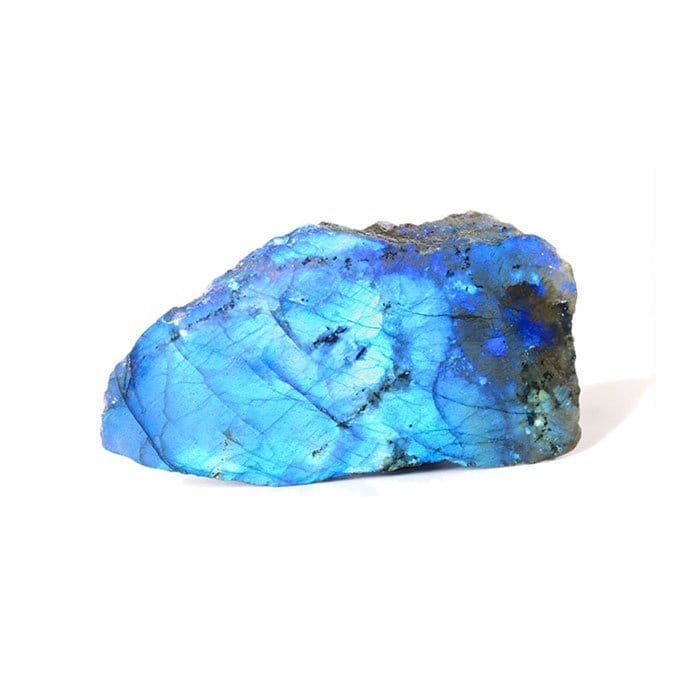
Labradorite · Feldspar family
Labradorite is a feldspar that looks like an ordinary grey stone — until the light hits it and it flashes electric blue, green and gold. That flash, called labradorescence, is why it’s the crystal tradition’s great stone of magic, transformation and intuition, tied to the third eye and long called the shaman’s stone. Below — what it is, the legend behind it, how to use and keep it, the varieties you’ll meet, and how to tell it from man-made glass.
Labradorite is the great trickster of the crystal world. At rest it’s a plain, smoky grey — easy to overlook. Then you tilt it, and a sheet of electric colour ignites across the surface: peacock blue, sea green, sometimes gold or violet, flashing and vanishing as the stone moves. That hidden fire is exactly why labradorite became the stone of magic and intuition — the idea that something luminous and powerful can live inside the ordinary, waiting for the right light to reveal it.
This guide covers everything worth knowing: what labradorite actually is and where that flash comes from, the northern-lights legend behind its meaning, the ways people use it, how to keep it safely, the varieties you’ll meet, and how to tell a real stone from glass. As always, we’ll keep the lore and the facts clearly labelled.
What is labradorite?
Labradorite is a member of the plagioclase feldspar family — a calcium-sodium feldspar, and the same broad mineral group as moonstone and sunstone. Chemically it’s fairly plain; what makes it extraordinary is, again, its inner structure. As the stone formed, it separated into ultra-thin alternating layers, and when light strikes them it bounces and interferes, splitting into those flashing colours. Gemmologists call the effect labradorescence, and it’s so distinctive the stone gave the phenomenon its name.
The flash is usually blue and green, but the finest material shows the full spectrum — gold, orange, violet and red. On the Mohs scale labradorite sits around 6 to 6.5: hard enough for jewellery, but, like all feldspars, it has cleavage and can chip or split if knocked, so it wants a little care.
One charming quirk: the colour isn’t really “in” the stone the way amethyst’s purple is. Crush labradorite to powder and the flash disappears, because the effect depends entirely on those intact internal layers. The magic, quite literally, is in the structure.
Labradorite meaning & history
Labradorite is named for the place it was first described by Europeans: the coast of Labrador, in Canada, where Moravian missionaries recorded it in the 1770s. But the Inuit of the region knew it long before, and their legend is the one that still shapes its meaning. They told that the northern lights were once trapped inside the rocks along the coast; a warrior, striking the stone with his spear, freed most of the lights back into the sky — but some remained, locked forever inside the stone. Labradorite, in other words, is frozen aurora.
It’s no surprise, then, that the tradition reads labradorite as the stone of magic, mystery and transformation. It’s often called the shaman’s stone — the crystal of seekers, diviners and anyone walking between the everyday world and something deeper. Where clear quartz amplifies and amethyst calms, labradorite is about awakening: revealing hidden gifts and protecting you while you explore them.
Labradorite healing properties
In the crystal tradition, labradorite is above all a stone of intuition and transformation. It’s the one most often suggested for awakening “psychic” senses and inner knowing, for navigating change, and for protecting the aura — it’s said to form a shield that keeps your energy in and others’ out. Because it both stimulates intuition and steadies the mind, it’s a favourite for meditation and for anyone going through a big transition.
People most often turn to labradorite for:
- Intuition & awakening. The classic stone for inner sight, insight and “magic.”
- Transformation. A companion for change, transitions and new chapters.
- Protection of the aura. Said to shield your energy and prevent draining.
- Calm & clarity. Reining in an overactive imagination while strengthening intuition.
These are traditional and symbolic uses, not medical claims. Labradorite is a beautiful focus for intuition, reflection and navigating change — it is not a treatment, and nothing here is intended to diagnose or cure any condition. If you’re moving through a difficult transition, please also lean on trusted people or a qualified professional.
Labradorite, the chakras & zodiac
In chakra work, labradorite is linked above all to the third eye chakra (Ajna), the centre of intuition and inner vision, and to the crown chakra for higher awareness. Its flashes of blue also connect it to the throat chakra and clear, truthful expression. That spread across the upper chakras suits a stone all about perception and insight.
Labradorite isn’t a traditional birthstone, but in astrology it’s most often associated with Leo, Scorpio and Sagittarius — signs tied to intensity, transformation and seeking. As a stone of light and the aurora, it’s connected to the element of Water (and, for some, Wind/Air).
How to use labradorite
Labradorite is wonderfully versatile, and most of the ways people use it are about intuition, protection and change.
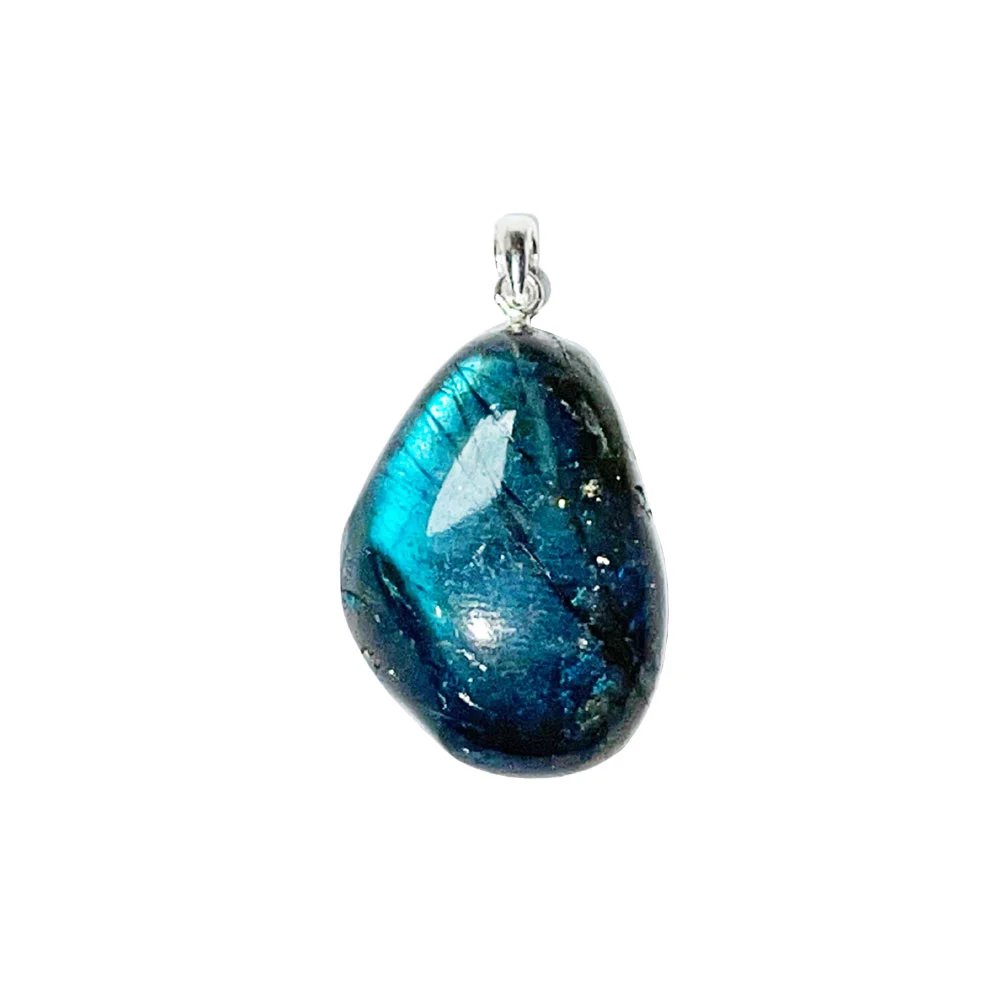
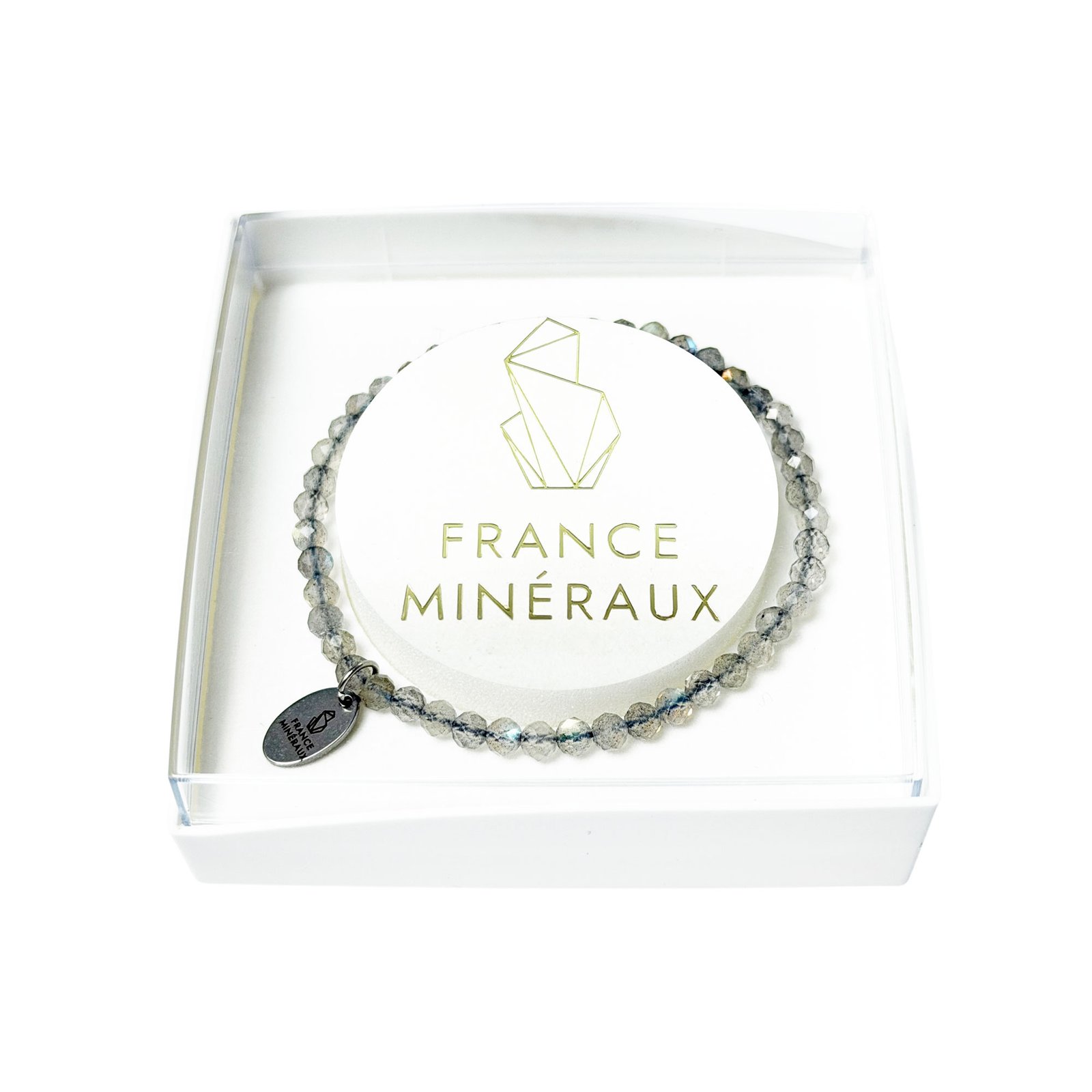
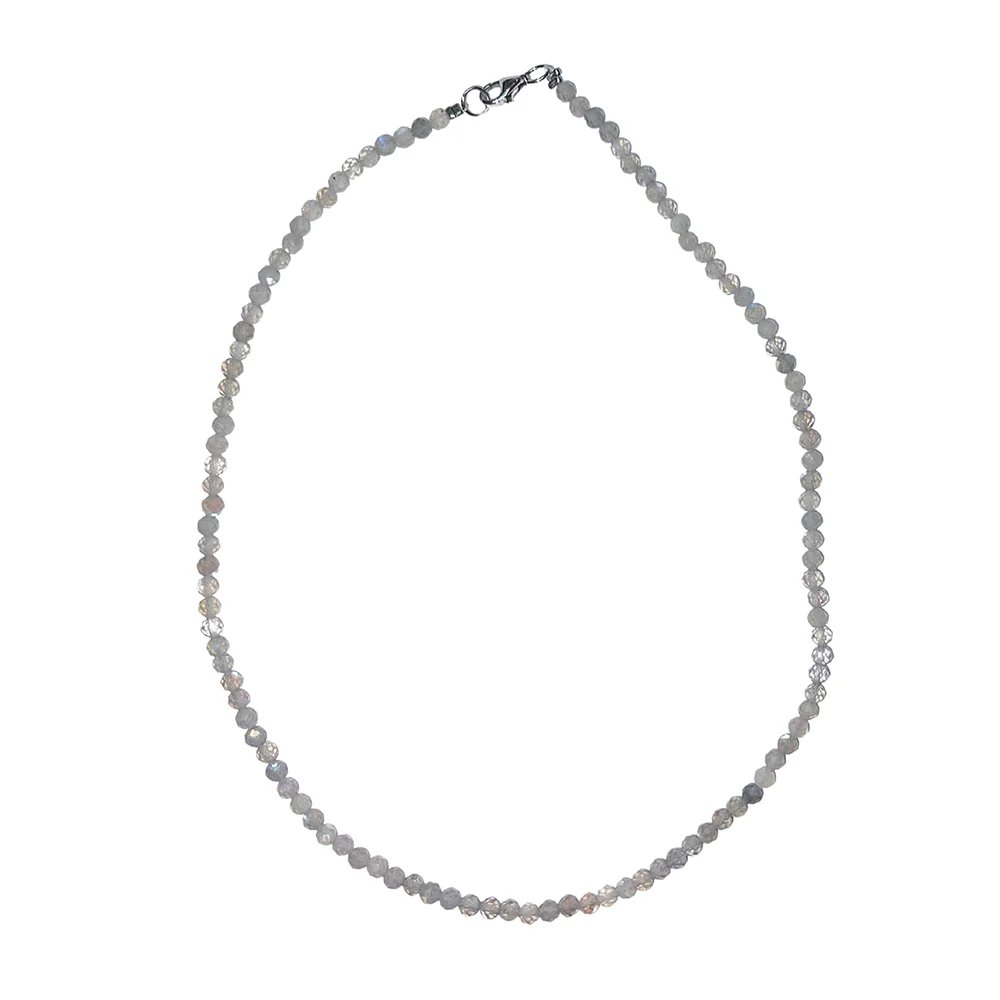
- Wear it. As a pendant, ring or bracelet — kept close, it keeps its protective, intuitive associations with you and catches the light beautifully.
- Meditate with it. Hold a stone or rest it on the third eye to focus on intuition and inner sight.
- Keep it close during change. A traveller through any transition — a move, a new job, a new path — carries it as a transformation talisman.
- Place it in your space. A tumbled stone or tower where you work or rest, as a quiet guardian of your energy.
- Wear a bracelet to absorb. In feng shui it’s often worn on the left wrist to draw in its protective, intuitive energy.
How to cleanse & charge labradorite
Labradorite is straightforward to care for with a couple of cautions. As a feldspar it can split along its cleavage if dropped or knocked, so handle it gently and keep it away from harder stones. A brief rinse is fine, but it shouldn’t be left to soak, and salt should be avoided as it can scratch the surface and dull the flash.
Good ways to cleanse labradorite:
- Moonlight. A night under the full moon is gentle and reliable — fitting for a stone of intuition.
- Smoke. Pass it through incense, palo santo or sage smoke.
- Selenite. Rest it on a selenite plate overnight to clear and recharge it.
- Sound. A singing bowl or bell clears it with no contact at all.
- Brief water. A quick rinse in cool water is fine; skip salt water and long soaks.
Labradorite’s colour comes from its structure, not a pigment, so it won’t fade — a little sunlight is safe. Because it’s so often used as an energetic shield, many people cleanse it whenever it feels “heavy,” and recharge it under the moon.
Types & colours of labradorite
“Labradorite” covers a range defined mostly by the colour and intensity of the flash:
- Blue/green labradorite. The classic — grey body with peacock-blue to green flash. The most common and beloved.
- Spectrolite. A prized Finnish variety that flashes the full spectrum — gold, orange, red and violet as well as blue.
- Golden (yellow) labradorite. A transparent, honey-coloured feldspar, usually without the flash; cut as a faceted gem.
- White labradorite. A pale stone with multicoloured flash — sold widely as “rainbow moonstone,” though it’s really labradorite.
- Andesine-labradorite. Often colour-treated (copper-diffused) to red or green; should be disclosed as treated.
Fine labradorite comes from Canada (Labrador and Quebec), Madagascar (much of today’s bright blue material), and Finland (the famous spectrolite), with stones also from Russia, Norway and the United States.
Is labradorite rare or valuable?
Everyday labradorite is abundant and very affordable — a tumbled stone or a beaded bracelet costs very little. What you pay for is the flash: stones with a broad, bright, full-colour labradorescence that covers most of the face are far more desirable than those that flash only at one narrow angle.
The most valuable material is fine spectrolite with vivid multicoloured fire, and large, clean pieces with strong blue flash. Transparent golden labradorite, cut as a faceted gem, is also collectible. For most buyers, though, the honest advice is simple: tilt the stone in good light before you buy, and choose the one whose fire genuinely moves you — that’s where the value really lives.
How to tell real labradorite from fake
Two things to watch for: man-made glass imitations, and colour treatments sold without disclosure. A few honest checks help:
- Watch the flash move. Real labradorescence appears and disappears as you tilt the stone, and only flashes within a certain angle. A “rainbow” that looks the same from everywhere is likely glass.
- Look for bubbles. Round air bubbles inside point to manufactured glass, not natural feldspar.
- Question impossible colour. An evenly intense, all-over electric rainbow with no grey body can signal glass or heavy treatment.
- Feel the temperature. Natural stone feels cool and warms slowly; glass warms quickly in the hand.
Be aware that some red and green “labradorite” (andesine-labradorite) has been copper-diffusion treated to create its colour. That’s a real stone, but the treatment should be disclosed — so if provenance matters to you, buy from a seller who states clearly whether a stone is natural or treated.
Genuine, natural labradorite
If you’d like a piece of your own, Minerals Kingdom offers authenticated natural labradorite — tumbled stones, cabochons, bracelets and jewellery, with any treatment stated honestly.